By using this site, you agree to the Privacy Policy and Terms of Use.
Accept
GMJ NewsGMJ NewsGMJ News
  • Latest News
    • GMJ Briefs
  • Podcast & Media
    • Podcast Episodes
    • GMJ Audio
    • GMJ Videos
  • Research Digest
    • New Studies
    • Georgian Research
    • Data & Numbers
  • Policy & Systems
    • Health Policy
    • Quality & Safety
    • Migration & Health
    • Global Health
  • Practice
    • Clinical Updates
    • Case Discussions
    • Pharmacy & Prescribing
    • Ingredients A-Z
  • Perspectives
    • Editorial
    • Explainers
    • Voices
    • Letters
  • GMJ Articles
    • Vol. 1 Issue 2 (2026)
    • Vol. 1 Issue 1 (2026)
    • Pre-Launch Articles (2025)
  • Read the Journal →
  • About GMJ News
Notification Show More
Font ResizerAa
GMJ NewsGMJ News
Font ResizerAa
  • Latest News
    • GMJ Briefs
  • Podcast & Media
    • Podcast Episodes
    • GMJ Audio
    • GMJ Videos
  • Research Digest
    • New Studies
    • Georgian Research
    • Data & Numbers
  • Policy & Systems
    • Health Policy
    • Quality & Safety
    • Migration & Health
    • Global Health
  • Practice
    • Clinical Updates
    • Case Discussions
    • Pharmacy & Prescribing
    • Ingredients A-Z
  • Perspectives
    • Editorial
    • Explainers
    • Voices
    • Letters
  • GMJ Articles
    • Vol. 1 Issue 2 (2026)
    • Vol. 1 Issue 1 (2026)
    • Pre-Launch Articles (2025)
  • Read the Journal →
  • About GMJ News
Follow US
GMJ News > GMJ Briefs > Animal Health Receives 0.6% of Global Health Funding While Human Health Claims 95%

Animal Health Receives 0.6% of Global Health Funding While Human Health Claims 95%

GMJ
Last updated: 10/06/2026 23:55
By
Prof. Giorgi Pkhakadze
Share
1 Min Read
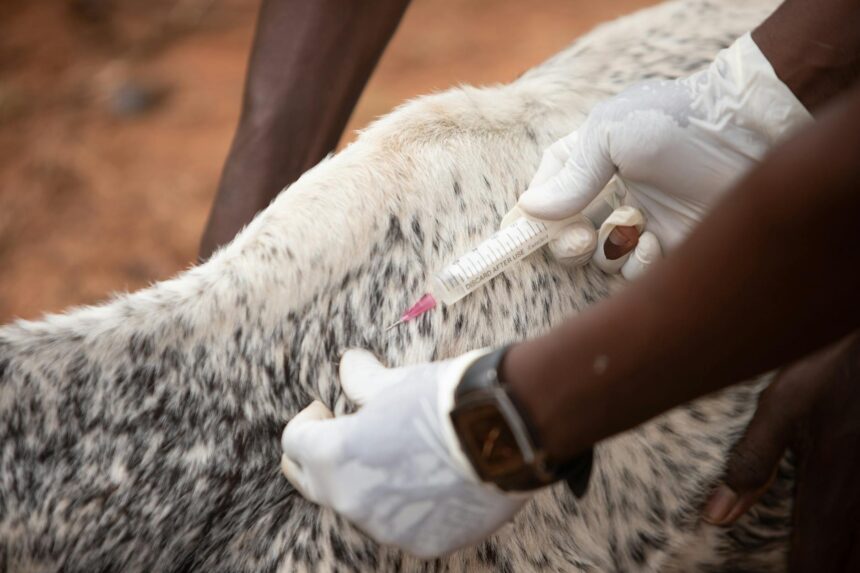
Infographic showing animal health funding represents tiny fraction of global health spending
Animal health receives just 0.6% of global health spending despite mounting disease crises that pose significant risks to human populations. A new WOAH report reveals critical funding gaps threatening pandemic preparedness. — Photo: Life In Lens / Pexels
SHARE
1 min read|123 words

According to the World Organisation for Animal Health’s 2024 global health spending analysis, animal health receives only 0.6% of total global health expenditure, revealing a stark funding disparity that undermines disease prevention efforts at their source. The distribution shows human health commanding 95% of spending, environmental health at 4%, and plant health at 2%, leaving animal health systems critically underfunded.

This allocation pattern is particularly troubling given the well-documented epidemiological evidence that three-quarters of emerging infectious diseases have animal origins. The funding gap directly correlates with weakened surveillance capabilities and inadequate response infrastructure, especially in regions where zoonotic disease risks are highest. Current surveillance systems remain insufficient to detect and contain animal diseases before they potentially spillover into human populations, creating a precarious situation for global health security.

Was this article helpful?

GMJ Brief · Key Finding

📰 Read the full article: Animal health receives just 0.6% of global health spending despite mounting disease crises →

Related reference
  • Iron · Ingredient
Share This Article
Facebook LinkedIn Bluesky Copy Link Print
GMJ
ByProf. Giorgi Pkhakadze
Follow:
Prof. Giorgi Pkhakadze, MD, MPH, PhD, is Editor-in-Chief of the Georgian Medical Journal and Chair of the Public Health Institute of Georgia (PHIG). He is Professor and Head of the Department of Social and Behavioural Sciences at David Tvildiani Medical University, and Secretary/Treasurer of the UEMS Section of Public Health. ORCID: 0000-0001-7609-4515.

Submit Your Paper →

Georgia's peer-reviewed open-access medical journal. No APC until January 2027.
Submit Manuscript →
WHO: Unsafe Food Causes 866 Million Illnesses Annually, Children Face Triple Risk

New WHO data reveals children under 5 face triple the risk of…

Yemen Food Crisis: 11.2 Million Face Acute Hunger as International Aid Funding Cuts Continue

Nearly 11.2 million Yemenis face severe acute food insecurity as international humanitarian…

Two Weather Patterns Linked to Increased Headache Risk in New Study

University of Cincinnati researchers, collaborating with Mount Sinai, Errex Inc., and Teva…

Submit Your Paper to GMJ

No APC until January 2027.
Submit Manuscript →

You Might Also Like

Medical consultation showing gynecological examination room with healthcare equipment

5,000 Annual Vulvar Cancer Cases in the UK: Why Persistent Itching Demands Urgent Evaluation

By
Prof. Giorgi Pkhakadze
10/06/2026

SITUATION BRIEF: WHO PHEIC Declaration for Cross-Border Ebola Outbreak (DRC-Uganda)

By
Prof. Giorgi Pkhakadze
31/05/2026
Global HealthPolicy & Systems

Malaria Cases Rising in Five African Countries Despite Global Control Efforts

By
Prof. Giorgi Pkhakadze
26/05/2026
Global HealthPolicy & Systems

UN Scales Up Ebola Response in DRC and Uganda Amid Security Challenges

By
Prof. Giorgi Pkhakadze
09/06/2026
Facebook Twitter Youtube Instagram
Company
  • Privacy Policy
  • Contact US
  • GMJ Journal
  • Submit Manuscript
  • Editorial Team
  • Register at GMJ
  • Terms of Use

Subscribe to GMJ News — Click here

Join Community
© 2026 Georgian Medical Journal (GMJ). Published by the Public Health Institute of Georgia (PHIG). All rights reserved.
Welcome Back!

Sign in to your account

Username or Email Address
Password

Lost your password?

Not a member? Sign Up