By using this site, you agree to the Privacy Policy and Terms of Use.
Accept
GMJ NewsGMJ NewsGMJ News
  • Latest News
    • GMJ Briefs
  • Podcast & Media
    • Podcast Episodes
    • GMJ Audio
    • GMJ Videos
  • Research Digest
    • New Studies
    • Georgian Research
    • Data & Numbers
  • Policy & Systems
    • Health Policy
    • Quality & Safety
    • Migration & Health
    • Global Health
  • Practice
    • Clinical Updates
    • Case Discussions
    • Pharmacy & Prescribing
    • Ingredients A-Z
  • Perspectives
    • Editorial
    • Explainers
    • Voices
    • Letters
  • Health Topics
  • GMJ Articles
    • Vol. 1 Issue 2 (2026)
    • Vol. 1 Issue 1 (2026)
    • Pre-Launch Articles (2025)
  • Read the Journal →
  • About GMJ News
Notification Show More
Font ResizerAa
GMJ NewsGMJ News
Font ResizerAa
  • Latest News
    • GMJ Briefs
  • Podcast & Media
    • Podcast Episodes
    • GMJ Audio
    • GMJ Videos
  • Research Digest
    • New Studies
    • Georgian Research
    • Data & Numbers
  • Policy & Systems
    • Health Policy
    • Quality & Safety
    • Migration & Health
    • Global Health
  • Practice
    • Clinical Updates
    • Case Discussions
    • Pharmacy & Prescribing
    • Ingredients A-Z
  • Perspectives
    • Editorial
    • Explainers
    • Voices
    • Letters
  • Health Topics
  • GMJ Articles
    • Vol. 1 Issue 2 (2026)
    • Vol. 1 Issue 1 (2026)
    • Pre-Launch Articles (2025)
  • Read the Journal →
  • About GMJ News
Follow US
GMJ News > GMJ Briefs > Brain’s Energy Crisis: How B Vitamin Deficiency Impairs 20% of Body’s ATP Supply

Brain’s Energy Crisis: How B Vitamin Deficiency Impairs 20% of Body’s ATP Supply

GMJ
Last updated: 07/08/2026 03:29
By
Prof. Giorgi Pkhakadze
Share
1 Min Read
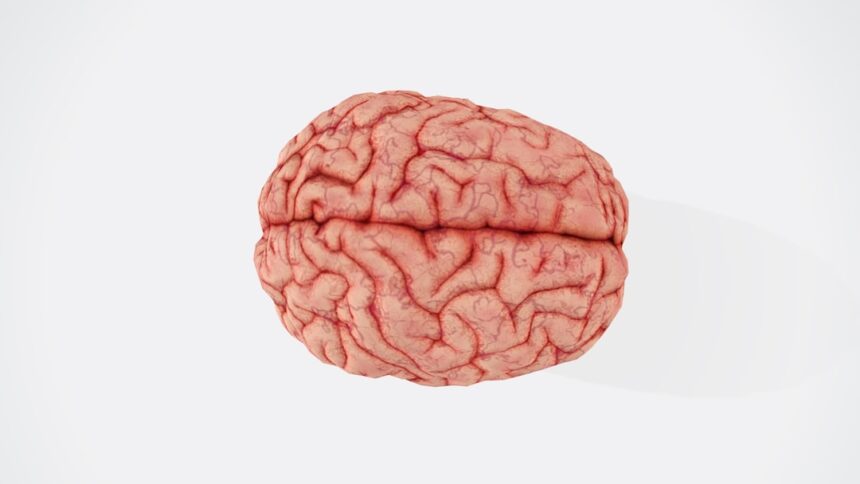
Illustration of B vitamins supporting brain metabolism, energy production, and neurotransmitter synthesis
B vitamins regulate homocysteine, fuel mitochondrial energy production, and synthesize mood-regulating neurotransmitters—three mechanisms critical for cognitive protection. Evidence shows that deficiencies in B6, B12, and folate accelerate brain atrophy and cognitive decline, with symptoms often reversible through supplementation. — Photo by BUDDHI Kumar SHRESTHA on Unsplash (Unsplash License)
SHARE
1 min read|139 words

A striking metabolic reality confronts medical science: the human brain consumes one-fifth of the body’s total ATP energy production despite occupying only 2% of body weight. This disproportionate energy demand creates a vulnerability—when B vitamin status declines, cognitive function deteriorates rapidly.

Clinical evidence reveals that deficiencies in B1 (thiamine) and B2 (riboflavin) directly impair mitochondrial ATP production, the biochemical fuel underlying all neural activity. The consequences manifest as reversible cognitive fog, persistent fatigue, and measurable memory problems that resolve upon adequate nutrient repletion. This relationship explains why older adults and individuals with malabsorption disorders show accelerated cognitive decline when B vitamin status drops below optimal thresholds.

Neurochemical research indicates that 88% of brain energy metabolism depends on B vitamin cofactors, making micronutrient sufficiency non-negotiable for sustained cognitive performance and neuroprotection throughout the lifespan.

Read the full article on GMJ Newsroom.

Submit Your Paper
GMJ_Submit_Banner

Was this article helpful?

GMJ Brief · Key Finding

📰 Read the full article: How B Vitamins and Micronutrients Protect Brain Function: Evidence from Neuroscience →

Related reference
  • Riboflavin · Ingredient
  • Vitamin C · Ingredient
  • Thiamine · Ingredient
  • Thiamin · Ingredient
Share This Article
Facebook LinkedIn Bluesky Copy Link Print
GMJ
ByProf. Giorgi Pkhakadze
Follow:
Prof. Giorgi Pkhakadze, MD, MPH, PhD, is Editor-in-Chief of the Georgian Medical Journal and Chair of the Public Health Institute of Georgia (PHIG). He is Professor and Head of the Department of Social and Behavioural Sciences at David Tvildiani Medical University, and Secretary/Treasurer of the UEMS Section of Public Health. ORCID: 0000-0001-7609-4515.

Submit Your Paper →

Georgia's peer-reviewed open-access medical journal. No APC until January 2027.
Submit Manuscript →
Burundi’s first quarter 2026: refugees access care as WHO strengthens health partnerships

WHO's first-quarter 2026 report documents that over 65,000 Congolese refugees in Burundi…

Danish Medicines Agency Launches Cell Therapy Clinical Trial Template

The Danish Medicines Agency has released a standardized Investigator's Brochure template for…

UK’s MHRA Launches Innovation Guidance to Accelerate Medical Device and Drug Development

The UK's MHRA has published formal guidance for drug and medical device…

Submit Your Paper to GMJ

No APC until January 2027.
Submit Manuscript →

You Might Also Like

Healthcare policy document showing Medicaid work requirements implementation timeline

What Medicaid Beneficiaries and States Need to Know About Work Requirements

By
Prof. Giorgi Pkhakadze
30/07/2026
Brain energy consumption chart showing metabolic demands across different age groups

Three Essential Insights Into Brain Nutrition and Cognitive Protection

By
Prof. Giorgi Pkhakadze
27/06/2026
Sunscreen ingredient approval timeline showing 25-year gap between FDA approvals

FDA Breaks 25-Year Drought: Bemotrizinol Approval Reshapes US Sunscreen Market

By
Prof. Giorgi Pkhakadze
19/07/2026
Medical AI algorithm interface showing sepsis prediction with temporal data warning

Temporal Data Leakage Affects Multiple Sepsis AI Algorithms, Study Finds

By
Prof. Giorgi Pkhakadze
20/07/2026
Facebook Twitter Youtube Instagram
Company
  • Privacy Policy
  • Contact US
  • GMJ Journal
  • Submit Manuscript
  • Editorial Team
  • Register at GMJ
  • Terms of Use

Subscribe to GMJ News — Click here

Join Community
© 2026 Georgian Medical Journal (GMJ). Published by the Public Health Institute of Georgia (PHIG). All rights reserved.
Welcome Back!

Sign in to your account

Username or Email Address
Password

Lost your password?

Not a member? Sign Up