By using this site, you agree to the Privacy Policy and Terms of Use.
Accept
GMJ NewsGMJ NewsGMJ News
  • Latest News
    • GMJ Briefs
  • Podcast & Media
    • Podcast Episodes
    • GMJ Audio
    • GMJ Videos
  • Research Digest
    • New Studies
    • Georgian Research
    • Data & Numbers
  • Policy & Systems
    • Health Policy
    • Quality & Safety
    • Migration & Health
    • Global Health
  • Practice
    • Clinical Updates
    • Case Discussions
    • Pharmacy & Prescribing
    • Ingredients A-Z
  • Perspectives
    • Editorial
    • Explainers
    • Voices
    • Letters
  • GMJ Articles
    • Vol. 1 Issue 2 (2026)
    • Vol. 1 Issue 1 (2026)
    • Pre-Launch Articles (2025)
  • Read the Journal →
  • About GMJ News
Notification Show More
Font ResizerAa
GMJ NewsGMJ News
Font ResizerAa
  • Latest News
    • GMJ Briefs
  • Podcast & Media
    • Podcast Episodes
    • GMJ Audio
    • GMJ Videos
  • Research Digest
    • New Studies
    • Georgian Research
    • Data & Numbers
  • Policy & Systems
    • Health Policy
    • Quality & Safety
    • Migration & Health
    • Global Health
  • Practice
    • Clinical Updates
    • Case Discussions
    • Pharmacy & Prescribing
    • Ingredients A-Z
  • Perspectives
    • Editorial
    • Explainers
    • Voices
    • Letters
  • GMJ Articles
    • Vol. 1 Issue 2 (2026)
    • Vol. 1 Issue 1 (2026)
    • Pre-Launch Articles (2025)
  • Read the Journal →
  • About GMJ News
Follow US
GMJ News > GMJ Briefs > Three Essential Insights Into Brain Nutrition and Cognitive Protection

Three Essential Insights Into Brain Nutrition and Cognitive Protection

GMJ
Last updated: 27/06/2026 12:11
By
Prof. Giorgi Pkhakadze
Share
1 Min Read
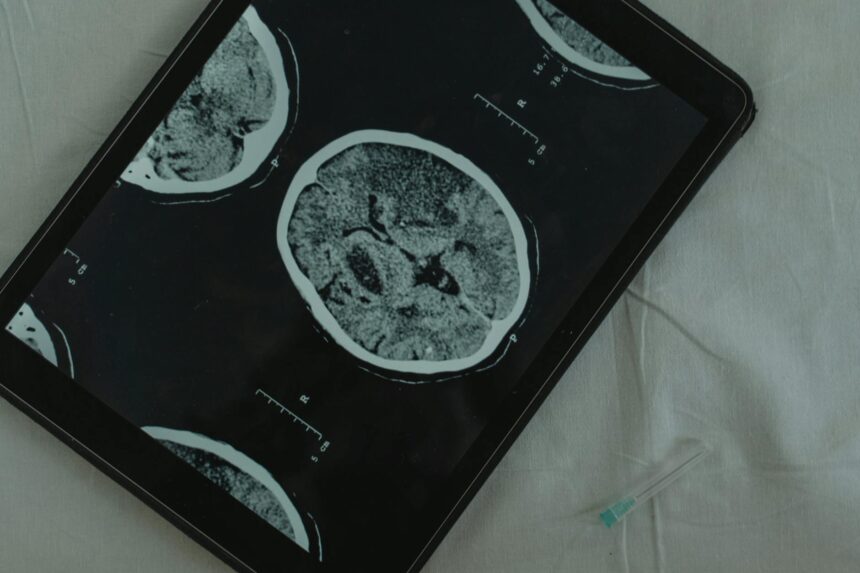
Brain energy consumption chart showing metabolic demands across different age groups
New research reveals the brain consumes 20% of total body energy in adults, rising to 50% during childhood development. This extraordinary metabolic demand requires optimal micronutrient availability for cognitive function. — Photo: Tima Miroshnichenko / Pexels
SHARE
1 min read|132 words

Understanding brain energy metabolism reveals three critical facts for maintaining cognitive health. First, brain energy consumption peaks at 50% during childhood development around age 10, establishing that early nutrition fundamentally shapes neural development. Second, B-vitamin deficiencies directly impair cognitive function and energy metabolism, meaning that micronutrient gaps quickly manifest as mental fatigue and reduced mental clarity.

Third—and most actionable—folate and B12 supplementation demonstrates measurable cognitive protection in aging adults. Clinical studies show that supplementing these vitamins in older adults with elevated homocysteine levels significantly slows brain atrophy and improves memory performance. This evidence-based approach represents one of the most effective interventions for cognitive preservation during aging.

These findings emphasize that targeted micronutrient support, particularly B vitamins, offers practical protection for brain health across the lifespan.

Read the full article on GMJ Newsroom.

Submit Your Paper
GMJ_Submit_Banner

Was this article helpful?

GMJ Brief · Takeaway

📰 Read the full article: Brain Consumes 20% of Body’s Energy, Requires Key Micronutrients for Optimal Function →

Related reference
  • Vitamin D · Ingredient
  • Folate · Ingredient
Share This Article
Facebook LinkedIn Bluesky Copy Link Print
GMJ
ByProf. Giorgi Pkhakadze
Follow:
Prof. Giorgi Pkhakadze, MD, MPH, PhD, is Editor-in-Chief of the Georgian Medical Journal and Chair of the Public Health Institute of Georgia (PHIG). He is Professor and Head of the Department of Social and Behavioural Sciences at David Tvildiani Medical University, and Secretary/Treasurer of the UEMS Section of Public Health. ORCID: 0000-0001-7609-4515.

Submit Your Paper →

Georgia's peer-reviewed open-access medical journal. No APC until January 2027.
Submit Manuscript →
Nearly half of Americans now cost-insecure for healthcare, hitting 5-year low

A new West Health-Gallup Center survey finds that just 49% of Americans…

Life-threatening skin infection: what clinicians need to know about necrotising fasciitis

Necrotising fasciitis, a rapidly progressive soft tissue infection, kills approximately 25% of…

Can Humans Grow a Third Set of Adult Teeth? What the Evidence Actually Shows

Humans naturally develop only two sets of teeth—primary and permanent—due to genetic…

Submit Your Paper to GMJ

No APC until January 2027.
Submit Manuscript →

You Might Also Like

Healthcare policy document showing Medicaid work requirements implementation timeline

CMS Finalizes Medicaid Work Requirements Affecting Millions of Americans

By
Prof. Giorgi Pkhakadze
07/07/2026
Abstract visualization of AI assisting with scientific research and data analysis

Validation Crisis: Why Researchers Distrust AI Co-Scientist Tools

By
Prof. Giorgi Pkhakadze
10/06/2026
Microscopic image showing damaged brain tissue from anti-aging drug treatment in laboratory mice

Study Reveals Unexpected Severity of Brain Damage from Anti-Aging Drug Combination

By
Prof. Giorgi Pkhakadze
12/06/2026
Infographic showing PCOS prevalence rates across different global regions with medical terminology discussion

Misleading PCOS Name Contributes to 2.3-Year Diagnostic Delays, Research Shows

By
Prof. Giorgi Pkhakadze
23/06/2026
Facebook Twitter Youtube Instagram
Company
  • Privacy Policy
  • Contact US
  • GMJ Journal
  • Submit Manuscript
  • Editorial Team
  • Register at GMJ
  • Terms of Use

Subscribe to GMJ News — Click here

Join Community
© 2026 Georgian Medical Journal (GMJ). Published by the Public Health Institute of Georgia (PHIG). All rights reserved.
Welcome Back!

Sign in to your account

Username or Email Address
Password

Lost your password?

Not a member? Sign Up