By using this site, you agree to the Privacy Policy and Terms of Use.
Accept
GMJ NewsGMJ NewsGMJ News
  • Latest News
    • GMJ Briefs
  • Podcast & Media
    • Podcast Episodes
    • GMJ Audio
    • GMJ Videos
  • Research Digest
    • New Studies
    • Georgian Research
    • Data & Numbers
  • Policy & Systems
    • Health Policy
    • Quality & Safety
    • Migration & Health
    • Global Health
  • Practice
    • Clinical Updates
    • Case Discussions
    • Pharmacy & Prescribing
    • Ingredients A-Z
  • Perspectives
    • Editorial
    • Explainers
    • Voices
    • Letters
  • GMJ Articles
    • Vol. 1 Issue 2 (2026)
    • Vol. 1 Issue 1 (2026)
    • Pre-Launch Articles (2025)
  • Read the Journal →
  • About GMJ News
Notification Show More
Font ResizerAa
GMJ NewsGMJ News
Font ResizerAa
  • Latest News
    • GMJ Briefs
  • Podcast & Media
    • Podcast Episodes
    • GMJ Audio
    • GMJ Videos
  • Research Digest
    • New Studies
    • Georgian Research
    • Data & Numbers
  • Policy & Systems
    • Health Policy
    • Quality & Safety
    • Migration & Health
    • Global Health
  • Practice
    • Clinical Updates
    • Case Discussions
    • Pharmacy & Prescribing
    • Ingredients A-Z
  • Perspectives
    • Editorial
    • Explainers
    • Voices
    • Letters
  • GMJ Articles
    • Vol. 1 Issue 2 (2026)
    • Vol. 1 Issue 1 (2026)
    • Pre-Launch Articles (2025)
  • Read the Journal →
  • About GMJ News
Follow US
GMJ News > GMJ Briefs > Breaking the Silence: How Cultural Stigma Delays Autism Care in South Asian American Families

Breaking the Silence: How Cultural Stigma Delays Autism Care in South Asian American Families

GMJ
Last updated: 09/07/2026 18:43
By
Prof. Giorgi Pkhakadze
Share
1 Min Read
Healthcare provider counseling diverse family about autism support services
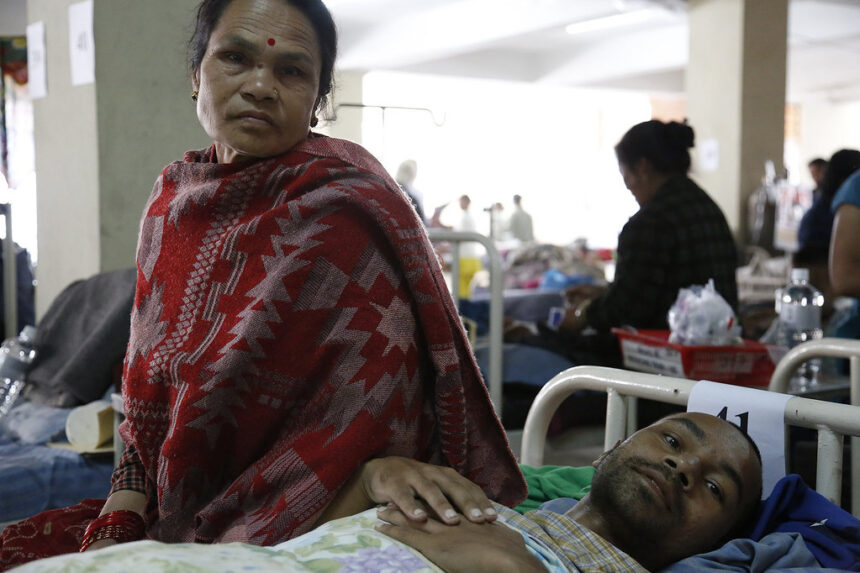
Cultural stigma in South Asian American families creates unique barriers to autism care access. Psychiatrist highlights how family crisis responses can delay necessary interventions. — "British medics help earthquake-hit hospital in Kathmandu, Nepal" by DFID - UK Department for International Development is licensed under CC BY 2.0. To view a copy of this license, visit https://creativecommons.org/licenses/by/2.0/. (CC BY 2.0)
SHARE
1 min read|135 words

Child and adolescent psychiatrist Dr. Ritu Goel warns that cultural stigma surrounding autism diagnoses creates significant barriers to care for South Asian American families. In many South Asian households, autism diagnoses trigger what Goel describes as a family crisis, driven by cultural expectations around family reputation and child achievement. This stigma often leads families to keep diagnoses secret, isolating children from critical therapeutic interventions during crucial developmental windows. The tendency to maintain confidentiality compounds access challenges, as children may miss early intervention opportunities that could significantly improve outcomes. Healthcare providers are urged to adopt culturally sensitive approaches that acknowledge these unique pressures while emphasizing the importance of timely diagnosis and treatment. Understanding these cultural dynamics is essential for delivering equitable care to all children with autism spectrum disorder. Read the full article on GMJ Newsroom.

Was this article helpful?

GMJ Brief · Announcement

📰 Read the full article: Autism Stigma in South Asian American Families Creates Barriers to Care, Psychiatrist Warns →

Share This Article
Facebook LinkedIn Bluesky Copy Link Print
GMJ
ByProf. Giorgi Pkhakadze
Follow:
Prof. Giorgi Pkhakadze, MD, MPH, PhD, is Editor-in-Chief of the Georgian Medical Journal and Chair of the Public Health Institute of Georgia (PHIG). He is Professor and Head of the Department of Social and Behavioural Sciences at David Tvildiani Medical University, and Secretary/Treasurer of the UEMS Section of Public Health. ORCID: 0000-0001-7609-4515.

Submit Your Paper →

Georgia's peer-reviewed open-access medical journal. No APC until January 2027.
Submit Manuscript →
South Asian climate-health research faces representation gap: who funds and controls the knowledge?

South Asia faces severe climate-health impacts yet remains underrepresented in global research…

Amyloid Beta’s Role in Tau Disruption May Explain Alzheimer’s Pathogenesis, Study Suggests

New research suggests amyloid beta triggers Alzheimer's disease by disrupting tau protein…

Mammals May Possess Hidden Regenerative Capacity: Scientists Redirect Healing Toward Tissue Regrowth Instead of Scarring

Scientists have demonstrated that mammals may retain dormant regenerative abilities through a…

Submit Your Paper to GMJ

No APC until January 2027.
Submit Manuscript →

You Might Also Like

Ebola Outbreak in DRC Poses Larger Threat Than Confirmed Cases, Africa CDC Warns

By
Prof. Giorgi Pkhakadze
20/06/2026
Medical illustration of enhanced deep brain stimulation electrode configuration

Swiss Team Advances Noninvasive Brain Stimulation Without Surgery

By
Prof. Giorgi Pkhakadze
06/07/2026
Global HealthNew StudiesPolicy & SystemsResearch Digest

Single Brazilian Introduction Seeded Cuba’s 2024 Oropouche Outbreak, Genome Analysis Reveals

By
Prof. Giorgi Pkhakadze
08/07/2026

Canada Signals Major Post-Pandemic Shift in Pediatric Influenza Cases

By
Prof. Giorgi Pkhakadze
22/06/2026
Facebook Twitter Youtube Instagram
Company
  • Privacy Policy
  • Contact US
  • GMJ Journal
  • Submit Manuscript
  • Editorial Team
  • Register at GMJ
  • Terms of Use

Subscribe to GMJ News — Click here

Join Community
© 2026 Georgian Medical Journal (GMJ). Published by the Public Health Institute of Georgia (PHIG). All rights reserved.
Welcome Back!

Sign in to your account

Username or Email Address
Password

Lost your password?

Not a member? Sign Up