By using this site, you agree to the Privacy Policy and Terms of Use.
Accept
GMJ NewsGMJ NewsGMJ News
  • Latest News
    • GMJ Briefs
  • Podcast & Media
    • Podcast Episodes
    • GMJ Audio
    • GMJ Videos
  • Research Digest
    • New Studies
    • Georgian Research
    • Data & Numbers
  • Policy & Systems
    • Health Policy
    • Quality & Safety
    • Migration & Health
    • Global Health
  • Practice
    • Clinical Updates
    • Case Discussions
    • Pharmacy & Prescribing
    • Ingredients A-Z
  • Perspectives
    • Editorial
    • Explainers
    • Voices
    • Letters
  • GMJ Articles
    • Vol. 1 Issue 2 (2026)
    • Vol. 1 Issue 1 (2026)
    • Pre-Launch Articles (2025)
  • Read the Journal →
  • About GMJ News
Notification Show More
Font ResizerAa
GMJ NewsGMJ News
Font ResizerAa
  • Latest News
    • GMJ Briefs
  • Podcast & Media
    • Podcast Episodes
    • GMJ Audio
    • GMJ Videos
  • Research Digest
    • New Studies
    • Georgian Research
    • Data & Numbers
  • Policy & Systems
    • Health Policy
    • Quality & Safety
    • Migration & Health
    • Global Health
  • Practice
    • Clinical Updates
    • Case Discussions
    • Pharmacy & Prescribing
    • Ingredients A-Z
  • Perspectives
    • Editorial
    • Explainers
    • Voices
    • Letters
  • GMJ Articles
    • Vol. 1 Issue 2 (2026)
    • Vol. 1 Issue 1 (2026)
    • Pre-Launch Articles (2025)
  • Read the Journal →
  • About GMJ News
Follow US
GMJ News > GMJ Briefs > Chokeberry Delivers 5× More Polyphenols Than Strawberry, Journal of Nutrition Study Reveals

Chokeberry Delivers 5× More Polyphenols Than Strawberry, Journal of Nutrition Study Reveals

GMJ
Last updated: 05/08/2026 05:30
By
Prof. Giorgi Pkhakadze
Share
1 Min Read
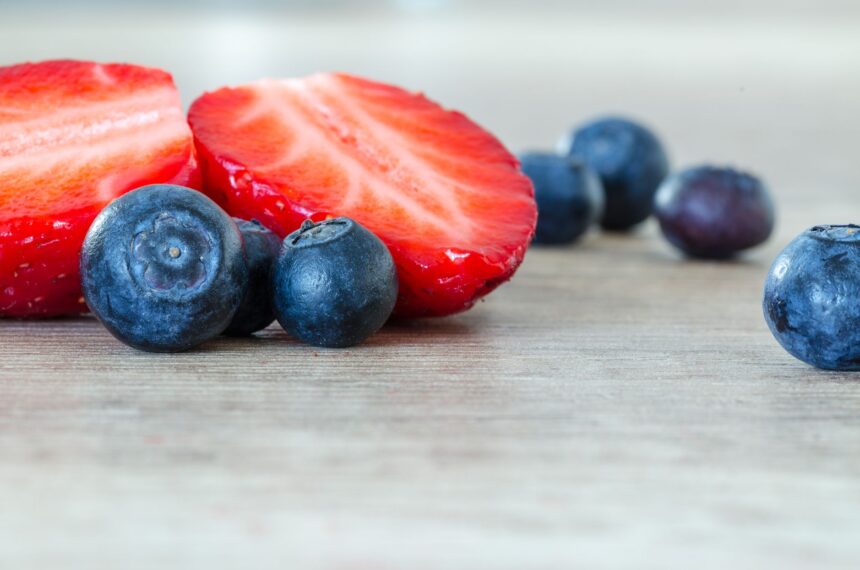
Bar chart showing polyphenol content across berries and plant foods, from chokeberry at 1,500+ mg to strawberry at 270 mg per 100g fresh weight
Polyphenol content in berries varies more than fivefold, with chokeberry and cocoa powder delivering over 1,500 mg per 100g fresh weight compared to strawberry's 270 mg. Selecting high-polyphenol sources meaningfully increases dietary bioactive intake without supplementation. — Photo by Lukas Blazek on Pexels (Pexels License)
SHARE
1 min read|114 words

A comprehensive dietary analysis published in the Journal of Nutrition demonstrates striking variation in polyphenol concentration across commonly consumed berries and plant foods. Chokeberry stands at the top of the hierarchy with 1,500+ mg per 100 grams of fresh weight—more than five times the polyphenol content of strawberries at 270 mg per 100 grams.

Cocoa powder ranks equally high at 1,480 mg/100g, followed by bilberry (900 mg/100g) and black currant (825 mg/100g). These variations reflect differences in subclass composition, including anthocyanidins, proanthocyanidins, and ellagitannins.

The clinical significance lies in practical application: consuming 100 grams of high-polyphenol berries delivers bioactive compound levels comparable to dietary supplement doses, offering consumers a food-based strategy to optimize polyphenol intake without pharmaceutical intervention.

Was this article helpful?

GMJ Brief · Key Finding

📰 Read the full article: Polyphenol Content Varies Tenfold Across Berries and Foods — What the Science Shows →

Related reference
  • Bilberry · Ingredient
Share This Article
Facebook LinkedIn Bluesky Copy Link Print
GMJ
ByProf. Giorgi Pkhakadze
Follow:
Prof. Giorgi Pkhakadze, MD, MPH, PhD, is Editor-in-Chief of the Georgian Medical Journal and Chair of the Public Health Institute of Georgia (PHIG). He is Professor and Head of the Department of Social and Behavioural Sciences at David Tvildiani Medical University, and Secretary/Treasurer of the UEMS Section of Public Health. ORCID: 0000-0001-7609-4515.

Submit Your Paper →

Georgia's peer-reviewed open-access medical journal. No APC until January 2027.
Submit Manuscript →
Purple Urine Bag Syndrome: A Rare but Treatable Condition in Long-Term Care

Purple urine bag syndrome is a rare but benign condition affecting catheterised…

Cancer Survivors in Their Teens and Twenties Face Unique Long-Term Health Risks

Adolescents and young adults surviving cancer face distinct long-term complications and psychosocial…

Indiana Enacts Hospital Price Caps as States Challenge Healthcare Cost Growth

Indiana has enacted direct price caps on hospital charges to employers, becoming…

Submit Your Paper to GMJ

No APC until January 2027.
Submit Manuscript →

You Might Also Like

PHEIC Declaration: Ebola Cross-Border Transmission DRC-Uganda

By
Prof. Giorgi Pkhakadze
31/05/2026
Illustration comparing visceral and subcutaneous fat distribution and their effects on brain volume

Announcement: Brain preservation depends on where you store fat, not how much you weigh

By
Prof. Giorgi Pkhakadze
27/07/2026
Medical professionals reviewing pregnancy vaccination guidelines and recommendations

Historic First: ACOG Releases Independent Pregnancy Immunization Guidelines

By
Prof. Giorgi Pkhakadze
10/07/2026
WOAH animal health status recognition programme milestone infographic

What WOAH’s 30-Year Milestone Means for Global Health Security and Trade

By
Prof. Giorgi Pkhakadze
23/07/2026
Facebook Twitter Youtube Instagram
Company
  • Privacy Policy
  • Contact US
  • GMJ Journal
  • Submit Manuscript
  • Editorial Team
  • Register at GMJ
  • Terms of Use

Subscribe to GMJ News — Click here

Join Community
© 2026 Georgian Medical Journal (GMJ). Published by the Public Health Institute of Georgia (PHIG). All rights reserved.
Welcome Back!

Sign in to your account

Username or Email Address
Password

Lost your password?

Not a member? Sign Up