By using this site, you agree to the Privacy Policy and Terms of Use.
Accept
GMJ NewsGMJ NewsGMJ News
  • Latest News
    • GMJ Briefs
  • Podcast & Media
    • Podcast Episodes
    • GMJ Audio
    • GMJ Videos
  • Research Digest
    • New Studies
    • Georgian Research
    • Data & Numbers
  • Policy & Systems
    • Health Policy
    • Quality & Safety
    • Migration & Health
    • Global Health
  • Practice
    • Clinical Updates
    • Case Discussions
    • Pharmacy & Prescribing
    • Ingredients A-Z
  • Perspectives
    • Editorial
    • Explainers
    • Voices
    • Letters
  • GMJ Articles
    • Vol. 1 Issue 2 (2026)
    • Vol. 1 Issue 1 (2026)
    • Pre-Launch Articles (2025)
  • Read the Journal →
  • About GMJ News
Notification Show More
Font ResizerAa
GMJ NewsGMJ News
Font ResizerAa
  • Latest News
    • GMJ Briefs
  • Podcast & Media
    • Podcast Episodes
    • GMJ Audio
    • GMJ Videos
  • Research Digest
    • New Studies
    • Georgian Research
    • Data & Numbers
  • Policy & Systems
    • Health Policy
    • Quality & Safety
    • Migration & Health
    • Global Health
  • Practice
    • Clinical Updates
    • Case Discussions
    • Pharmacy & Prescribing
    • Ingredients A-Z
  • Perspectives
    • Editorial
    • Explainers
    • Voices
    • Letters
  • GMJ Articles
    • Vol. 1 Issue 2 (2026)
    • Vol. 1 Issue 1 (2026)
    • Pre-Launch Articles (2025)
  • Read the Journal →
  • About GMJ News
Follow US
GMJ News > GMJ Briefs > Clinicians Document Rising Link Between Parental Phone Distraction and Adolescent Attachment Issues

Clinicians Document Rising Link Between Parental Phone Distraction and Adolescent Attachment Issues

GMJ
Last updated: 25/07/2026 22:52
By
Prof. Giorgi Pkhakadze
Share
1 Min Read
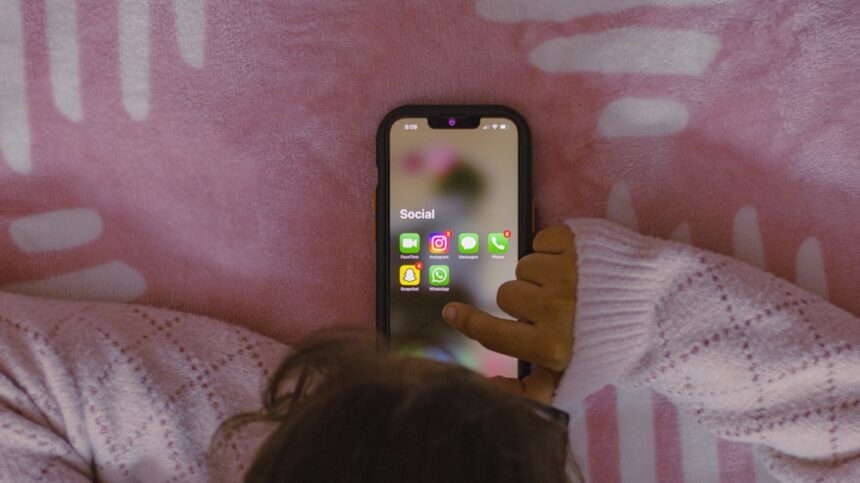
Parent distracted by phone while teenager sits nearby, illustrating parental screen time impact on adolescent attachment
New research on digital mental health documents that teenagers whose parents are frequently distracted by mobile devices show increased rates of insecure attachment styles, with potential long-term implications for mental and physical health. — Photo by Sanket Mishra on Unsplash (Unsplash License)
SHARE
1 min read|108 words

Clinical observation preceded formal investigation: healthcare providers are increasingly reporting teenagers who struggle with parental phone distraction during critical developmental years. New research now validates these clinical concerns, confirming a correlation between caregiver device use and insecure attachment patterns in adolescents.

The data underscore an important public health gap. While attachment security in adolescence is a known predictor of resilience and mental health outcomes in adulthood, the role of parental screen distraction in undermining attachment security has only recently received systematic study. This evidence suggests that caregivers’ digital habits represent a measurable developmental factor worthy of clinical assessment and family intervention.

Read the full article on GMJ Newsroom.

Was this article helpful?

GMJ Brief · Key Finding

📰 Read the full article: Parental Phone Distraction Linked to Insecure Attachment in Teenagers, New Research Shows →

Share This Article
Facebook LinkedIn Bluesky Copy Link Print
GMJ
ByProf. Giorgi Pkhakadze
Follow:
Prof. Giorgi Pkhakadze, MD, MPH, PhD, is Editor-in-Chief of the Georgian Medical Journal and Chair of the Public Health Institute of Georgia (PHIG). He is Professor and Head of the Department of Social and Behavioural Sciences at David Tvildiani Medical University, and Secretary/Treasurer of the UEMS Section of Public Health. ORCID: 0000-0001-7609-4515.

Submit Your Paper →

Georgia's peer-reviewed open-access medical journal. No APC until January 2027.
Submit Manuscript →
How Plants Send Electrical Distress Signals After Injury—Using the Same Molecule as Human Nerves

Plants deploy a glutamate-mediated calcium signaling system to detect injury and coordinate…

Vitamin D Deficiency Links to Multiple Chronic Diseases, New Review Shows

A comprehensive review in Nutrients documents how vitamin D deficiency impairs immune…

How B Vitamins and Micronutrients Power the Brain’s Energy System

The brain consumes 20% of adult body energy—up to 50% in children—demanding…

Submit Your Paper to GMJ

No APC until January 2027.
Submit Manuscript →

You Might Also Like

PHEIC Declaration for Cross-Border Ebola Transmission: DRC-Uganda

By
Prof. Giorgi Pkhakadze
31/05/2026
Diagram showing gut-brain circadian communication pathways

Microbial Messengers: How Gut Bacteria Control Your Sleep and Metabolism

By
Prof. Giorgi Pkhakadze
03/06/2026
International survey on cardio-oncology training presented at ESC Cardio-Oncology 2026 conference

ESC Survey Exposes Urgent Need for Standardised Cardio-Oncology Education Across Europe

By
Prof. Giorgi Pkhakadze
21/07/2026
Medical professional handling blood collection equipment in clinical setting

WHO Report Exposes Critical Blood Safety Divide Between Rich and Poor Nations

By
Prof. Giorgi Pkhakadze
04/07/2026
Facebook Twitter Youtube Instagram
Company
  • Privacy Policy
  • Contact US
  • GMJ Journal
  • Submit Manuscript
  • Editorial Team
  • Register at GMJ
  • Terms of Use

Subscribe to GMJ News — Click here

Join Community
© 2026 Georgian Medical Journal (GMJ). Published by the Public Health Institute of Georgia (PHIG). All rights reserved.
Welcome Back!

Sign in to your account

Username or Email Address
Password

Lost your password?

Not a member? Sign Up