By using this site, you agree to the Privacy Policy and Terms of Use.
Accept
GMJ NewsGMJ NewsGMJ News
  • Latest News
    • GMJ Briefs
  • Podcast & Media
    • Podcast Episodes
    • GMJ Audio
    • GMJ Videos
  • Research Digest
    • New Studies
    • Georgian Research
    • Data & Numbers
  • Policy & Systems
    • Health Policy
    • Quality & Safety
    • Migration & Health
    • Global Health
  • Practice
    • Clinical Updates
    • Case Discussions
    • Pharmacy & Prescribing
    • Ingredients A-Z
  • Perspectives
    • Editorial
    • Explainers
    • Voices
    • Letters
  • GMJ Articles
    • Vol. 1 Issue 2 (2026)
    • Vol. 1 Issue 1 (2026)
    • Pre-Launch Articles (2025)
  • Read the Journal →
  • About GMJ News
Notification Show More
Font ResizerAa
GMJ NewsGMJ News
Font ResizerAa
  • Latest News
    • GMJ Briefs
  • Podcast & Media
    • Podcast Episodes
    • GMJ Audio
    • GMJ Videos
  • Research Digest
    • New Studies
    • Georgian Research
    • Data & Numbers
  • Policy & Systems
    • Health Policy
    • Quality & Safety
    • Migration & Health
    • Global Health
  • Practice
    • Clinical Updates
    • Case Discussions
    • Pharmacy & Prescribing
    • Ingredients A-Z
  • Perspectives
    • Editorial
    • Explainers
    • Voices
    • Letters
  • GMJ Articles
    • Vol. 1 Issue 2 (2026)
    • Vol. 1 Issue 1 (2026)
    • Pre-Launch Articles (2025)
  • Read the Journal →
  • About GMJ News
Follow US
GMJ News > GMJ Briefs > Complete Anxiety Reversal Achieved Through Amygdala Circuit Restoration

Complete Anxiety Reversal Achieved Through Amygdala Circuit Restoration

GMJ
Last updated: 22/06/2026 04:17
By
Prof. Giorgi Pkhakadze
Share
1 Min Read
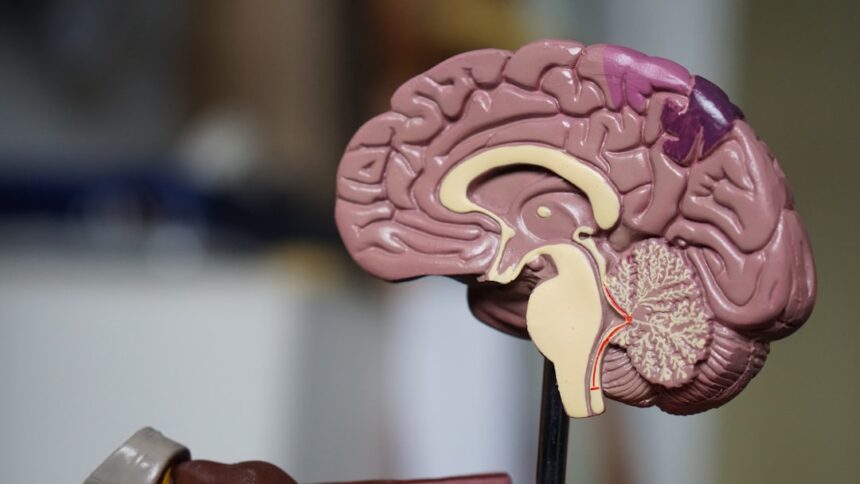
Scientific illustration of amygdala brain circuits involved in anxiety processing
Researchers successfully reversed anxiety in mice by targeting a specific group of amygdala neurons. The breakthrough identifies a promising new target for developing more precise anxiety treatments. — Photo: Robina Weermeijer / Pexels
SHARE
1 min read|132 words

A landmark experimental study demonstrates that complete reversal of anxiety and social deficits can be achieved by restoring normal neural activity in a specific population of amygdala neurons. Researchers utilized advanced neuroscience techniques to characterize this previously unknown neuronal group and its critical role in emotional regulation.

When these neurons functioned abnormally, laboratory mice exhibited classic anxiety behaviors and social withdrawal. Upon restoration of normal circuit activity, anxiety symptoms completely resolved, providing compelling evidence that this neural mechanism represents a key control point for anxiety responses.

This circuit-based finding could revolutionize therapeutic approaches to anxiety disorders, moving toward interventions that target specific neural mechanisms rather than broad neurochemical systems. The precision of this approach suggests potential for improved efficacy and tolerability in future anxiety treatments. Read the full article on GMJ Newsroom.

Was this article helpful?

GMJ Brief · Key Finding

📰 Read the full article: Scientists Reverse Anxiety in Mice by Targeting Tiny Amygdala Circuit →

Share This Article
Facebook LinkedIn Bluesky Copy Link Print
GMJ
ByProf. Giorgi Pkhakadze
Follow:
Prof. Giorgi Pkhakadze, MD, MPH, PhD, is Editor-in-Chief of the Georgian Medical Journal and Chair of the Public Health Institute of Georgia (PHIG). He is Professor and Head of the Department of Social and Behavioural Sciences at David Tvildiani Medical University, and Secretary/Treasurer of the UEMS Section of Public Health. ORCID: 0000-0001-7609-4515.

Submit Your Paper →

Georgia's peer-reviewed open-access medical journal. No APC until January 2027.
Submit Manuscript →
Can Biomarker Testing Reduce Unnecessary Antibiotics in Primary Care?

Biomarker-guided testing could reduce unnecessary antibiotic prescribing in primary care, particularly for…

South Asian climate-health research faces representation gap: who funds and controls the knowledge?

South Asia faces severe climate-health impacts yet remains underrepresented in global research…

Amyloid Beta’s Role in Tau Disruption May Explain Alzheimer’s Pathogenesis, Study Suggests

New research suggests amyloid beta triggers Alzheimer's disease by disrupting tau protein…

Submit Your Paper to GMJ

No APC until January 2027.
Submit Manuscript →

You Might Also Like

Medical laboratory technician analyzing blood samples for multi-cancer early detection testing

Multi-Cancer Blood Tests Emerge as Game-Changer for Symptomatic Patient Diagnosis

By
Prof. Giorgi Pkhakadze
19/06/2026
Medical researcher holding vaccine vial in laboratory setting

Dual-Action Vaccine Offers New Hope Against Lassa Fever in West Africa

By
Prof. Giorgi Pkhakadze
01/07/2026
Scientific illustration showing GPNMB protein interaction between brain cells in Parkinson's disease research

How One Protein Drives Parkinson’s Disease Spread Between Brain Cells

By
Prof. Giorgi Pkhakadze
28/06/2026
Medical illustration of spinal cord stimulation device for stroke rehabilitation therapy

New Frontier in Stroke Recovery: Electrical Stimulation Extends Healing Beyond Traditional Limits

By
Prof. Giorgi Pkhakadze
18/06/2026
Facebook Twitter Youtube Instagram
Company
  • Privacy Policy
  • Contact US
  • GMJ Journal
  • Submit Manuscript
  • Editorial Team
  • Register at GMJ
  • Terms of Use

Subscribe to GMJ News — Click here

Join Community
© 2026 Georgian Medical Journal (GMJ). Published by the Public Health Institute of Georgia (PHIG). All rights reserved.
Welcome Back!

Sign in to your account

Username or Email Address
Password

Lost your password?

Not a member? Sign Up