By using this site, you agree to the Privacy Policy and Terms of Use.
Accept
GMJ NewsGMJ NewsGMJ News
  • Latest News
    • GMJ Briefs
  • Podcast & Media
    • Podcast Episodes
    • GMJ Audio
    • GMJ Videos
  • Research Digest
    • New Studies
    • Georgian Research
    • Data & Numbers
  • Policy & Systems
    • Health Policy
    • Quality & Safety
    • Migration & Health
    • Global Health
  • Practice
    • Clinical Updates
    • Case Discussions
    • Pharmacy & Prescribing
    • Ingredients A-Z
  • Perspectives
    • Editorial
    • Explainers
    • Voices
    • Letters
  • GMJ Articles
    • Vol. 1 Issue 2 (2026)
    • Vol. 1 Issue 1 (2026)
    • Pre-Launch Articles (2025)
  • Read the Journal →
  • About GMJ News
Notification Show More
Font ResizerAa
GMJ NewsGMJ News
Font ResizerAa
  • Latest News
    • GMJ Briefs
  • Podcast & Media
    • Podcast Episodes
    • GMJ Audio
    • GMJ Videos
  • Research Digest
    • New Studies
    • Georgian Research
    • Data & Numbers
  • Policy & Systems
    • Health Policy
    • Quality & Safety
    • Migration & Health
    • Global Health
  • Practice
    • Clinical Updates
    • Case Discussions
    • Pharmacy & Prescribing
    • Ingredients A-Z
  • Perspectives
    • Editorial
    • Explainers
    • Voices
    • Letters
  • GMJ Articles
    • Vol. 1 Issue 2 (2026)
    • Vol. 1 Issue 1 (2026)
    • Pre-Launch Articles (2025)
  • Read the Journal →
  • About GMJ News
Follow US
GMJ News > GMJ Briefs > Data Disparity: Severely Ill Infants Receive Care Half as Often as Mildly Sick Peers

Data Disparity: Severely Ill Infants Receive Care Half as Often as Mildly Sick Peers

GMJ
Last updated: 07/06/2026 17:47
By
Prof. Giorgi Pkhakadze
Share
1 Min Read
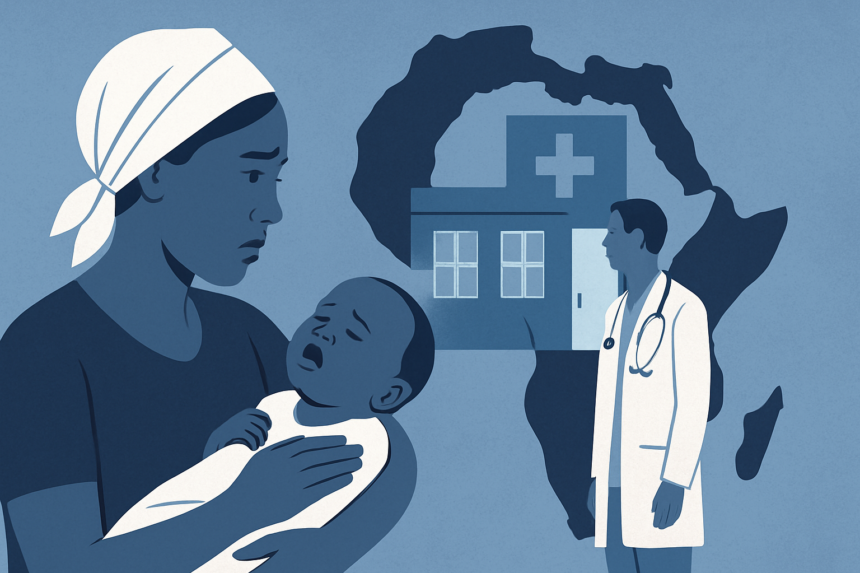
Healthcare worker examining infant in African clinic setting
New research reveals parents seek medical care for severely ill infants only 8.4%-41.8% of the time, compared to 66.7% for mild illness. Johns Hopkins study develops simple two-sign assessment tool for identifying illness severity.
SHARE
1 min read|122 words

A comprehensive analysis of healthcare-seeking patterns across seven countries reveals a striking statistical reality: only 8.4% to 41.8% of severely ill neonates received formal medical care compared to 15.0% to 66.7% of those with mild symptoms. This inverse relationship between illness severity and healthcare access represents a critical gap in infant mortality reduction efforts. The study, published in PLOS Global Public Health, examined verbal and social autopsy data from 2,847 neonatal deaths and 2,156 infant deaths across six sub-Saharan African countries and Pakistan. Researchers observed consistent patterns where illness severity decreased the likelihood of formal care-seeking in all studied populations. The data underscores an urgent need to understand the barriers preventing families from accessing emergency care when their children face the greatest medical risk, particularly in resource-limited settings.

Was this article helpful?

Share This Article
Facebook LinkedIn Bluesky Copy Link Print
GMJ
ByProf. Giorgi Pkhakadze
Follow:
Prof. Giorgi Pkhakadze, MD, MPH, PhD, is Editor-in-Chief of the Georgian Medical Journal and Chair of the Public Health Institute of Georgia (PHIG). He is Professor and Head of the Department of Social and Behavioural Sciences at David Tvildiani Medical University, and Secretary/Treasurer of the UEMS Section of Public Health. ORCID: 0000-0001-7609-4515.

Submit Your Paper →

Georgia's peer-reviewed open-access medical journal. No APC until January 2027.
Submit Manuscript →
Beyond Neurons: How Brain’s Supporting Cells Drive Inflammation and Cognitive Resilience

The brain's health depends on more than neurons alone. A complex cellular…

How Your Immune System Learns and Remembers: The Dual Defence Strategy

Your immune system operates through two coordinated mechanisms: innate immunity provides immediate…

Why Normal Thyroid Tests Don’t Always Mean You’re Healthy: The Hashimoto’s Gap

Standard thyroid tests measure only hormone levels, missing the autoimmune component of…

Submit Your Paper to GMJ

No APC until January 2027.
Submit Manuscript →

You Might Also Like

SITUATION BRIEF: Cross-Border Ebola Outbreak – DRC/Uganda

By
Prof. Giorgi Pkhakadze
31/05/2026
Adult caregiver supporting both child and elderly parent, representing sandwich generation dual caregiving responsibilities

Fragmented Support Systems Leave Sandwich Generation Caregivers Vulnerable

By
Prof. Giorgi Pkhakadze
20/07/2026
Medical illustration of prehospital trauma resuscitation with whole blood transfusion

Landmark Trials Validate Prehospital Whole Blood for Severe Trauma

By
Prof. Giorgi Pkhakadze
19/07/2026
Medical illustration showing hepatitis B virus and treatment breakthrough concept

What You Need to Know About GSK’s Experimental Hepatitis B Breakthrough

By
Prof. Giorgi Pkhakadze
28/06/2026
Facebook Twitter Youtube Instagram
Company
  • Privacy Policy
  • Contact US
  • GMJ Journal
  • Submit Manuscript
  • Editorial Team
  • Register at GMJ
  • Terms of Use

Subscribe to GMJ News — Click here

Join Community
© 2026 Georgian Medical Journal (GMJ). Published by the Public Health Institute of Georgia (PHIG). All rights reserved.
Welcome Back!

Sign in to your account

Username or Email Address
Password

Lost your password?

Not a member? Sign Up