By using this site, you agree to the Privacy Policy and Terms of Use.
Accept
GMJ NewsGMJ NewsGMJ News
  • Latest News
    • GMJ Briefs
  • Podcast & Media
    • Podcast Episodes
    • GMJ Audio
    • GMJ Videos
  • Research Digest
    • New Studies
    • Georgian Research
    • Data & Numbers
  • Policy & Systems
    • Health Policy
    • Quality & Safety
    • Migration & Health
    • Global Health
  • Practice
    • Clinical Updates
    • Case Discussions
    • Pharmacy & Prescribing
    • Ingredients A-Z
  • Perspectives
    • Editorial
    • Explainers
    • Voices
    • Letters
  • GMJ Articles
    • Vol. 1 Issue 2 (2026)
    • Vol. 1 Issue 1 (2026)
    • Pre-Launch Articles (2025)
  • Read the Journal →
  • About GMJ News
Notification Show More
Font ResizerAa
GMJ NewsGMJ News
Font ResizerAa
  • Latest News
    • GMJ Briefs
  • Podcast & Media
    • Podcast Episodes
    • GMJ Audio
    • GMJ Videos
  • Research Digest
    • New Studies
    • Georgian Research
    • Data & Numbers
  • Policy & Systems
    • Health Policy
    • Quality & Safety
    • Migration & Health
    • Global Health
  • Practice
    • Clinical Updates
    • Case Discussions
    • Pharmacy & Prescribing
    • Ingredients A-Z
  • Perspectives
    • Editorial
    • Explainers
    • Voices
    • Letters
  • GMJ Articles
    • Vol. 1 Issue 2 (2026)
    • Vol. 1 Issue 1 (2026)
    • Pre-Launch Articles (2025)
  • Read the Journal →
  • About GMJ News
Follow US
GMJ News > GMJ Briefs > Data Show Alarming Gap Between Blood Donation Targets and Reality Across Americas

Data Show Alarming Gap Between Blood Donation Targets and Reality Across Americas

GMJ
Last updated: 12/07/2026 20:43
By
Prof. Giorgi Pkhakadze
Share
1 Min Read
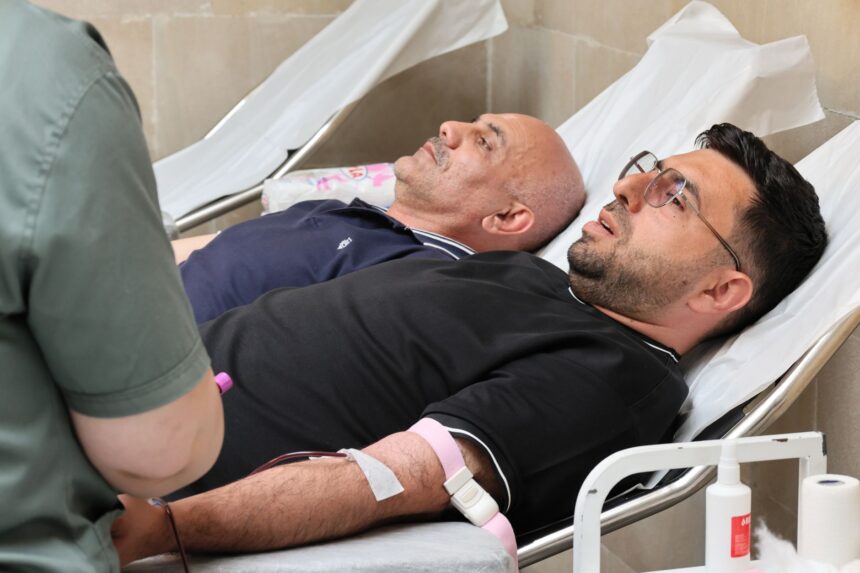
Medical professionals handling blood donation equipment in modern healthcare facility
PAHO warns of critical blood shortages across the Americas, calling for urgent action to strengthen voluntary donation systems. Many countries fall short of WHO-recommended donation targets. — Photo by Tahir Xəlfə on Pexels (Pexels License)
SHARE
1 min read|113 words

The World Health Organization recommends 25 blood donations per 1,000 people annually to ensure optimal transfusion capacity, yet the Pan American Health Organization’s latest analysis reveals the Americas falls dramatically short of this benchmark. High-income countries achieve approximately 22 donations per 1,000 population, while upper-middle-income nations manage only 11, and lower-middle-income countries provide just 7 donations per 1,000. This stark disparity in donation rates creates a two-tiered healthcare system where vulnerable populations face constrained access to life-saving transfusions. Global health experts underscore that these numbers represent more than statistics—they reflect real limitations in emergency response, surgical capacity, and treatment options for patients with blood disorders. Closing this gap requires urgent investment in voluntary donation systems and community mobilization strategies.

Was this article helpful?
GMJ Brief · Key Finding

📰 Read the full article: Blood donation rates plummet in the Americas, PAHO warns of critical shortage →

Share This Article
Facebook LinkedIn Bluesky Copy Link Print
GMJ
ByProf. Giorgi Pkhakadze
Follow:
Prof. Giorgi Pkhakadze, MD, MPH, PhD, is Editor-in-Chief of the Georgian Medical Journal and Chair of the Public Health Institute of Georgia (PHIG). He is Professor and Head of the Department of Social and Behavioural Sciences at David Tvildiani Medical University, and Secretary/Treasurer of the UEMS Section of Public Health. ORCID: 0000-0001-7609-4515.

Submit Your Paper →

Georgia's peer-reviewed open-access medical journal. No APC until January 2027.
Submit Manuscript →
Why Normal Thyroid Tests Don’t Always Mean You’re Healthy: The Hashimoto’s Gap

Standard thyroid tests measure only hormone levels, missing the autoimmune component of…

Brain’s Support Cells Hold Key to Mental Health: How Astrocytes, Microglia, and Oligodendrocytes Shape Resilience

The human brain is far more than neurons alone. Astrocytes, microglia, and…

Apigenin Shows Promise in Lab Studies, But Human Evidence Remains Elusive

Apigenin, a plant compound featured in sleep and longevity supplements, has demonstrated…

Submit Your Paper to GMJ

No APC until January 2027.
Submit Manuscript →

You Might Also Like

Microscopic image of T cells showing HIV-induced cellular transformation from CD4+ to CD8+ phenotype

HIV Rewires Immune System Through Unprecedented T Cell Conversion

By
Prof. Giorgi Pkhakadze
14/06/2026
Scientific diagram showing bacterial fermentation of fiber into butyrate in the colon

Three Essential Insights About Fiber and Your Gut Bacteria

By
Prof. Giorgi Pkhakadze
27/06/2026
Clinical UpdatesHealth PolicyPolicy & SystemsPractice

US Military Reinstates Flu Vaccine Mandate After Outbreak Following Optional Policy

By
Prof. Giorgi Pkhakadze
25/06/2026
Elderly person holding glucosamine supplement bottle with concerned expression

Millions Take Glucosamine Globally—But New Data Raises Safety Questions for Dementia Patients

By
Prof. Giorgi Pkhakadze
20/07/2026
Facebook Twitter Youtube Instagram
Company
  • Privacy Policy
  • Contact US
  • GMJ Journal
  • Submit Manuscript
  • Editorial Team
  • Register at GMJ
  • Terms of Use

Subscribe to GMJ News — Click here

Join Community
© 2026 Georgian Medical Journal (GMJ). Published by the Public Health Institute of Georgia (PHIG). All rights reserved.
Welcome Back!

Sign in to your account

Username or Email Address
Password

Lost your password?

Not a member? Sign Up