By using this site, you agree to the Privacy Policy and Terms of Use.
Accept
GMJ NewsGMJ NewsGMJ News
  • Latest News
    • GMJ Briefs
  • Podcast & Media
    • Podcast Episodes
    • GMJ Audio
    • GMJ Videos
  • Research Digest
    • New Studies
    • Georgian Research
    • Data & Numbers
  • Policy & Systems
    • Health Policy
    • Quality & Safety
    • Migration & Health
    • Global Health
  • Practice
    • Clinical Updates
    • Case Discussions
    • Pharmacy & Prescribing
    • Ingredients A-Z
  • Perspectives
    • Editorial
    • Explainers
    • Voices
    • Letters
  • GMJ Articles
    • Vol. 1 Issue 2 (2026)
    • Vol. 1 Issue 1 (2026)
    • Pre-Launch Articles (2025)
  • Read the Journal →
  • About GMJ News
Notification Show More
Font ResizerAa
GMJ NewsGMJ News
Font ResizerAa
  • Latest News
    • GMJ Briefs
  • Podcast & Media
    • Podcast Episodes
    • GMJ Audio
    • GMJ Videos
  • Research Digest
    • New Studies
    • Georgian Research
    • Data & Numbers
  • Policy & Systems
    • Health Policy
    • Quality & Safety
    • Migration & Health
    • Global Health
  • Practice
    • Clinical Updates
    • Case Discussions
    • Pharmacy & Prescribing
    • Ingredients A-Z
  • Perspectives
    • Editorial
    • Explainers
    • Voices
    • Letters
  • GMJ Articles
    • Vol. 1 Issue 2 (2026)
    • Vol. 1 Issue 1 (2026)
    • Pre-Launch Articles (2025)
  • Read the Journal →
  • About GMJ News
Follow US
GMJ News > GMJ Briefs > First Potential Treatment for Henipavirus Emerges From Dual-Antibody Strategy

First Potential Treatment for Henipavirus Emerges From Dual-Antibody Strategy

GMJ
Last updated: 13/07/2026 17:06
By
Prof. Giorgi Pkhakadze
Share
1 Min Read
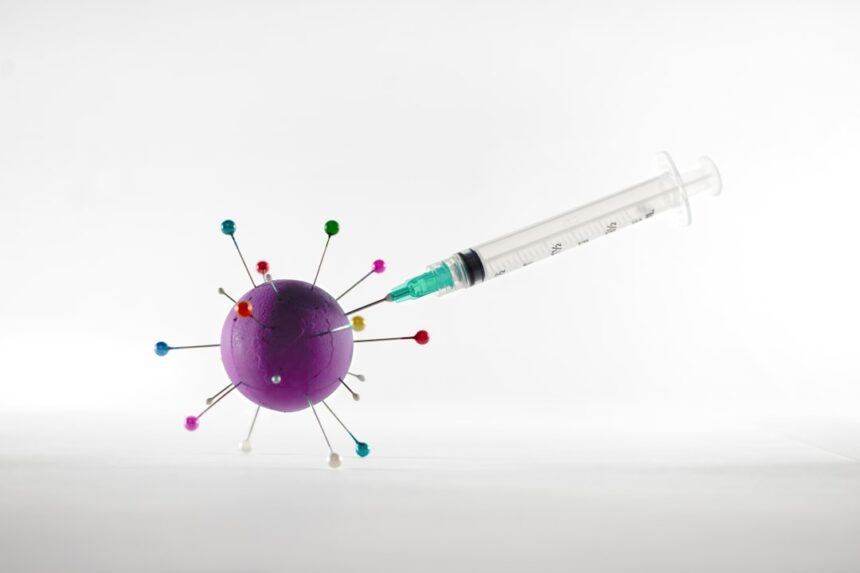
Laboratory illustration of antibodies neutralizing henipavirus particles
New antibody cocktail shows broad protection against deadly Nipah and Hendra viruses, offering first potential treatment for infections with up to 75% fatality rates. Dual-targeting approach demonstrates cross-species neutralization in preclinical studies. — Photo by Iván Díaz on Unsplash (Unsplash License)
SHARE
1 min read|124 words

A new antibody cocktail developed by researchers offers the first potential therapeutic option against Nipah and Hendra viruses, infections that currently lack approved treatments and carry fatality rates up to 75%. The breakthrough, published in Science Translational Medicine, employs a dual-targeting approach that simultaneously blocks two critical viral proteins—fusion and receptor binding proteins—to prevent viral entry into human cells.

This strategy represents a significant advancement over previous single-antibody approaches, which demonstrated limited effectiveness. The human monoclonal antibody combination showed broad neutralizing activity against multiple henipavirus strains in preclinical laboratory and animal studies. With documented outbreaks occurring across Asia, Australia, and the Indian subcontinent, this development holds particular significance for global pandemic preparedness and disease surveillance efforts.

Read the full article on GMJ Newsroom.

Was this article helpful?

GMJ Brief · Announcement

📰 Read the full article: Breakthrough Antibody Cocktail Shows Promise Against Deadly Henipavirus Infections →

Share This Article
Facebook LinkedIn Bluesky Copy Link Print
GMJ
ByProf. Giorgi Pkhakadze
Follow:
Prof. Giorgi Pkhakadze, MD, MPH, PhD, is Editor-in-Chief of the Georgian Medical Journal and Chair of the Public Health Institute of Georgia (PHIG). He is Professor and Head of the Department of Social and Behavioural Sciences at David Tvildiani Medical University, and Secretary/Treasurer of the UEMS Section of Public Health. ORCID: 0000-0001-7609-4515.

Submit Your Paper →

Georgia's peer-reviewed open-access medical journal. No APC until January 2027.
Submit Manuscript →
Protein Source and Meal Timing May Matter Less for Muscle Growth Than Assumed

A randomized controlled trial challenges two core beliefs in sports nutrition: that…

Lean protein outperforms high-fat sources for muscle growth after exercise, new trial shows

Lean protein sources stimulate muscle growth 47% more effectively than high-fat sources…

How Lutein and Zeaxanthin Protect Your Retina from Blue Light Damage

Lutein and zeaxanthin, dietary carotenoid pigments, concentrate in the retina's macula where…

Submit Your Paper to GMJ

No APC until January 2027.
Submit Manuscript →

You Might Also Like

Clinical UpdatesHealth PolicyPolicy & SystemsPractice

WHO approves first diagnostic test for Ebola Bundibugyo virus amid outbreak

By
Prof. Giorgi Pkhakadze
06/07/2026
Children receiving medical care in Gaza humanitarian crisis

UNICEF Documents 1,500 Children With Severe Skin Diseases in Gaza Humanitarian Emergency

By
Prof. Giorgi Pkhakadze
07/06/2026
Illustration of AI chatbot interface with medical symbols and trust indicators

Trust Gap Widens: Only 23% of Patients Confident in AI Medical Advice

By
Prof. Giorgi Pkhakadze
30/06/2026
Microscopic view of lab-grown brain organoids showing neural connections and regenerating nerve fibers

Cambridge Organoid Technology Offers New Path to Reversing Spinal Cord Injuries

By
Prof. Giorgi Pkhakadze
05/06/2026
Facebook Twitter Youtube Instagram
Company
  • Privacy Policy
  • Contact US
  • GMJ Journal
  • Submit Manuscript
  • Editorial Team
  • Register at GMJ
  • Terms of Use

Subscribe to GMJ News — Click here

Join Community
© 2026 Georgian Medical Journal (GMJ). Published by the Public Health Institute of Georgia (PHIG). All rights reserved.
Welcome Back!

Sign in to your account

Username or Email Address
Password

Lost your password?

Not a member? Sign Up