By using this site, you agree to the Privacy Policy and Terms of Use.
Accept
GMJ NewsGMJ NewsGMJ News
  • Latest News
    • GMJ Briefs
  • Podcast & Media
    • Podcast Episodes
    • GMJ Audio
    • GMJ Videos
  • Research Digest
    • New Studies
    • Georgian Research
    • Data & Numbers
  • Policy & Systems
    • Health Policy
    • Quality & Safety
    • Migration & Health
    • Global Health
  • Practice
    • Clinical Updates
    • Case Discussions
    • Pharmacy & Prescribing
    • Ingredients A-Z
  • Perspectives
    • Editorial
    • Explainers
    • Voices
    • Letters
  • GMJ Articles
    • Vol. 1 Issue 2 (2026)
    • Vol. 1 Issue 1 (2026)
    • Pre-Launch Articles (2025)
  • Read the Journal →
  • About GMJ News
Notification Show More
Font ResizerAa
GMJ NewsGMJ News
Font ResizerAa
  • Latest News
    • GMJ Briefs
  • Podcast & Media
    • Podcast Episodes
    • GMJ Audio
    • GMJ Videos
  • Research Digest
    • New Studies
    • Georgian Research
    • Data & Numbers
  • Policy & Systems
    • Health Policy
    • Quality & Safety
    • Migration & Health
    • Global Health
  • Practice
    • Clinical Updates
    • Case Discussions
    • Pharmacy & Prescribing
    • Ingredients A-Z
  • Perspectives
    • Editorial
    • Explainers
    • Voices
    • Letters
  • GMJ Articles
    • Vol. 1 Issue 2 (2026)
    • Vol. 1 Issue 1 (2026)
    • Pre-Launch Articles (2025)
  • Read the Journal →
  • About GMJ News
Follow US
GMJ News > GMJ Briefs > Four Brain Cell Types, One Critical Conversation

Four Brain Cell Types, One Critical Conversation

GMJ
Last updated: 31/07/2026 23:30
By
Prof. Giorgi Pkhakadze
Share
1 Min Read
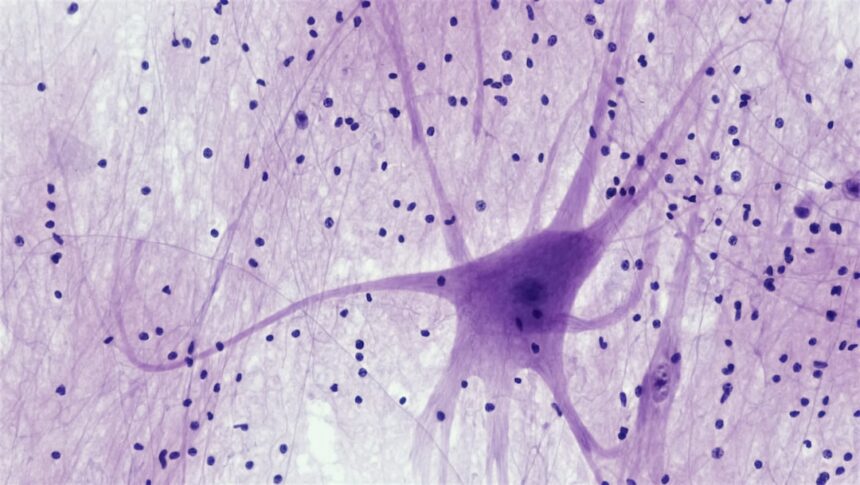
Diagram showing astrocytes, microglia, neurons, and oligodendrocytes communicating in the brain with inflammatory and protective signaling pathways
The brain's health depends on coordinated communication between astrocytes, microglia, neurons, and oligodendrocytes. These cellular conversations determine whether the brain environment becomes protective or inflammatory, shaping memory, mood, cognition, and neural resilience. — Photo by Bioscience Image Library by Fayette Reynolds on Unsplash (Unsplash License)
SHARE
1 min read|121 words

Recent research identifies four major brain cell types whose molecular communication network fundamentally determines brain health outcomes. Astrocytes function as the central switchboard, receiving and processing signals that decide whether inflammation rises or the brain recovers. This regulatory role is critical: when astrocyte signaling fails, the entire cellular environment shifts toward a pro-inflammatory state that cascades through the neural network.

Microglia, oligodendrocytes, and neurons respond to signals from this astrocyte-regulated environment. Microglia can transition from protective to damaging states, oligodendrocytes adjust myelin production based on environmental cues, and neurons become vulnerable to inflammatory damage. This interconnected system demonstrates that brain resilience emerges not from individual cell function, but from the quality of intercellular conversations.

Read the full article on GMJ Newsroom.

Was this article helpful?

GMJ Brief · Key Finding

📰 Read the full article: How Brain Cell Conversations Shape Memory, Mood and Resilience →

Related reference
  • Iron · Ingredient
Share This Article
Facebook LinkedIn Bluesky Copy Link Print
GMJ
ByProf. Giorgi Pkhakadze
Follow:
Prof. Giorgi Pkhakadze, MD, MPH, PhD, is Editor-in-Chief of the Georgian Medical Journal and Chair of the Public Health Institute of Georgia (PHIG). He is Professor and Head of the Department of Social and Behavioural Sciences at David Tvildiani Medical University, and Secretary/Treasurer of the UEMS Section of Public Health. ORCID: 0000-0001-7609-4515.

Submit Your Paper →

Georgia's peer-reviewed open-access medical journal. No APC until January 2027.
Submit Manuscript →
Vitamin B12 deficiency hospitalizations surge 32% in Brazil: a warning for high-income health systems

Hospital admissions for vitamin B12 deficiency rose 32% in Brazil (2016–2023) across…

Personalised Squat Biomechanics: How Individual Posture Determines Safe Exercise Form

Effective squat technique depends on individual postural alignment and structural constraints, not…

Cardiorespiratory Fitness: A Stronger Predictor of Longevity Than Blood Pressure or Cholesterol

Maximal oxygen uptake (VO₂max) emerges as a stronger predictor of long-term health…

Submit Your Paper to GMJ

No APC until January 2027.
Submit Manuscript →

You Might Also Like

Global HealthPolicy & SystemsQuality & Safety

Ebola Bundibugyo Cases Rise in DRC as Outbreak Spreads to New Provinces

By
Prof. Giorgi Pkhakadze
19/07/2026
Map showing dengue transmission risk zones across California with climate change projections

What Californians Need to Know: Three Critical Findings on Dengue Risk

By
Prof. Giorgi Pkhakadze
21/07/2026
Medical chart comparing hemoglobin levels with and without vitamin C supplementation

Clinical Evidence Undermines Routine Vitamin C and Iron Supplement Pairing

By
Prof. Giorgi Pkhakadze
29/07/2026
Medical illustration of prehospital trauma resuscitation with whole blood transfusion

Landmark Trials Validate Prehospital Whole Blood for Severe Trauma

By
Prof. Giorgi Pkhakadze
19/07/2026
Facebook Twitter Youtube Instagram
Company
  • Privacy Policy
  • Contact US
  • GMJ Journal
  • Submit Manuscript
  • Editorial Team
  • Register at GMJ
  • Terms of Use

Subscribe to GMJ News — Click here

Join Community
© 2026 Georgian Medical Journal (GMJ). Published by the Public Health Institute of Georgia (PHIG). All rights reserved.
Welcome Back!

Sign in to your account

Username or Email Address
Password

Lost your password?

Not a member? Sign Up