By using this site, you agree to the Privacy Policy and Terms of Use.
Accept
GMJ NewsGMJ NewsGMJ News
  • Latest News
    • GMJ Briefs
  • Podcast & Media
    • Podcast Episodes
    • GMJ Audio
    • GMJ Videos
  • Research Digest
    • New Studies
    • Georgian Research
    • Data & Numbers
  • Policy & Systems
    • Health Policy
    • Quality & Safety
    • Migration & Health
    • Global Health
  • Practice
    • Clinical Updates
    • Case Discussions
    • Pharmacy & Prescribing
    • Ingredients A-Z
  • Perspectives
    • Editorial
    • Explainers
    • Voices
    • Letters
  • GMJ Articles
    • Vol. 1 Issue 2 (2026)
    • Vol. 1 Issue 1 (2026)
    • Pre-Launch Articles (2025)
  • Read the Journal →
  • About GMJ News
Notification Show More
Font ResizerAa
GMJ NewsGMJ News
Font ResizerAa
  • Latest News
    • GMJ Briefs
  • Podcast & Media
    • Podcast Episodes
    • GMJ Audio
    • GMJ Videos
  • Research Digest
    • New Studies
    • Georgian Research
    • Data & Numbers
  • Policy & Systems
    • Health Policy
    • Quality & Safety
    • Migration & Health
    • Global Health
  • Practice
    • Clinical Updates
    • Case Discussions
    • Pharmacy & Prescribing
    • Ingredients A-Z
  • Perspectives
    • Editorial
    • Explainers
    • Voices
    • Letters
  • GMJ Articles
    • Vol. 1 Issue 2 (2026)
    • Vol. 1 Issue 1 (2026)
    • Pre-Launch Articles (2025)
  • Read the Journal →
  • About GMJ News
Follow US
GMJ News > GMJ Briefs > Global Supply Chain Crisis Forces UNICEF to Cut Child Health Supply Orders

Global Supply Chain Crisis Forces UNICEF to Cut Child Health Supply Orders

GMJ
Last updated: 09/06/2026 19:39
By
Prof. Giorgi Pkhakadze
Share
1 Min Read
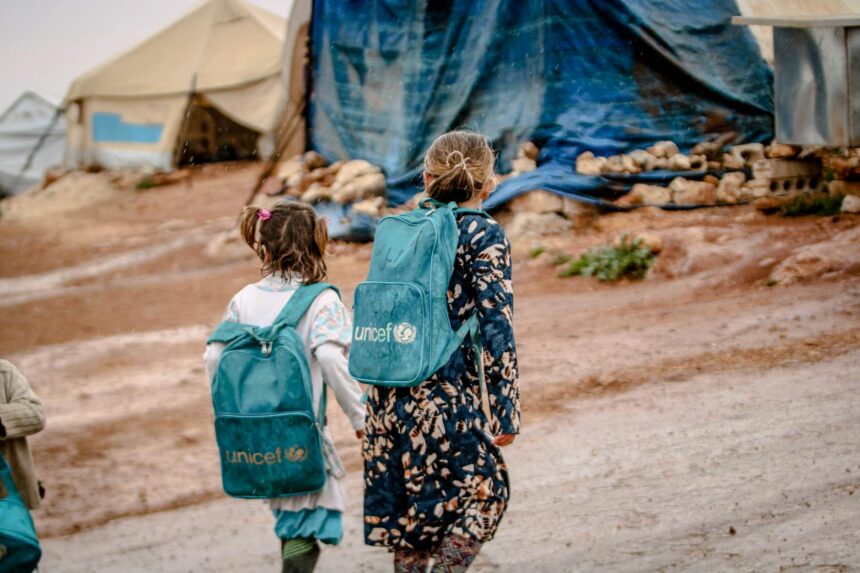
Children receiving medical care showing impact of supply chain disruptions on healthcare delivery
Rising global transport costs are forcing UNICEF to reduce procurement of essential medical supplies for children. The crisis affects vaccines, therapeutic foods, and medical equipment delivery to vulnerable populations worldwide. — Photo: Ahmed akacha / Pexels
SHARE
1 min read|121 words

UNICEF faces unprecedented procurement challenges as rising global transport costs diminish the organization’s purchasing power for essential pediatric health supplies. The crisis threatens to reverse decades of progress in reducing child mortality rates across vulnerable populations worldwide.

Temperature-sensitive supplies such as vaccines and therapeutic foods—which require specialized cold-chain logistics—are experiencing the most significant impact. Medical equipment and essential childhood medicines are similarly affected by shipping cost inflation. These constraints arrive at a critical juncture, as children in conflict zones and remote humanitarian settings already face severe barriers to accessing basic healthcare.

The supply chain disruption compounds existing logistical challenges in regions with compromised transport infrastructure, potentially affecting immunization campaigns and nutritional interventions that save millions of children’s lives annually.

Was this article helpful?

GMJ Brief · Announcement

📰 Read the full article: Rising Transport Costs Reduce UNICEF’s Capacity to Deliver Child Healthcare Supplies →

Share This Article
Facebook LinkedIn Bluesky Copy Link Print
GMJ
ByProf. Giorgi Pkhakadze
Follow:
Prof. Giorgi Pkhakadze, MD, MPH, PhD, is Editor-in-Chief of the Georgian Medical Journal and Chair of the Public Health Institute of Georgia (PHIG). He is Professor and Head of the Department of Social and Behavioural Sciences at David Tvildiani Medical University, and Secretary/Treasurer of the UEMS Section of Public Health. ORCID: 0000-0001-7609-4515.

Submit Your Paper →

Georgia's peer-reviewed open-access medical journal. No APC until January 2027.
Submit Manuscript →
How Your Body Switches Between Two Operating Systems: The Autonomic Nervous System Explained

Your body operates two competing nervous systems that constantly switch control. The…

How Diet Shapes Your Gut Microbiome—and Why It Matters for Health

Food functions as a biological intervention that reshapes your gut microbiome, directly…

Vitamin K’s Hidden Hierarchy: Why Your Body Prioritises Blood Clotting Over Bone Health

Current vitamin K dietary guidelines prioritise blood clotting at the expense of…

Submit Your Paper to GMJ

No APC until January 2027.
Submit Manuscript →

You Might Also Like

Thoughtful oncologist in conversation with patient, illustrating relational dimensions of cancer care

The Hidden Antidote to Oncology Burnout: Human Connection

By
Prof. Giorgi Pkhakadze
21/07/2026

PHEIC Declaration: Cross-Border Ebola Outbreak DRC-Uganda

By
Prof. Giorgi Pkhakadze
31/05/2026
Healthcare provider counseling diverse family about autism support services

Autism Disparities: Why Asian/Pacific Islander Children Show Lower Diagnosis Rates

By
Prof. Giorgi Pkhakadze
16/07/2026
Healthcare workers reviewing Chagas disease surveillance data in Latin American clinic

6-7 Million Infected Globally Yet Chagas Disease Surveillance Remains Critically Underfunded

By
Prof. Giorgi Pkhakadze
22/06/2026
Facebook Twitter Youtube Instagram
Company
  • Privacy Policy
  • Contact US
  • GMJ Journal
  • Submit Manuscript
  • Editorial Team
  • Register at GMJ
  • Terms of Use

Subscribe to GMJ News — Click here

Join Community
© 2026 Georgian Medical Journal (GMJ). Published by the Public Health Institute of Georgia (PHIG). All rights reserved.
Welcome Back!

Sign in to your account

Username or Email Address
Password

Lost your password?

Not a member? Sign Up