By using this site, you agree to the Privacy Policy and Terms of Use.
Accept
GMJ NewsGMJ NewsGMJ News
  • Latest News
    • GMJ Briefs
  • Podcast & Media
    • Podcast Episodes
    • GMJ Audio
    • GMJ Videos
  • Research Digest
    • New Studies
    • Georgian Research
    • Data & Numbers
  • Policy & Systems
    • Health Policy
    • Quality & Safety
    • Migration & Health
    • Global Health
  • Practice
    • Clinical Updates
    • Case Discussions
    • Pharmacy & Prescribing
    • Ingredients A-Z
  • Perspectives
    • Editorial
    • Explainers
    • Voices
    • Letters
  • GMJ Articles
    • Vol. 1 Issue 2 (2026)
    • Vol. 1 Issue 1 (2026)
    • Pre-Launch Articles (2025)
  • Read the Journal →
  • About GMJ News
Notification Show More
Font ResizerAa
GMJ NewsGMJ News
Font ResizerAa
  • Latest News
    • GMJ Briefs
  • Podcast & Media
    • Podcast Episodes
    • GMJ Audio
    • GMJ Videos
  • Research Digest
    • New Studies
    • Georgian Research
    • Data & Numbers
  • Policy & Systems
    • Health Policy
    • Quality & Safety
    • Migration & Health
    • Global Health
  • Practice
    • Clinical Updates
    • Case Discussions
    • Pharmacy & Prescribing
    • Ingredients A-Z
  • Perspectives
    • Editorial
    • Explainers
    • Voices
    • Letters
  • GMJ Articles
    • Vol. 1 Issue 2 (2026)
    • Vol. 1 Issue 1 (2026)
    • Pre-Launch Articles (2025)
  • Read the Journal →
  • About GMJ News
Follow US
GMJ News > GMJ Briefs > Healthcare Systems Expand Focus Beyond Clinical Care to Support Community Reconciliation

Healthcare Systems Expand Focus Beyond Clinical Care to Support Community Reconciliation

GMJ
Last updated: 24/06/2026 08:25
By
Prof. Giorgi Pkhakadze
Share
1 Min Read
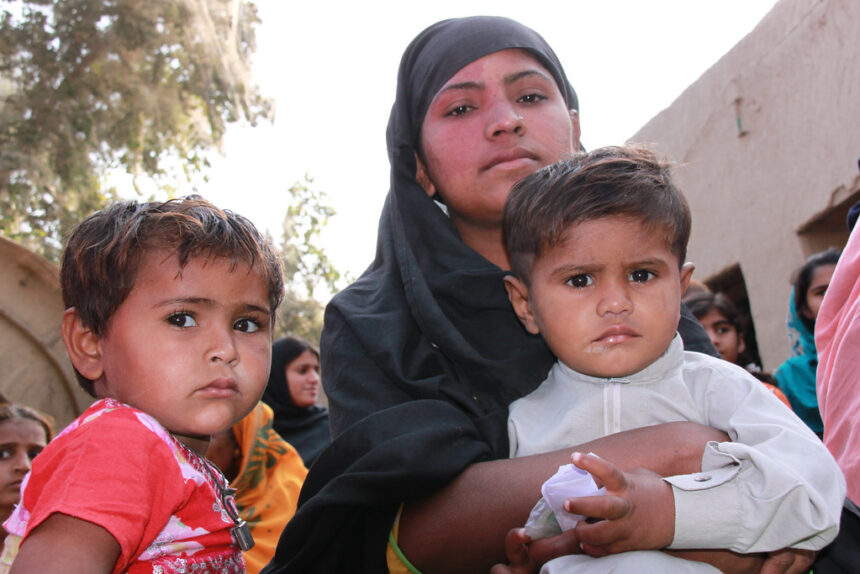
Medical professionals discussing community health and reconciliation approaches
Medical professionals examine reconciliation's role in crisis-affected communities through recent CMAJ correspondence. Healthcare systems increasingly recognize responsibilities beyond traditional clinical boundaries. — "Access to healthcare after the floods" by DFID - UK Department for International Development is licensed under CC BY 2.0. To view a copy of this license, visit https://creativecommons.org/licenses/by/2.0/. (CC BY 2.0)
SHARE
1 min read|149 words

Medical professionals are increasingly recognizing that effective healthcare extends far beyond the clinic walls, particularly in communities affected by crisis or conflict. Recent correspondence published in the Canadian Medical Association Journal demonstrates how healthcare providers are integrating reconciliation frameworks into their practice models, addressing both physical and social dimensions of community health.

This evolving perspective reflects a fundamental shift in how medical systems approach their social responsibilities. Healthcare institutions now acknowledge that social determinants—including community cohesion, trust, and collective healing—directly impact population health outcomes. By engaging with reconciliation processes, medical professionals contribute to rebuilding community resilience and addressing the root causes of health disparities in crisis-affected regions.

Experts emphasize that this integration requires genuine interdisciplinary collaboration, bringing together clinicians, public health specialists, and community leaders. The growing medical journal coverage of these topics signals healthcare’s commitment to holistic, socially-informed practice.

Read the full article on GMJ Newsroom.

Submit Your Paper
GMJ_Submit_Banner

Was this article helpful?

GMJ Brief · Announcement

📰 Read the full article: Medical Journal Letters Highlight Reconciliation Challenges in Crisis-Affected Communities →

Share This Article
Facebook LinkedIn Bluesky Copy Link Print
GMJ
ByProf. Giorgi Pkhakadze
Follow:
Prof. Giorgi Pkhakadze, MD, MPH, PhD, is Editor-in-Chief of the Georgian Medical Journal and Chair of the Public Health Institute of Georgia (PHIG). He is Professor and Head of the Department of Social and Behavioural Sciences at David Tvildiani Medical University, and Secretary/Treasurer of the UEMS Section of Public Health. ORCID: 0000-0001-7609-4515.

Submit Your Paper →

Georgia's peer-reviewed open-access medical journal. No APC until January 2027.
Submit Manuscript →
NHS workforce planning faces strategic uncertainty as UK prioritises domestic medical graduates

NHS workforce planning faces uncertainty as new legislation prioritises UK medical graduates…

Maternal mortality crisis deepens for Sudanese refugee women in Central African Republic

Pregnant Sudanese refugee women in Central African Republic face 138 times higher…

Home Exercise Program Reduces Cognitive Decline During Cancer Chemotherapy

New trial shows home-based exercise significantly improved attention and reduced cognitive problems…

Submit Your Paper to GMJ

No APC until January 2027.
Submit Manuscript →

You Might Also Like

Global HealthPolicy & Systems

WHO Director-General calls for ceasefire as DR Congo battles deadly Ebola resurgence

By
Prof. Giorgi Pkhakadze
30/05/2026
Medical illustration showing jaw tumour treatment with molecular targeting approach

Precision Medicine Enters the Operating Room: Molecular Pathway Targeting Transforms Ameloblastoma Care

By
Prof. Giorgi Pkhakadze
18/06/2026

PHEIC Declaration: Ebola Outbreak Cross-Border Transmission DRC-Uganda

By
Prof. Giorgi Pkhakadze
31/05/2026

🚨 CDC Outbreak Update: Infant Botulism Linked to Powdered Infant Formula

By
Prof. Giorgi Pkhakadze
20/06/2026
Facebook Twitter Youtube Instagram
Company
  • Privacy Policy
  • Contact US
  • GMJ Journal
  • Submit Manuscript
  • Editorial Team
  • Register at GMJ
  • Terms of Use

Subscribe to GMJ News — Click here

Join Community
© 2026 Georgian Medical Journal (GMJ). Published by the Public Health Institute of Georgia (PHIG). All rights reserved.
Welcome Back!

Sign in to your account

Username or Email Address
Password

Lost your password?

Not a member? Sign Up