By using this site, you agree to the Privacy Policy and Terms of Use.
Accept
GMJ NewsGMJ NewsGMJ News
  • Latest News
    • GMJ Briefs
  • Podcast & Media
    • Podcast Episodes
    • GMJ Audio
    • GMJ Videos
  • Research Digest
    • New Studies
    • Georgian Research
    • Data & Numbers
  • Policy & Systems
    • Health Policy
    • Quality & Safety
    • Migration & Health
    • Global Health
  • Practice
    • Clinical Updates
    • Case Discussions
    • Pharmacy & Prescribing
    • Ingredients A-Z
  • Perspectives
    • Editorial
    • Explainers
    • Voices
    • Letters
  • GMJ Articles
    • Vol. 1 Issue 2 (2026)
    • Vol. 1 Issue 1 (2026)
    • Pre-Launch Articles (2025)
  • Read the Journal →
  • About GMJ News
Notification Show More
Font ResizerAa
GMJ NewsGMJ News
Font ResizerAa
  • Latest News
    • GMJ Briefs
  • Podcast & Media
    • Podcast Episodes
    • GMJ Audio
    • GMJ Videos
  • Research Digest
    • New Studies
    • Georgian Research
    • Data & Numbers
  • Policy & Systems
    • Health Policy
    • Quality & Safety
    • Migration & Health
    • Global Health
  • Practice
    • Clinical Updates
    • Case Discussions
    • Pharmacy & Prescribing
    • Ingredients A-Z
  • Perspectives
    • Editorial
    • Explainers
    • Voices
    • Letters
  • GMJ Articles
    • Vol. 1 Issue 2 (2026)
    • Vol. 1 Issue 1 (2026)
    • Pre-Launch Articles (2025)
  • Read the Journal →
  • About GMJ News
Follow US
GMJ News > GMJ Briefs > Hundreds of Donor Lungs Analyzed to Predict Transplant Success

Hundreds of Donor Lungs Analyzed to Predict Transplant Success

GMJ
Last updated: 24/06/2026 06:07
By
Prof. Giorgi Pkhakadze
Share
1 Min Read
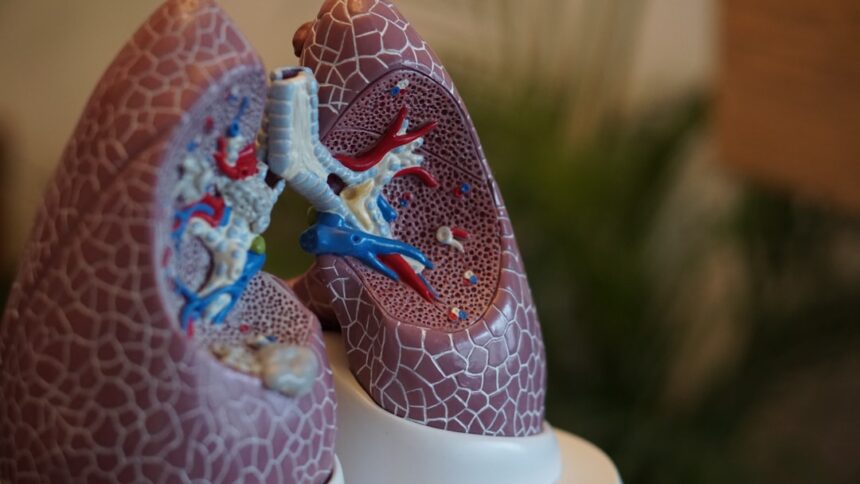
Digital representation of lung transplant technology and ex vivo perfusion systems
Researchers create digital twins of donor lungs using ex vivo perfusion data, enabling virtual testing of therapies and personalized transplant protocols. The breakthrough could revolutionize organ evaluation and improve patient outcomes. — Photo: Robina Weermeijer / Pexels
SHARE
1 min read|158 words

A groundbreaking study has analyzed data from hundreds of donor lungs to develop digital twin models capable of predicting therapeutic efficacy and organ function with remarkable accuracy. According to the research published in Nature Medicine, these computational models demonstrate a 90 percent viability assessment rate and a 75 percent function prediction capability, substantially improving traditional organ evaluation methods.

The digital twins are constructed from multimodal data collected during ex vivo lung perfusion procedures, creating comprehensive virtual representations of real organs. This data-driven approach enables researchers to identify which donor organs are most suitable for transplantation and predict how different therapeutic interventions will perform in specific clinical scenarios.

These findings represent a critical advancement in addressing global organ shortages. By maximizing the utility of available donor organs through precise pre-transplant evaluation and personalized treatment planning, the technology could significantly enhance transplant outcomes and expand the pool of viable organs for recipients awaiting life-saving procedures.

Read the full article on GMJ Newsroom.

Submit Your Paper
GMJ_Submit_Banner

Was this article helpful?

GMJ Brief · Key Finding

📰 Read the full article: Digital Twins of Donor Lungs Could Transform Transplant Medicine →
Share This Article
Facebook LinkedIn Bluesky Copy Link Print
GMJ
ByProf. Giorgi Pkhakadze
Follow:
Prof. Giorgi Pkhakadze, MD, MPH, PhD, is Editor-in-Chief of the Georgian Medical Journal and Chair of the Public Health Institute of Georgia (PHIG). He is Professor and Head of the Department of Social and Behavioural Sciences at David Tvildiani Medical University, and Secretary/Treasurer of the UEMS Section of Public Health. ORCID: 0000-0001-7609-4515.

Submit Your Paper →

Georgia's peer-reviewed open-access medical journal. No APC until January 2027.
Submit Manuscript →
Immune Changes and RNA Patterns Predict Early Colorectal Cancer Risk in Precancerous Lesions

New research reveals immune system changes and RNA patterns that predict colorectal…

Oxford Study Unravels Inflammatory Bowel Disease as Multiple Distinct Conditions

Oxford-led research reveals IBD comprises multiple distinct diseases with different mechanisms. Discovery…

Surgical Menopause Linked to Severe Urogenital Symptoms Compared to Natural Menopause

New research shows surgical menopause leads to more severe genitourinary symptoms than…

Submit Your Paper to GMJ

No APC until January 2027.
Submit Manuscript →

You Might Also Like

Chart showing three different peak performance ages across human lifespan from Swedish longitudinal study

Three Performance Peaks and Accelerating Decline: What the Research Means for You

By
Prof. Giorgi Pkhakadze
24/06/2026

6.3 Magnitude Earthquake Strikes China; 9,000 in High-Impact Zones

By
Prof. Giorgi Pkhakadze
17/06/2026
Medical chart showing multiple body system health markers declining with sleep restriction

Sleep Deprivation’s Rapid Toll: 51% Cortisol Surge and Decade-Long Aging Effects in One Week

By
Prof. Giorgi Pkhakadze
10/06/2026
Chart showing TB financing capacity across different country income levels

Breaking Donor Dependency: Most High-Burden TB Countries Can Self-Finance Programs

By
Prof. Giorgi Pkhakadze
07/06/2026
Facebook Twitter Youtube Instagram
Company
  • Privacy Policy
  • Contact US
  • GMJ Journal
  • Submit Manuscript
  • Editorial Team
  • Register at GMJ
  • Terms of Use

Subscribe to GMJ News — Click here

Join Community
© 2026 Georgian Medical Journal (GMJ). Published by the Public Health Institute of Georgia (PHIG). All rights reserved.
Welcome Back!

Sign in to your account

Username or Email Address
Password

Lost your password?

Not a member? Sign Up