By using this site, you agree to the Privacy Policy and Terms of Use.
Accept
GMJ NewsGMJ NewsGMJ News
  • Latest News
    • GMJ Briefs
  • Podcast & Media
    • Podcast Episodes
    • GMJ Audio
    • GMJ Videos
  • Research Digest
    • New Studies
    • Georgian Research
    • Data & Numbers
  • Policy & Systems
    • Health Policy
    • Quality & Safety
    • Migration & Health
    • Global Health
  • Practice
    • Clinical Updates
    • Case Discussions
    • Pharmacy & Prescribing
    • Ingredients A-Z
  • Perspectives
    • Editorial
    • Explainers
    • Voices
    • Letters
  • GMJ Articles
    • Vol. 1 Issue 2 (2026)
    • Vol. 1 Issue 1 (2026)
    • Pre-Launch Articles (2025)
  • Read the Journal →
  • About GMJ News
Notification Show More
Font ResizerAa
GMJ NewsGMJ News
Font ResizerAa
  • Latest News
    • GMJ Briefs
  • Podcast & Media
    • Podcast Episodes
    • GMJ Audio
    • GMJ Videos
  • Research Digest
    • New Studies
    • Georgian Research
    • Data & Numbers
  • Policy & Systems
    • Health Policy
    • Quality & Safety
    • Migration & Health
    • Global Health
  • Practice
    • Clinical Updates
    • Case Discussions
    • Pharmacy & Prescribing
    • Ingredients A-Z
  • Perspectives
    • Editorial
    • Explainers
    • Voices
    • Letters
  • GMJ Articles
    • Vol. 1 Issue 2 (2026)
    • Vol. 1 Issue 1 (2026)
    • Pre-Launch Articles (2025)
  • Read the Journal →
  • About GMJ News
Follow US
GMJ News > GMJ Briefs > Breaking Donor Dependency: Most High-Burden TB Countries Can Self-Finance Programs

Breaking Donor Dependency: Most High-Burden TB Countries Can Self-Finance Programs

GMJ
Last updated: 07/06/2026 15:28
By
Prof. Giorgi Pkhakadze
Share
1 Min Read
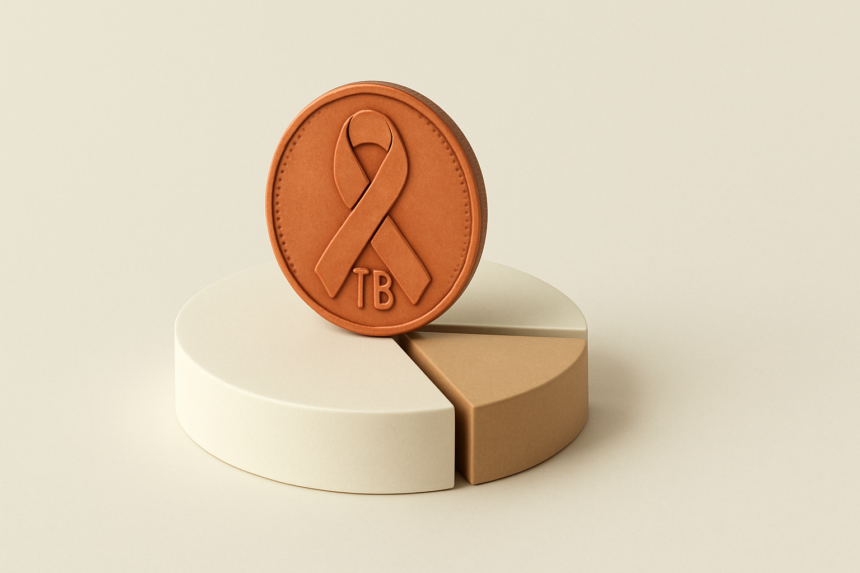
Chart showing TB financing capacity across different country income levels
New research shows 74% of high TB burden countries could self-finance programs through strategic budget reallocations, challenging current donor-dependent models. However, low-income nations and marginalized populations remain at risk.
SHARE
1 min read|143 words

A landmark analysis published in PLOS Global Public Health demonstrates that the majority of tuberculosis high-burden countries possess sufficient financial capacity to sustain their programs independently. Research led by William A. Wells reveals that 74% of these nations could compensate for complete donor funding withdrawal through strategic budget reallocations and increased domestic health allocations.

The findings challenge decades of donor-dependent TB financing models, which have inadvertently weakened national systems by bypassing domestic budget channels and reducing accountability to local stakeholders. By redirecting existing health resources and strengthening TB budget prioritization, countries can build more resilient, domestically-accountable programs.

However, the analysis underscores a critical equity concern: low-income countries remain unable to achieve financial self-sufficiency without continued international support. This two-tiered landscape suggests a need for targeted, transitional funding mechanisms that enable all countries to develop sustainable TB responses.

Read the full article on GMJ Newsroom.

Submit Your Paper
GMJ_Submit_Banner

Was this article helpful?

GMJ Brief · Announcement

📰 Read the full article: Three-Quarters of High-Burden Countries Could Self-Fund TB Programs Without Donor Support →

Related reference
  • Tuberculosis · Condition
Share This Article
Facebook LinkedIn Bluesky Copy Link Print
GMJ
ByProf. Giorgi Pkhakadze
Follow:
Prof. Giorgi Pkhakadze, MD, MPH, PhD, is Editor-in-Chief of the Georgian Medical Journal and Chair of the Public Health Institute of Georgia (PHIG). He is Professor and Head of the Department of Social and Behavioural Sciences at David Tvildiani Medical University, and Secretary/Treasurer of the UEMS Section of Public Health. ORCID: 0000-0001-7609-4515.

Submit Your Paper →

Georgia's peer-reviewed open-access medical journal. No APC until January 2027.
Submit Manuscript →
England’s Euro 2024 Match Days Saw 17,000 Fewer A&E Visits — Why That Matters for Health Planning

Analysis of NHS accident and emergency data from Euro 2024 reveals just…

Americas Health Leadership: PAHO Executive Committee Endorses Plan to Strengthen Regional Health Systems

The Pan American Health Organization Executive Committee endorsed a comprehensive strategic framework…

UK Orphan Drug Registry Expands Access to Rare Disease Treatments

The UK Medicines and Healthcare products Regulatory Agency (MHRA) maintains a comprehensive…

Submit Your Paper to GMJ

No APC until January 2027.
Submit Manuscript →

You Might Also Like

Comparison chart showing different magnesium supplement forms and their cognitive research outcomes

Magnesium Form Matters Less Than You Think, New Meta-Analysis Reveals

By
Prof. Giorgi Pkhakadze
01/06/2026
Scientific laboratory equipment for antimalarial drug testing and genotyping analysis

Johns Hopkins Researchers Establish New Standards for Antimalarial Drug Testing in Africa

By
Prof. Giorgi Pkhakadze
07/06/2026
Medical illustration showing heart protection from GLP-1 medications

Announcement: GLP-1 Drugs Like Ozempic Cut Heart Attack Risk by 20% in Major Review

By
Prof. Giorgi Pkhakadze
02/06/2026
Children receiving medical care in Gaza humanitarian crisis

UNICEF Documents 1,500 Children With Severe Skin Diseases in Gaza Humanitarian Emergency

By
Prof. Giorgi Pkhakadze
07/06/2026
Facebook Twitter Youtube Instagram
Company
  • Privacy Policy
  • Contact US
  • GMJ Journal
  • Submit Manuscript
  • Editorial Team
  • Register at GMJ
  • Terms of Use

Subscribe to GMJ News — Click here

Join Community
© 2026 Georgian Medical Journal (GMJ). Published by the Public Health Institute of Georgia (PHIG). All rights reserved.
Welcome Back!

Sign in to your account

Username or Email Address
Password

Lost your password?

Not a member? Sign Up