By using this site, you agree to the Privacy Policy and Terms of Use.
Accept
GMJ NewsGMJ NewsGMJ News
  • Latest News
    • GMJ Briefs
  • Podcast & Media
    • Podcast Episodes
    • GMJ Audio
    • GMJ Videos
  • Research Digest
    • New Studies
    • Georgian Research
    • Data & Numbers
  • Policy & Systems
    • Health Policy
    • Quality & Safety
    • Migration & Health
    • Global Health
  • Practice
    • Clinical Updates
    • Case Discussions
    • Pharmacy & Prescribing
    • Ingredients A-Z
  • Perspectives
    • Editorial
    • Explainers
    • Voices
    • Letters
  • GMJ Articles
    • Vol. 1 Issue 2 (2026)
    • Vol. 1 Issue 1 (2026)
    • Pre-Launch Articles (2025)
  • Read the Journal →
  • About GMJ News
Notification Show More
Font ResizerAa
GMJ NewsGMJ News
Font ResizerAa
  • Latest News
    • GMJ Briefs
  • Podcast & Media
    • Podcast Episodes
    • GMJ Audio
    • GMJ Videos
  • Research Digest
    • New Studies
    • Georgian Research
    • Data & Numbers
  • Policy & Systems
    • Health Policy
    • Quality & Safety
    • Migration & Health
    • Global Health
  • Practice
    • Clinical Updates
    • Case Discussions
    • Pharmacy & Prescribing
    • Ingredients A-Z
  • Perspectives
    • Editorial
    • Explainers
    • Voices
    • Letters
  • GMJ Articles
    • Vol. 1 Issue 2 (2026)
    • Vol. 1 Issue 1 (2026)
    • Pre-Launch Articles (2025)
  • Read the Journal →
  • About GMJ News
Follow US
GMJ News > GMJ Briefs > Immune Signatures and RNA Patterns Offer New Hope for Colorectal Cancer Prevention

Immune Signatures and RNA Patterns Offer New Hope for Colorectal Cancer Prevention

GMJ
Last updated: 02/07/2026 20:43
By
Prof. Giorgi Pkhakadze
Share
1 Min Read
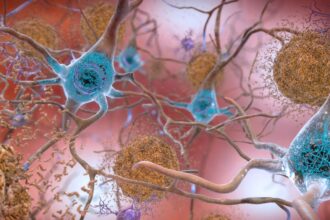
Medical illustration showing colorectal tissue with immune cells and molecular patterns
New research reveals immune system changes and RNA patterns that predict colorectal cancer development in precancerous lesions. The findings could revolutionize early detection strategies. — Photo by Tara Winstead on Pexels (Pexels License)
SHARE
1 min read|124 words

Groundbreaking research published in Science Translational Medicine has identified distinct immune system changes and RNA expression patterns that predict which precancerous colorectal lesions will progress to cancer. The discovery represents a significant advance in early detection and prevention strategies for colorectal cancer, currently the third leading cause of cancer deaths worldwide.

The study demonstrates that alterations in the immune microenvironment occur during the earliest stages of colorectal carcinogenesis, well before visible malignant changes become apparent. These immune changes create a permissive environment for malignant transformation, opening new avenues for therapeutic intervention. By combining immune and RNA profiling, clinicians may soon identify high-risk patients requiring intensive surveillance, fundamentally transforming how we approach colorectal cancer prevention and early detection.

Read the full article on GMJ Newsroom.

Was this article helpful?

GMJ Brief · Announcement

📰 Read the full article: Immune Changes and RNA Patterns Predict Early Colorectal Cancer Risk in Precancerous Lesions →

Related reference
  • Colorectal Cancer · Condition
  • Iron · Ingredient
Share This Article
Facebook LinkedIn Bluesky Copy Link Print
GMJ
ByProf. Giorgi Pkhakadze
Follow:
Prof. Giorgi Pkhakadze, MD, MPH, PhD, is Editor-in-Chief of the Georgian Medical Journal and Chair of the Public Health Institute of Georgia (PHIG). He is Professor and Head of the Department of Social and Behavioural Sciences at David Tvildiani Medical University, and Secretary/Treasurer of the UEMS Section of Public Health. ORCID: 0000-0001-7609-4515.

Submit Your Paper →

Georgia's peer-reviewed open-access medical journal. No APC until January 2027.
Submit Manuscript →
Engineered Heart Muscle From Stem Cells Shows Promise in First-in-Human Trial

A first-in-human clinical trial of engineered heart muscle derived from induced pluripotent…

Most People Who Stop GLP-1 Drugs Like Ozempic Eventually Return to Treatment

A new analysis of treatment patterns shows that many patients who discontinue…

Semaglutide Linked to Fewer Bone Fractures Despite Greater Weight Loss in Type 2 Diabetes

A real-world analysis of 60,000 adults with type 2 diabetes shows semaglutide…

Submit Your Paper to GMJ

No APC until January 2027.
Submit Manuscript →

You Might Also Like

Infographic showing five different metabolic pathways leading to type 2 diabetes diagnosis

Diabetes Is Not One Disease: New Study Identifies Five Distinct Metabolic Pathways

By
Prof. Giorgi Pkhakadze
19/06/2026
Healthcare cost analysis showing long COVID economic impact on US system

What Every Healthcare Leader Should Know About Long COVID’s $8 Billion Price

By
Prof. Giorgi Pkhakadze
27/06/2026

PHEIC Declaration: Ebola Cross-Border Transmission DRC-Uganda

By
Prof. Giorgi Pkhakadze
31/05/2026
Scientific comparison chart showing magnesium supplement absorption rates across different formulations

Takeaway: Popular Magnesium Absorption Charts May Overstate Supplement Differences, New Research Shows

By
Prof. Giorgi Pkhakadze
26/06/2026
Facebook Twitter Youtube Instagram
Company
  • Privacy Policy
  • Contact US
  • GMJ Journal
  • Submit Manuscript
  • Editorial Team
  • Register at GMJ
  • Terms of Use

Subscribe to GMJ News — Click here

Join Community
© 2026 Georgian Medical Journal (GMJ). Published by the Public Health Institute of Georgia (PHIG). All rights reserved.
Welcome Back!

Sign in to your account

Username or Email Address
Password

Lost your password?

Not a member? Sign Up