By using this site, you agree to the Privacy Policy and Terms of Use.
Accept
GMJ NewsGMJ NewsGMJ News
  • Latest News
    • GMJ Briefs
  • Podcast & Media
    • Podcast Episodes
    • GMJ Audio
    • GMJ Videos
  • Research Digest
    • New Studies
    • Georgian Research
    • Data & Numbers
  • Policy & Systems
    • Health Policy
    • Quality & Safety
    • Migration & Health
    • Global Health
  • Practice
    • Clinical Updates
    • Case Discussions
    • Pharmacy & Prescribing
    • Ingredients A-Z
  • Perspectives
    • Editorial
    • Explainers
    • Voices
    • Letters
  • GMJ Articles
    • Vol. 1 Issue 2 (2026)
    • Vol. 1 Issue 1 (2026)
    • Pre-Launch Articles (2025)
  • Read the Journal →
  • About GMJ News
Notification Show More
Font ResizerAa
GMJ NewsGMJ News
Font ResizerAa
  • Latest News
    • GMJ Briefs
  • Podcast & Media
    • Podcast Episodes
    • GMJ Audio
    • GMJ Videos
  • Research Digest
    • New Studies
    • Georgian Research
    • Data & Numbers
  • Policy & Systems
    • Health Policy
    • Quality & Safety
    • Migration & Health
    • Global Health
  • Practice
    • Clinical Updates
    • Case Discussions
    • Pharmacy & Prescribing
    • Ingredients A-Z
  • Perspectives
    • Editorial
    • Explainers
    • Voices
    • Letters
  • GMJ Articles
    • Vol. 1 Issue 2 (2026)
    • Vol. 1 Issue 1 (2026)
    • Pre-Launch Articles (2025)
  • Read the Journal →
  • About GMJ News
Follow US
GMJ News > GMJ Briefs > Indigenous Children in Ecuador Face Stunting Rates 2.4 Times Higher Than Peers

Indigenous Children in Ecuador Face Stunting Rates 2.4 Times Higher Than Peers

GMJ
Last updated: 14/06/2026 16:03
By
Prof. Giorgi Pkhakadze
Share
1 Min Read
Infographic showing malnutrition statistics among Ecuadorian children by ethnicity
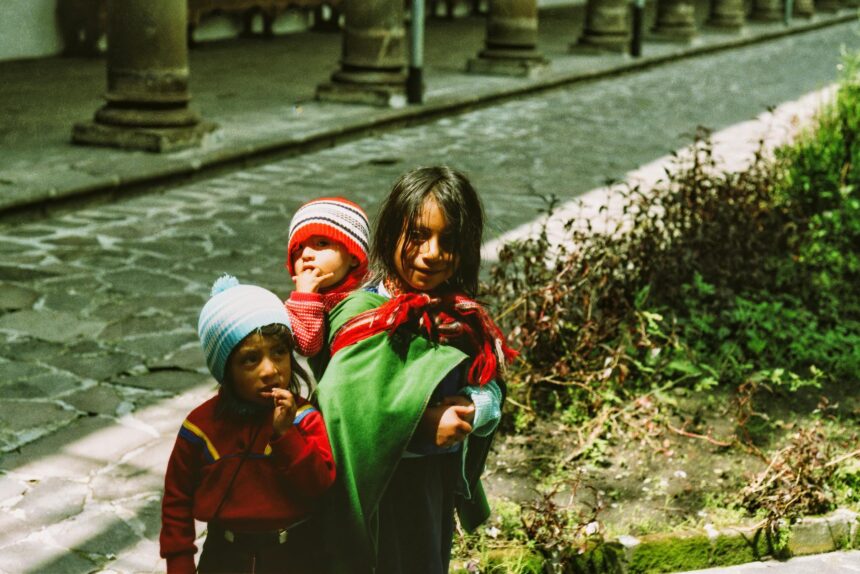
New research reveals that 73.3% of Ecuadorian children under 5 experience overlapping forms of malnutrition, with indigenous children facing the highest burden. The study identifies critical intervention windows and geographic clustering patterns. — Photo: Tom Fisk / Pexels
SHARE
1 min read|137 words

New evidence from a comprehensive population survey underscores the profound health inequities affecting Ecuador’s most vulnerable populations. The study reveals that 42.8% of indigenous children under five experience stunting—more than double the 18.1% rate among white children. This disparity extends across all measured conditions, with anaemia affecting 36.5% of indigenous children versus 28.2% of white children.

These striking differences are not biological but reflect what researchers identify as deep structural inequities embedded within Ecuador’s social and economic systems. The data, drawn from 8,864 children in the 2018 National Health and Nutrition Survey, demonstrates how ethnicity serves as a proxy for unequal access to nutrition, healthcare, and economic resources.

The research suggests that targeted interventions addressing socioeconomic barriers and systemic discrimination are essential to closing these equity gaps and improving child health outcomes across Latin America.

Read the full article on GMJ Newsroom.

Submit Your Paper
GMJ_Submit_Banner

Was this article helpful?

GMJ Brief · Key Finding

📰 Read the full article: Ecuador study reveals triple burden of malnutrition affecting 73% of children →

Share This Article
Facebook LinkedIn Bluesky Copy Link Print
GMJ
ByProf. Giorgi Pkhakadze
Follow:
Prof. Giorgi Pkhakadze, MD, MPH, PhD, is Editor-in-Chief of the Georgian Medical Journal and Chair of the Public Health Institute of Georgia (PHIG). He is Professor and Head of the Department of Social and Behavioural Sciences at David Tvildiani Medical University, and Secretary/Treasurer of the UEMS Section of Public Health. ORCID: 0000-0001-7609-4515.

Submit Your Paper →

Georgia's peer-reviewed open-access medical journal. No APC until January 2027.
Submit Manuscript →
WOAH Issues First Global Statement on Hantavirus as Zoonotic Disease Threat

The World Organisation for Animal Health issues its first comprehensive statement on…

World Animal Health Organization Launches Global Forum to Strengthen Disease Prevention Through Vaccination

WOAH launches PREVENT Forum, a global public-private partnership to strengthen animal disease…

WOAH Adopts Strategic Plan to Combat Global Animal Disease Threats Through 2031

WOAH adopts new strategic plan for 2027–2031 targeting zoonotic disease surveillance and…

Submit Your Paper to GMJ

No APC until January 2027.
Submit Manuscript →

You Might Also Like

SITUATION BRIEF: Cross-Border Ebola Outbreak – DRC/Uganda Border Region

By
Prof. Giorgi Pkhakadze
31/05/2026
Scientific illustration of CBD molecules and brain neurons showing reduced inflammation

55 Million Global Dementia Cases Drive Urgency for Novel Alzheimer’s Therapies

By
Prof. Giorgi Pkhakadze
13/06/2026

SITUATION BRIEF: Ebola Outbreak – Democratic Republic of Congo with Cross-Border Transmission to Uganda

By
Prof. Giorgi Pkhakadze
31/05/2026

PHEIC Declaration: Ebola Cross-Border Transmission DRC-Uganda

By
Prof. Giorgi Pkhakadze
31/05/2026
Facebook Twitter Youtube Instagram
Company
  • Privacy Policy
  • Contact US
  • GMJ Journal
  • Submit Manuscript
  • Editorial Team
  • Register at GMJ
  • Terms of Use

Subscribe to GMJ News — Click here

Join Community
© 2026 Georgian Medical Journal (GMJ). Published by the Public Health Institute of Georgia (PHIG). All rights reserved.
Welcome Back!

Sign in to your account

Username or Email Address
Password

Lost your password?

Not a member? Sign Up