By using this site, you agree to the Privacy Policy and Terms of Use.
Accept
GMJ NewsGMJ NewsGMJ News
  • Latest News
    • GMJ Briefs
  • Podcast & Media
    • Podcast Episodes
    • GMJ Audio
    • GMJ Videos
  • Research Digest
    • New Studies
    • Georgian Research
    • Data & Numbers
  • Policy & Systems
    • Health Policy
    • Quality & Safety
    • Migration & Health
    • Global Health
  • Practice
    • Clinical Updates
    • Case Discussions
    • Pharmacy & Prescribing
    • Ingredients A-Z
  • Perspectives
    • Editorial
    • Explainers
    • Voices
    • Letters
  • GMJ Articles
    • Vol. 1 Issue 2 (2026)
    • Vol. 1 Issue 1 (2026)
    • Pre-Launch Articles (2025)
  • Read the Journal →
  • About GMJ News
Notification Show More
Font ResizerAa
GMJ NewsGMJ News
Font ResizerAa
  • Latest News
    • GMJ Briefs
  • Podcast & Media
    • Podcast Episodes
    • GMJ Audio
    • GMJ Videos
  • Research Digest
    • New Studies
    • Georgian Research
    • Data & Numbers
  • Policy & Systems
    • Health Policy
    • Quality & Safety
    • Migration & Health
    • Global Health
  • Practice
    • Clinical Updates
    • Case Discussions
    • Pharmacy & Prescribing
    • Ingredients A-Z
  • Perspectives
    • Editorial
    • Explainers
    • Voices
    • Letters
  • GMJ Articles
    • Vol. 1 Issue 2 (2026)
    • Vol. 1 Issue 1 (2026)
    • Pre-Launch Articles (2025)
  • Read the Journal →
  • About GMJ News
Follow US
GMJ News > GMJ Briefs > 300 Million African Sickle Cell Carriers Face Treatment Access Crisis, BMJ Research Shows

300 Million African Sickle Cell Carriers Face Treatment Access Crisis, BMJ Research Shows

GMJ
Last updated: 05/07/2026 07:07
By
Prof. Giorgi Pkhakadze
Share
1 Min Read
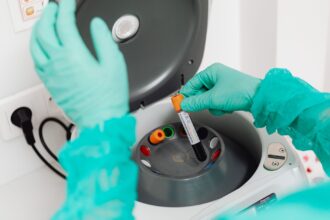
Medical laboratory equipment and healthcare infrastructure representing gene therapy capabilities in Africa
BMJ Global Health analysis reveals African healthcare systems need major infrastructure investment to deliver next-generation gene therapies for sickle cell disease. Current capacity serves less than 1% of eligible patients. — Photo by Roger Brown on Pexels (Pexels License)
SHARE
1 min read|146 words

New data from BMJ Global Health presents a stark picture of healthcare disparities: 300 million people across Africa carry the sickle cell trait, yet less than 1% of eligible patients receive advanced treatments. The burden is concentrated in sub-Saharan regions, with West Africa accounting for 25% of cases, Central Africa 20%, and East Africa 15%.

This substantial treatment gap reflects systemic infrastructure deficits rather than lack of therapeutic options. Emerging gene therapies and cellular treatments represent genuine opportunities for disease transformation, but their deployment requires specialized laboratory infrastructure, trained personnel, and sophisticated cold chain logistics—capabilities currently absent across most African healthcare facilities.

The disparity between disease prevalence and treatment availability highlights the critical need for targeted infrastructure investment. Without coordinated development of laboratory accreditation programs and workforce training initiatives, millions will continue lacking access to life-saving therapies that could fundamentally alter disease outcomes.

Read the full article on GMJ Newsroom.

Submit Your Paper
GMJ_Submit_Banner

Was this article helpful?

GMJ Brief · Key Finding

📰 Read the full article: Africa Needs Infrastructure Investment for Next-Generation Sickle Cell Therapies, BMJ Study Shows →

Share This Article
Facebook LinkedIn Bluesky Copy Link Print
GMJ
ByProf. Giorgi Pkhakadze
Follow:
Prof. Giorgi Pkhakadze, MD, MPH, PhD, is Editor-in-Chief of the Georgian Medical Journal and Chair of the Public Health Institute of Georgia (PHIG). He is Professor and Head of the Department of Social and Behavioural Sciences at David Tvildiani Medical University, and Secretary/Treasurer of the UEMS Section of Public Health. ORCID: 0000-0001-7609-4515.

Submit Your Paper →

Georgia's peer-reviewed open-access medical journal. No APC until January 2027.
Submit Manuscript →
Life-threatening skin infection: what clinicians need to know about necrotising fasciitis

Necrotising fasciitis, a rapidly progressive soft tissue infection, kills approximately 25% of…

Can Humans Grow a Third Set of Adult Teeth? What the Evidence Actually Shows

Humans naturally develop only two sets of teeth—primary and permanent—due to genetic…

Ebola Recoveries Offer Clinical and Public Health Insights Amid DRC Outbreak

Documented recoveries from Ebola virus disease in the Democratic Republic of Congo…

Submit Your Paper to GMJ

No APC until January 2027.
Submit Manuscript →

You Might Also Like

Clinical UpdatesGlobal HealthPolicy & SystemsPractice

WOAH Warns of Escalating Ebola Outbreak Across DRC and Uganda Border Region

By
Prof. Giorgi Pkhakadze
01/07/2026
PET brain scan showing alpha-synuclein detection in Parkinson's disease patient

10 Million Face Parkinson’s: New Imaging May Change Everything

By
Prof. Giorgi Pkhakadze
11/06/2026

EPIDEMIOLOGICAL INTELLIGENCE BRIEF: Ebola Cross-Border Transmission DRC-Uganda

By
Prof. Giorgi Pkhakadze
31/05/2026
Global HealthPolicy & Systems

WHO Declares Public Health Emergency as Ebola Outbreak Spreads from DRC to Uganda

By
Prof. Giorgi Pkhakadze
31/05/2026
Facebook Twitter Youtube Instagram
Company
  • Privacy Policy
  • Contact US
  • GMJ Journal
  • Submit Manuscript
  • Editorial Team
  • Register at GMJ
  • Terms of Use

Subscribe to GMJ News — Click here

Join Community
© 2026 Georgian Medical Journal (GMJ). Published by the Public Health Institute of Georgia (PHIG). All rights reserved.
Welcome Back!

Sign in to your account

Username or Email Address
Password

Lost your password?

Not a member? Sign Up