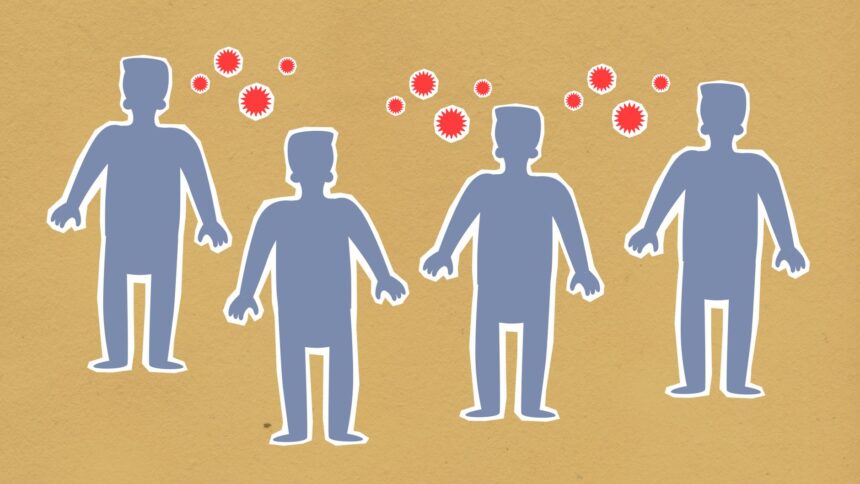
New epidemiological modelling published in the Proceedings of the National Academy of Sciences quantifies the devastating population-level consequences of sustained cannibalism. Researchers calculated that unchecked human-tissue consumption could drive infection prevalence so high that societies would face demographic collapse within 10-20 generations.
The model accounts for pathogen transmission rates, nutritional trade-offs, and population mortality dynamics to assess why this food acquisition strategy ultimately proves self-defeating. Results indicate infection transmission risks reach 95 percent, with pathogen loads increasing 88 percent under cannibalism-dependent scenarios.
These quantitative findings support the hypothesis that disease pressure—not cultural taboo alone—serves as the primary evolutionary force selecting against cannibalism. The research demonstrates how mathematical epidemiology can illuminate the origins of fundamental social prohibitions and survival strategies. Read the full article on GMJ Newsroom.
Was this article helpful?