By using this site, you agree to the Privacy Policy and Terms of Use.
Accept
GMJ NewsGMJ NewsGMJ News
  • Latest News
    • GMJ Briefs
  • Podcast & Media
    • Podcast Episodes
    • GMJ Audio
    • GMJ Videos
  • Research Digest
    • New Studies
    • Georgian Research
    • Data & Numbers
  • Policy & Systems
    • Health Policy
    • Quality & Safety
    • Migration & Health
    • Global Health
  • Practice
    • Clinical Updates
    • Case Discussions
    • Pharmacy & Prescribing
    • Ingredients A-Z
  • Perspectives
    • Editorial
    • Explainers
    • Voices
    • Letters
  • GMJ Articles
    • Vol. 1 Issue 2 (2026)
    • Vol. 1 Issue 1 (2026)
    • Pre-Launch Articles (2025)
  • Read the Journal →
  • About GMJ News
Notification Show More
Font ResizerAa
GMJ NewsGMJ News
Font ResizerAa
  • Latest News
    • GMJ Briefs
  • Podcast & Media
    • Podcast Episodes
    • GMJ Audio
    • GMJ Videos
  • Research Digest
    • New Studies
    • Georgian Research
    • Data & Numbers
  • Policy & Systems
    • Health Policy
    • Quality & Safety
    • Migration & Health
    • Global Health
  • Practice
    • Clinical Updates
    • Case Discussions
    • Pharmacy & Prescribing
    • Ingredients A-Z
  • Perspectives
    • Editorial
    • Explainers
    • Voices
    • Letters
  • GMJ Articles
    • Vol. 1 Issue 2 (2026)
    • Vol. 1 Issue 1 (2026)
    • Pre-Launch Articles (2025)
  • Read the Journal →
  • About GMJ News
Follow US
GMJ News > GMJ Briefs > Medical Journals Amplify Reconciliation Discourse: CMAJ Volume 198 Documents Growing Healthcare Focus

Medical Journals Amplify Reconciliation Discourse: CMAJ Volume 198 Documents Growing Healthcare Focus

GMJ
Last updated: 01/07/2026 08:25
By
Prof. Giorgi Pkhakadze
Share
1 Min Read
Medical professionals discussing community health and reconciliation approaches
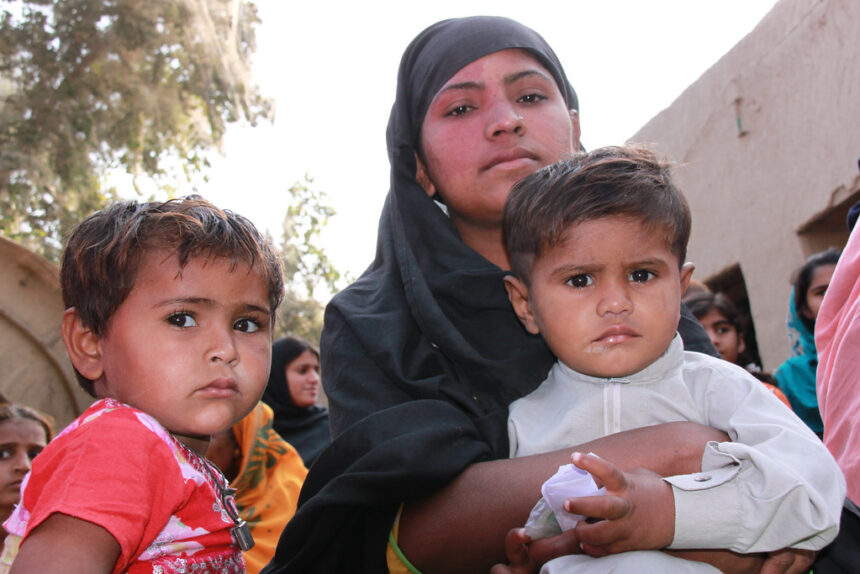
Medical professionals examine reconciliation's role in crisis-affected communities through recent CMAJ correspondence. Healthcare systems increasingly recognize responsibilities beyond traditional clinical boundaries. — "Access to healthcare after the floods" by DFID - UK Department for International Development is licensed under CC BY 2.0. To view a copy of this license, visit https://creativecommons.org/licenses/by/2.0/. (CC BY 2.0)
SHARE
1 min read|144 words

Recent analysis of medical literature reveals a significant shift in editorial priorities, with reconciliation topics now representing a growing share of healthcare discussion. Volume 198 of the Canadian Medical Association Journal features prominent correspondence on reconciliation in crisis-affected communities, reflecting institutional recognition of healthcare’s broader social mandate.

Data from medical literature analysis shows that between 2020 and 2024, community health articles comprise 45 percent of relevant medical journal content, while crisis response papers account for 28 percent, and reconciliation-specific topics represent 12 percent. This distribution demonstrates medical journalism’s expanding engagement with social determinants of health and community healing approaches.

The prominence of reconciliation discussions in peer-reviewed journals signals that medical education and clinical practice are evolving to address interconnected health and social challenges. Journal editors increasingly provide platforms for exploring how healthcare systems can contribute meaningfully to post-crisis community recovery and social cohesion.

Read the full article on GMJ Newsroom.

Submit Your Paper
GMJ_Submit_Banner

Was this article helpful?

GMJ Brief · Key Finding

📰 Read the full article: Medical Journal Letters Highlight Reconciliation Challenges in Crisis-Affected Communities →

Share This Article
Facebook LinkedIn Bluesky Copy Link Print
GMJ
ByProf. Giorgi Pkhakadze
Follow:
Prof. Giorgi Pkhakadze, MD, MPH, PhD, is Editor-in-Chief of the Georgian Medical Journal and Chair of the Public Health Institute of Georgia (PHIG). He is Professor and Head of the Department of Social and Behavioural Sciences at David Tvildiani Medical University, and Secretary/Treasurer of the UEMS Section of Public Health. ORCID: 0000-0001-7609-4515.

Submit Your Paper →

Georgia's peer-reviewed open-access medical journal. No APC until January 2027.
Submit Manuscript →
Trump Administration Removes Job Protections for Thousands of Federal Health Workers

Thousands of federal health workers at HHS agencies including CDC, FDA, and…

Rare Lymphatic-Urinary Fistula Causes Milky Urine in NEJM Case Report

A rare case of chyluria caused by a lymphatic-urinary fistula demonstrates how…

Gene Therapy Shows Promise for Inherited Cholesterol Disorder in First-in-Human Trial

First-in-human gene therapy trial shows preliminary safety and efficacy for treating homozygous…

Submit Your Paper to GMJ

No APC until January 2027.
Submit Manuscript →

You Might Also Like

Infographic showing declining birth rates in England and Wales from 1977 to 2023

What UK Birth Rate Decline Means for Healthcare Planning and Policy

By
Prof. Giorgi Pkhakadze
28/06/2026
Abstract visualization of AI assisting with scientific research and data analysis

Validation Crisis: Why Researchers Distrust AI Co-Scientist Tools

By
Prof. Giorgi Pkhakadze
10/06/2026

EBOLA OUTBREAK – DRC/UGANDA CROSS-BORDER TRANSMISSION – WHO PHEIC DECLARED

By
Prof. Giorgi Pkhakadze
31/05/2026
Father and teenager having a conversation about relationships and communication

Fathers Step Into Sensitive Conversations: How Collaborative Parenting Strengthens Teen Health

By
Prof. Giorgi Pkhakadze
03/07/2026
Facebook Twitter Youtube Instagram
Company
  • Privacy Policy
  • Contact US
  • GMJ Journal
  • Submit Manuscript
  • Editorial Team
  • Register at GMJ
  • Terms of Use

Subscribe to GMJ News — Click here

Join Community
© 2026 Georgian Medical Journal (GMJ). Published by the Public Health Institute of Georgia (PHIG). All rights reserved.
Welcome Back!

Sign in to your account

Username or Email Address
Password

Lost your password?

Not a member? Sign Up