By using this site, you agree to the Privacy Policy and Terms of Use.
Accept
GMJ NewsGMJ NewsGMJ News
  • Latest News
    • GMJ Briefs
  • Podcast & Media
    • Podcast Episodes
    • GMJ Audio
    • GMJ Videos
  • Research Digest
    • New Studies
    • Georgian Research
    • Data & Numbers
  • Policy & Systems
    • Health Policy
    • Quality & Safety
    • Migration & Health
    • Global Health
  • Practice
    • Clinical Updates
    • Case Discussions
    • Pharmacy & Prescribing
    • Ingredients A-Z
  • Perspectives
    • Editorial
    • Explainers
    • Voices
    • Letters
  • GMJ Articles
    • Vol. 1 Issue 2 (2026)
    • Vol. 1 Issue 1 (2026)
    • Pre-Launch Articles (2025)
  • Read the Journal →
  • About GMJ News
Notification Show More
Font ResizerAa
GMJ NewsGMJ News
Font ResizerAa
  • Latest News
    • GMJ Briefs
  • Podcast & Media
    • Podcast Episodes
    • GMJ Audio
    • GMJ Videos
  • Research Digest
    • New Studies
    • Georgian Research
    • Data & Numbers
  • Policy & Systems
    • Health Policy
    • Quality & Safety
    • Migration & Health
    • Global Health
  • Practice
    • Clinical Updates
    • Case Discussions
    • Pharmacy & Prescribing
    • Ingredients A-Z
  • Perspectives
    • Editorial
    • Explainers
    • Voices
    • Letters
  • GMJ Articles
    • Vol. 1 Issue 2 (2026)
    • Vol. 1 Issue 1 (2026)
    • Pre-Launch Articles (2025)
  • Read the Journal →
  • About GMJ News
Follow US
GMJ News > GMJ Briefs > Menu Warning Labels Demonstrate Significant Promise in Reducing Restaurant Sugar Consumption

Menu Warning Labels Demonstrate Significant Promise in Reducing Restaurant Sugar Consumption

GMJ
Last updated: 25/06/2026 06:25
By
Prof. Giorgi Pkhakadze
Share
1 Min Read
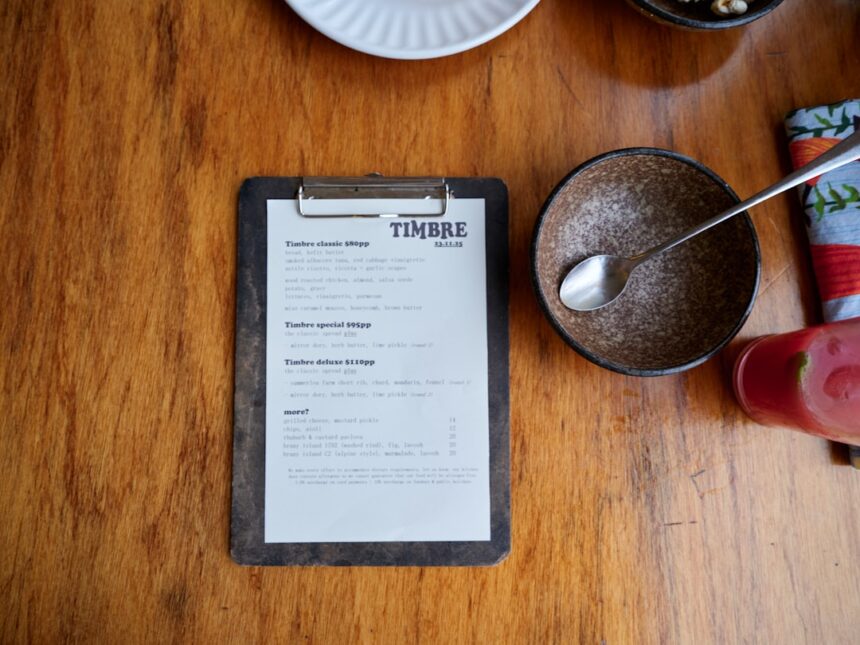
Restaurant menu with warning label highlighting high-sugar items
Large US trial shows restaurant menu warning labels cut added sugar orders by 31% without hurting customer satisfaction or business revenue. Icon-based warnings outperformed text-only labels. — Photo by Neon Wang on Unsplash (Unsplash License)
SHARE
1 min read|135 words

A landmark randomized controlled trial involving nearly 4,000 US adults has provided compelling evidence that warning labels on restaurant menus can substantially reduce added sugar orders. Conducted by researchers from Harvard T.H. Chan School of Public Health and New York University between March and August 2024, the study found a 31% reduction in added sugar orders when warning labels were present compared to standard menus.

The research tested three menu conditions, comparing standard menus against those featuring text-only warnings and icon-plus-text warnings with a red triangle symbol. Notably, the icon-based approach proved more effective, achieving a 35% reduction compared to 28% for text-only warnings. The findings carry significant public health implications, as implementing such labeling policies nationally could prevent thousands of diabetes and obesity cases while maintaining customer satisfaction and restaurant revenue.

Read the full article on GMJ Newsroom.

Was this article helpful?

GMJ Brief · Announcement

📰 Read the full article: Warning Labels on Restaurant Menus Cut Sugar Orders by 31%, Major US Trial Shows →

Related reference
  • Obesity · Condition
Share This Article
Facebook LinkedIn Bluesky Copy Link Print
GMJ
ByProf. Giorgi Pkhakadze
Follow:
Prof. Giorgi Pkhakadze, MD, MPH, PhD, is Editor-in-Chief of the Georgian Medical Journal and Chair of the Public Health Institute of Georgia (PHIG). He is Professor and Head of the Department of Social and Behavioural Sciences at David Tvildiani Medical University, and Secretary/Treasurer of the UEMS Section of Public Health. ORCID: 0000-0001-7609-4515.

Submit Your Paper →

Georgia's peer-reviewed open-access medical journal. No APC until January 2027.
Submit Manuscript →
Home Exercise Program Reduces Cognitive Decline During Cancer Chemotherapy

New trial shows home-based exercise significantly improved attention and reduced cognitive problems…

MIT Develops 3D Augmented Reality System for Medical Ultrasound Interpretation

MIT researchers have developed an augmented reality system that transforms 2D ultrasound…

AI System Diagnoses 100+ Brain Tumor Subtypes in Minutes With 95% Accuracy

German researchers developed an AI system that accurately classifies 100+ brain tumor…

Submit Your Paper to GMJ

No APC until January 2027.
Submit Manuscript →

You Might Also Like

PHEIC Declaration: Ebola Cross-Border Transmission DRC-Uganda

By
Prof. Giorgi Pkhakadze
31/05/2026
Medical researcher monitoring steam therapy equipment for diabetes treatment clinical trial

37 Million Americans with Diabetes: Arizona Trial Explores Heat Therapy as Treatment Option

By
Prof. Giorgi Pkhakadze
10/06/2026
Modern rooftop intensive care unit with natural lighting and outdoor environment at King's College Hospital

King’s College Hospital Pioneers Outdoor Critical Care with Revolutionary Rooftop ICU

By
Prof. Giorgi Pkhakadze
18/06/2026
Healthcare workers reviewing Chagas disease surveillance data in Latin American clinic

6-7 Million Infected Globally Yet Chagas Disease Surveillance Remains Critically Underfunded

By
Prof. Giorgi Pkhakadze
22/06/2026
Facebook Twitter Youtube Instagram
Company
  • Privacy Policy
  • Contact US
  • GMJ Journal
  • Submit Manuscript
  • Editorial Team
  • Register at GMJ
  • Terms of Use

Subscribe to GMJ News — Click here

Join Community
© 2026 Georgian Medical Journal (GMJ). Published by the Public Health Institute of Georgia (PHIG). All rights reserved.
Welcome Back!

Sign in to your account

Username or Email Address
Password

Lost your password?

Not a member? Sign Up