By using this site, you agree to the Privacy Policy and Terms of Use.
Accept
GMJ NewsGMJ NewsGMJ News
  • Latest News
    • GMJ Briefs
  • Podcast & Media
    • Podcast Episodes
    • GMJ Audio
    • GMJ Videos
  • Research Digest
    • New Studies
    • Georgian Research
    • Data & Numbers
  • Policy & Systems
    • Health Policy
    • Quality & Safety
    • Migration & Health
    • Global Health
  • Practice
    • Clinical Updates
    • Case Discussions
    • Pharmacy & Prescribing
    • Ingredients A-Z
  • Perspectives
    • Editorial
    • Explainers
    • Voices
    • Letters
  • GMJ Articles
    • Vol. 1 Issue 2 (2026)
    • Vol. 1 Issue 1 (2026)
    • Pre-Launch Articles (2025)
  • Read the Journal →
  • About GMJ News
Notification Show More
Font ResizerAa
GMJ NewsGMJ News
Font ResizerAa
  • Latest News
    • GMJ Briefs
  • Podcast & Media
    • Podcast Episodes
    • GMJ Audio
    • GMJ Videos
  • Research Digest
    • New Studies
    • Georgian Research
    • Data & Numbers
  • Policy & Systems
    • Health Policy
    • Quality & Safety
    • Migration & Health
    • Global Health
  • Practice
    • Clinical Updates
    • Case Discussions
    • Pharmacy & Prescribing
    • Ingredients A-Z
  • Perspectives
    • Editorial
    • Explainers
    • Voices
    • Letters
  • GMJ Articles
    • Vol. 1 Issue 2 (2026)
    • Vol. 1 Issue 1 (2026)
    • Pre-Launch Articles (2025)
  • Read the Journal →
  • About GMJ News
Follow US
GMJ News > Policy & Systems > Health Policy > Warning Labels on Restaurant Menus Cut Sugar Orders by 31%, Major US Trial Shows
Health PolicyNew StudiesPolicy & SystemsResearch Digest

Warning Labels on Restaurant Menus Cut Sugar Orders by 31%, Major US Trial Shows

GMJ
Last updated: 15/06/2026 12:25
By
GMJ Policy Desk
Share
8 Min Read
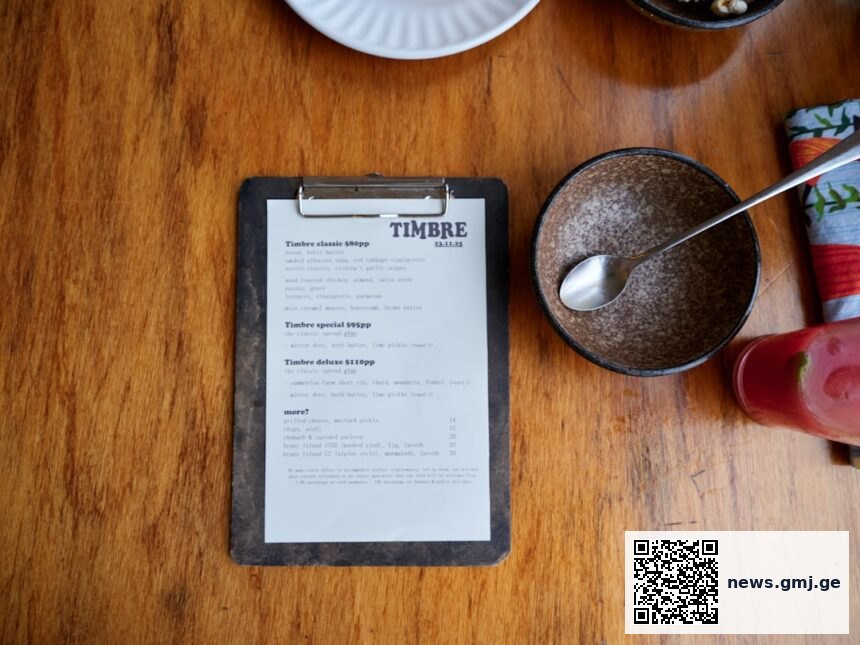
Restaurant menu with warning label highlighting high-sugar itemsIllustrative image · Photo by Neon Wang on Unsplash (Unsplash License)
Large US trial shows restaurant menu warning labels cut added sugar orders by 31% without hurting customer satisfaction or business revenue. Icon-based warnings outperformed text-only labels. — Photo by Neon Wang on Unsplash (Unsplash License)
SHARE
5 min read|967 words
✓ Reviewed by Prof. Giorgi Pkhakadze, MD, MPH, PhD · ORCID 0000-0001-7609-4515

🟢 Strong Evidence

Contents
    • Key takeaways
      • Study at a Glance
      • Sugar Reduction by Warning Label Type
  • Large Trial Tests Real-World Menu Impact
  • Icon Warnings Outperform Text-Only Labels
  • Policy Implications for Public Health
  • Industry Response and Implementation Challenges
    • What this means
  • Frequently asked questions
    • How much added sugar triggers a warning label?
    • Would warning labels hurt restaurant business?
    • Which US cities already require menu warnings?

Warning labels on restaurant menus could significantly reduce the amount of added sugar Americans consume when dining out, according to a large randomized controlled trial published in The Lancet Public Health. The study of nearly 4,000 participants found that menu warning labels decreased added sugar ordered by 31% compared to standard menus without warnings.

Key takeaways

  • Warning labels reduced added sugar ordered from restaurants by 31% in controlled trial
  • Icon-based warnings performed better than text-only labels for sugar reduction
  • Labels had no negative impact on restaurant revenue or customer satisfaction
  • Policy could prevent thousands of diabetes and obesity cases if implemented nationally

Study at a Glance

Source The Lancet Public Health
Study type Randomized controlled trial
Sample size N = 3,998
Population US adults ordering from simulated restaurant menus
Country United States
31%
reduction in added sugar ordered when warning labels appeared on restaurant menus

Sugar Reduction by Warning Label Type

Percentage decrease in added sugar orders compared to control menus, by label design

Icon + Text Warning
35%
Text-Only Warning
28%
Standard Menu

0%

Source: The Lancet Public Health, 2026 | Georgian Medical Journal News

Submit Your Paper
GMJ_Submit_Banner

Large Trial Tests Real-World Menu Impact

Researchers from Harvard T.H. Chan School of Public Health and New York University conducted the randomized trial between March and August 2024, recruiting 3,998 US adults through an online platform. Participants viewed simulated restaurant menus for popular chain establishments and selected items they would order in real life.

🎙️ Related Podcast Episodes
🎧 #7 | WHO Health Tax Strategy: Sugary Drinks, Alcohol, and the Global Fight Against Noncommunicable Diseases · 21m

The study tested three menu conditions: standard menus with no warnings, menus with text-only sugar warnings, and menus with icon-plus-text warnings featuring a red triangle symbol. Dr. Anna Grummon, lead investigator at Harvard’s Department of Nutrition, noted that the research aimed to provide evidence for potential policy interventions targeting the 13% of total calories Americans consume as added sugars.

Menu items receiving warnings included those with 10 grams or more of added sugar per serving—a threshold that captured beverages like sodas and specialty coffees, as well as desserts and some entrees with sugary sauces. The policy research builds on growing interest in menu labeling strategies to address diet-related chronic diseases.

Icon Warnings Outperform Text-Only Labels

Both warning label formats significantly reduced added sugar orders, but icon-based warnings proved more effective. Participants viewing icon-plus-text warnings ordered 35% less added sugar on average, while those seeing text-only warnings reduced their sugar orders by 28%, according to the Lancet Public Health study.

The warnings influenced multiple ordering behaviors simultaneously. Participants were more likely to notice high-sugar items, reported greater awareness of sugar content, and expressed increased concern about health impacts when warnings were present. Importantly, the labels did not reduce overall restaurant spending or meal satisfaction scores.

Professor Barry Popkin, nutrition epidemiologist at the University of North Carolina who was not involved in the research, told researchers that the findings support WHO recommendations for reducing free sugar intake to less than 10% of total energy consumption.

Policy Implications for Public Health

The research comes as several US jurisdictions consider menu labeling policies beyond the current federal requirement for calorie disclosure. The FDA’s existing menu labeling rules mandate calorie information but do not address added sugars specifically.

Mathematical modeling conducted by the research team suggests that implementing sugar warning labels nationally could prevent approximately 2.3 million cases of diabetes and 1.7 million cases of obesity over a 20-year period. The estimated healthcare cost savings exceed $15 billion annually, according to projections published alongside the main trial results.

Several cities including San Francisco and Philadelphia have already implemented or are considering expanded menu labeling requirements. The consumer advocacy organization Center for Science in the Public Interest has petitioned federal regulators to require sugar warnings on restaurant menus nationwide.

Industry Response and Implementation Challenges

The National Restaurant Association has expressed concerns about implementation costs and menu design complexity, though the study found no evidence that warnings reduced customer satisfaction or spending. Restaurant industry representatives argue that comprehensive nutrition information is already available through apps and websites for major chains.

However, behavioral economics research suggests that point-of-purchase interventions like menu warnings are more effective than requiring consumers to actively seek nutrition information. Dr. Grummon’s team noted that warning labels require minimal technological infrastructure compared to digital menu boards or mobile app integration.

Menu warning labels decreased added sugar ordered by 31% while maintaining customer satisfaction and restaurant revenue in a controlled trial of nearly 4,000 US adults.

— Dr. Anna Grummon, Harvard T.H. Chan School of Public Health (The Lancet Public Health, 2026)

What this means

For patients: Look for menu items without warning labels when dining out, and consider asking restaurants about sugar content in dishes and beverages
For clinicians: Consider counseling patients about hidden sources of added sugar in restaurant foods, particularly beverages and sauces, as part of diabetes and obesity prevention
For policymakers: Evidence supports implementing menu warning labels for high-sugar items as a cost-effective intervention to reduce population sugar consumption and prevent chronic disease

Frequently asked questions

How much added sugar triggers a warning label?

The study used a threshold of 10 grams of added sugar per serving, which equals about 2.5 teaspoons. This captures most regular sodas, specialty coffee drinks, and many desserts.

Would warning labels hurt restaurant business?

The trial found no negative impact on customer satisfaction scores or total spending per order when warning labels were present on menus.

Which US cities already require menu warnings?

Several cities including San Francisco have implemented or are considering expanded menu labeling beyond calories, though comprehensive sugar warning requirements remain limited.

The research provides the strongest evidence to date that restaurant menu warnings could serve as an effective policy tool for addressing the overconsumption of added sugars in the American diet. With chronic diseases linked to excess sugar intake continuing to rise, the findings suggest that targeted menu interventions could complement broader public health strategies for improving diet quality at the population level.

Source: Effects of added-sugar warning labels on restaurant menus in the USA: an online randomised controlled trial

Was this article helpful?

Disclaimer. This article is health journalism intended for general information and education. It is not medical advice and is not a substitute for professional diagnosis or treatment. Always consult a qualified healthcare provider about your individual circumstances. Full disclaimer →

Related Coverage
Medical Professionals Face Involuntary Practice Closure: NEJM Analysis Reveals Growing Healthcare Access CrisisJun 18, 2026
Weekly semaglutide outperforms dulaglutide for diabetes control in UK primary care studyJun 18, 2026
Climate Coalition Proposes Fossil Fuel Phase-Out After UN Process StallsJun 18, 2026
Climate Change Linked to Rising Antimicrobial Resistance in Salmonella GloballyJun 18, 2026
Related reference
  • Obesity · Condition
PG
Written by
Prof. Giorgi Pkhakadze, MD, MPH, PhD
Editor-in-Chief, GMJ News
Full profile →
Medical disclaimer. This article is health journalism intended for general information. It is not medical advice and is not a substitute for consultation with a qualified healthcare professional. Always seek your physician's advice regarding any medical condition.
Medically reviewed by Prof. Giorgi Pkhakadze, MD, MPH, PhD. Spotted an error? Contact the editorial team.

Get the GMJ News digest
Evidence-based health journalism in your inbox. No spam; unsubscribe anytime.
TAGGED:diabetes preventionobesity preventionpublic health policyrestaurant menussugar warnings
Share This Article
Facebook LinkedIn Bluesky Copy Link Print
GMJ
ByGMJ Policy Desk
Follow:
GMJ Policy Desk is part of GMJ News, the newsroom of the Georgian Medical Journal (gmj.ge), published by the Public Health Institute of Georgia. Every article is editorially reviewed before publication.
Leave a Comment Leave a Comment

Leave a Reply Cancel reply

Your email address will not be published. Required fields are marked *

Submit Your Paper →

Georgia's peer-reviewed open-access medical journal. No APC until January 2027.
Submit Manuscript →
Medical Professionals Face Involuntary Practice Closure: NEJM Analysis Reveals Growing Healthcare Access Crisis

New NEJM analysis reveals growing crisis of involuntary medical practice closures affecting…

Weekly semaglutide outperforms dulaglutide for diabetes control in UK primary care study

Large UK study shows weekly semaglutide provides superior blood sugar control and…

Climate Coalition Proposes Fossil Fuel Phase-Out After UN Process Stalls

Netherlands and Colombia launch coalition of willing nations to phase out fossil…

Submit Your Paper to GMJ

No APC until January 2027.
Submit Manuscript →

You Might Also Like

NHS Online hospital trust digital healthcare platform interface showing virtual consultation capabilitiesIllustrative image · Photo by Max Tcvetkov on Unsplash (Unsplash License)
Health PolicyPolicy & Systems

NHS Appoints First Chair of Groundbreaking Online Hospital Trust

By
GMJ Policy Desk
17/06/2026
Infographic showing five different metabolic pathways leading to type 2 diabetes diagnosis
New StudiesResearch Digest

Five Distinct Diabetes Development Patterns Identified Years Before Diagnosis

By
GMJ Research Desk
12/06/2026
Infographic showing percentage changes in seven physiological systems after sleep restriction
New Studies

Sleep Loss Triggers Simultaneous Breakdown Across Seven Body Systems

By
GMJ Research Desk
21/05/2026
Illustration of irisin signalling pathway in multiple sclerosis neuroprotection
New Studies

Exercise Hormone Irisin Shows Promise in Multiple Sclerosis Neuroprotection

By
GMJ Research Desk
21/05/2026
Facebook Twitter Youtube Instagram
Company
  • Privacy Policy
  • Contact US
  • GMJ Journal
  • Submit Manuscript
  • Editorial Team
  • Register at GMJ
  • Terms of Use

Subscribe to GMJ News — Click here

Join Community
© 2026 Georgian Medical Journal (GMJ). Published by the Public Health Institute of Georgia (PHIG). All rights reserved.
Welcome Back!

Sign in to your account

Username or Email Address
Password

Lost your password?

Not a member? Sign Up