By using this site, you agree to the Privacy Policy and Terms of Use.
Accept
GMJ NewsGMJ NewsGMJ News
  • Latest News
    • GMJ Briefs
  • Podcast & Media
    • Podcast Episodes
    • GMJ Audio
    • GMJ Videos
  • Research Digest
    • New Studies
    • Georgian Research
    • Data & Numbers
  • Policy & Systems
    • Health Policy
    • Quality & Safety
    • Migration & Health
    • Global Health
  • Practice
    • Clinical Updates
    • Case Discussions
    • Pharmacy & Prescribing
    • Ingredients A-Z
  • Perspectives
    • Editorial
    • Explainers
    • Voices
    • Letters
  • GMJ Articles
    • Vol. 1 Issue 2 (2026)
    • Vol. 1 Issue 1 (2026)
    • Pre-Launch Articles (2025)
  • Read the Journal →
  • About GMJ News
Notification Show More
Font ResizerAa
GMJ NewsGMJ News
Font ResizerAa
  • Latest News
    • GMJ Briefs
  • Podcast & Media
    • Podcast Episodes
    • GMJ Audio
    • GMJ Videos
  • Research Digest
    • New Studies
    • Georgian Research
    • Data & Numbers
  • Policy & Systems
    • Health Policy
    • Quality & Safety
    • Migration & Health
    • Global Health
  • Practice
    • Clinical Updates
    • Case Discussions
    • Pharmacy & Prescribing
    • Ingredients A-Z
  • Perspectives
    • Editorial
    • Explainers
    • Voices
    • Letters
  • GMJ Articles
    • Vol. 1 Issue 2 (2026)
    • Vol. 1 Issue 1 (2026)
    • Pre-Launch Articles (2025)
  • Read the Journal →
  • About GMJ News
Follow US
GMJ News > GMJ Briefs > Microbiome Analysis May Enable Early Detection of Parkinson’s Disease Risk

Microbiome Analysis May Enable Early Detection of Parkinson’s Disease Risk

GMJ
Last updated: 21/06/2026 09:17
By
Prof. Giorgi Pkhakadze
Share
1 Min Read
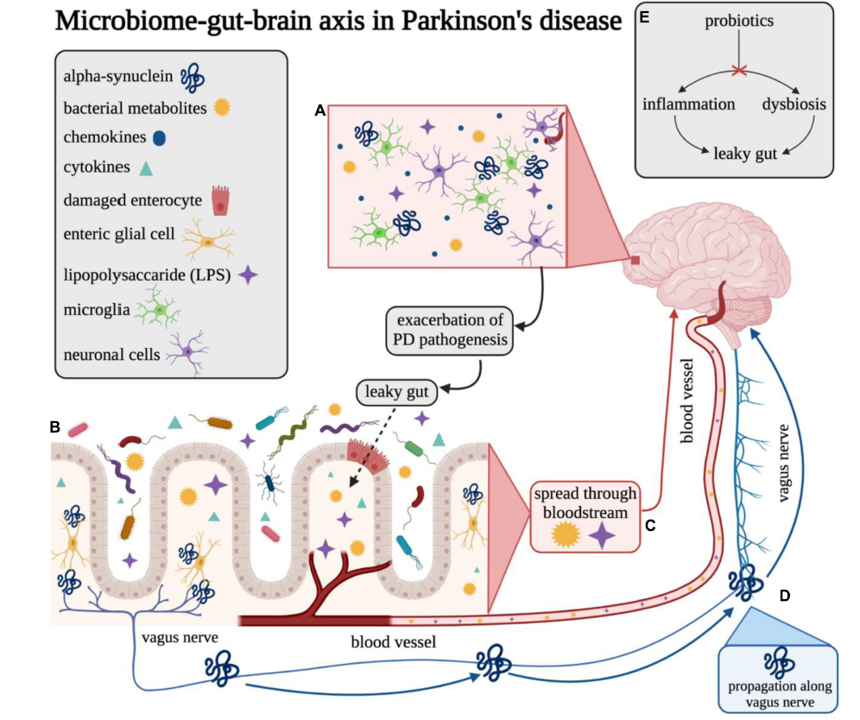
Scientific illustration of gut microbiome bacteria and brain connection for Parkinson's disease research
New research published in Nature Medicine reveals that gut microbiome analysis could identify Parkinson's disease risk years before symptoms appear. The study found progressive microbiome changes across healthy, at-risk, and symptomatic individuals, with healthy diet showing protective effects. — "Overview of the gut–brain axis in Parkinson’s disease" by Emily M. Klann, Upuli Dissanayake, Anjela Gurrala, Matthew Farrer, Aparna Wagle Shukla, Adolfo Ramirez-Zamora, Volker Mai, and Vinata Vedam-Mai is licensed under CC BY 4.0. To view a copy of this license, visit https://creativecommons.org/licenses/by/4.0/. (CC BY 4.0)
SHARE
1 min read|122 words

A groundbreaking study published in Nature Medicine reveals that gut microbiome screening could identify individuals at risk for Parkinson’s disease years before clinical symptoms manifest. Researchers analyzed distinctive microbial patterns across three cohorts: healthy individuals, those with genetic predisposition to Parkinson’s, and symptomatic patients, discovering a coherent progression of microbiome alterations that precedes motor dysfunction.

These findings represent a significant advancement in understanding the gut-brain connection in neurodegenerative disease. By identifying predictable microbiome changes, clinicians may develop risk stratification tools to guide preventive interventions. The research also highlights the protective role of dietary factors, with healthy eating patterns showing an inverse association with disease-related microbiome alterations, suggesting that lifestyle modifications could complement future therapeutic strategies.

Read the full article on GMJ Newsroom.

Was this article helpful?

GMJ Brief · Announcement

📰 Read the full article: Gut microbiome screening could predict Parkinson’s disease risk years before symptoms emerge →

Share This Article
Facebook LinkedIn Bluesky Copy Link Print
GMJ
ByProf. Giorgi Pkhakadze
Follow:
Prof. Giorgi Pkhakadze, MD, MPH, PhD, is Editor-in-Chief of the Georgian Medical Journal and Chair of the Public Health Institute of Georgia (PHIG). He is Professor and Head of the Department of Social and Behavioural Sciences at David Tvildiani Medical University, and Secretary/Treasurer of the UEMS Section of Public Health. ORCID: 0000-0001-7609-4515.

Submit Your Paper →

Georgia's peer-reviewed open-access medical journal. No APC until January 2027.
Submit Manuscript →
Orforglipron Shows Clinically Significant HbA1c Reductions in Type 2 Diabetes

Two phase III randomised controlled trials presented at the American Diabetes Association…

Plasma protein signatures reveal how individual cell types age and predict disease risk

Plasma proteomics can measure biological aging independently in 40+ cell types, with…

Bidi Smoking Linked to Elevated Cancer Risk in Large Indian Study

A multicentre case-control study in India links bidi smoking—hand-rolled cigarettes common in…

Submit Your Paper to GMJ

No APC until January 2027.
Submit Manuscript →

You Might Also Like

Modern home interior with health-focused design modifications including improved ventilation and safe play areas

From Blueprint to Better Health: How Home Design Becomes Clinical Intervention

By
Prof. Giorgi Pkhakadze
03/06/2026
Global HealthPolicy & Systems

WHO Declares Emergency as Ebola Spreads from DRC to Uganda

By
Prof. Giorgi Pkhakadze
31/05/2026
Healthcare workers conducting disease surveillance in Latin American community

1 Billion People Worldwide Struggle with Neglected Tropical Diseases—New PAHO Initiative Targets 200 Million in Americas

By
Prof. Giorgi Pkhakadze
12/06/2026
New StudiesResearch Digest

First Real-World RSV Vaccine Study Shows Strong Protection Against Severe Disease

By
Prof. Giorgi Pkhakadze
28/05/2026
Facebook Twitter Youtube Instagram
Company
  • Privacy Policy
  • Contact US
  • GMJ Journal
  • Submit Manuscript
  • Editorial Team
  • Register at GMJ
  • Terms of Use

Subscribe to GMJ News — Click here

Join Community
© 2026 Georgian Medical Journal (GMJ). Published by the Public Health Institute of Georgia (PHIG). All rights reserved.
Welcome Back!

Sign in to your account

Username or Email Address
Password

Lost your password?

Not a member? Sign Up