By using this site, you agree to the Privacy Policy and Terms of Use.
Accept
GMJ NewsGMJ NewsGMJ News
  • Latest News
    • GMJ Briefs
  • Podcast & Media
    • Podcast Episodes
    • GMJ Audio
    • GMJ Videos
  • Research Digest
    • New Studies
    • Georgian Research
    • Data & Numbers
  • Policy & Systems
    • Health Policy
    • Quality & Safety
    • Migration & Health
    • Global Health
  • Practice
    • Clinical Updates
    • Case Discussions
    • Pharmacy & Prescribing
    • Ingredients A-Z
  • Perspectives
    • Editorial
    • Explainers
    • Voices
    • Letters
  • GMJ Articles
    • Vol. 1 Issue 2 (2026)
    • Vol. 1 Issue 1 (2026)
    • Pre-Launch Articles (2025)
  • Read the Journal →
  • About GMJ News
Notification Show More
Font ResizerAa
GMJ NewsGMJ News
Font ResizerAa
  • Latest News
    • GMJ Briefs
  • Podcast & Media
    • Podcast Episodes
    • GMJ Audio
    • GMJ Videos
  • Research Digest
    • New Studies
    • Georgian Research
    • Data & Numbers
  • Policy & Systems
    • Health Policy
    • Quality & Safety
    • Migration & Health
    • Global Health
  • Practice
    • Clinical Updates
    • Case Discussions
    • Pharmacy & Prescribing
    • Ingredients A-Z
  • Perspectives
    • Editorial
    • Explainers
    • Voices
    • Letters
  • GMJ Articles
    • Vol. 1 Issue 2 (2026)
    • Vol. 1 Issue 1 (2026)
    • Pre-Launch Articles (2025)
  • Read the Journal →
  • About GMJ News
Follow US
GMJ News > Research Digest > New Studies > Gut microbiome screening could predict Parkinson’s disease risk years before symptoms emerge
New StudiesResearch Digest

Gut microbiome screening could predict Parkinson’s disease risk years before symptoms emerge

GMJ
Last updated: 13/06/2026 10:46
By
GMJ Research Desk
Share
6 Min Read
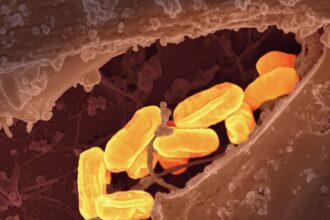
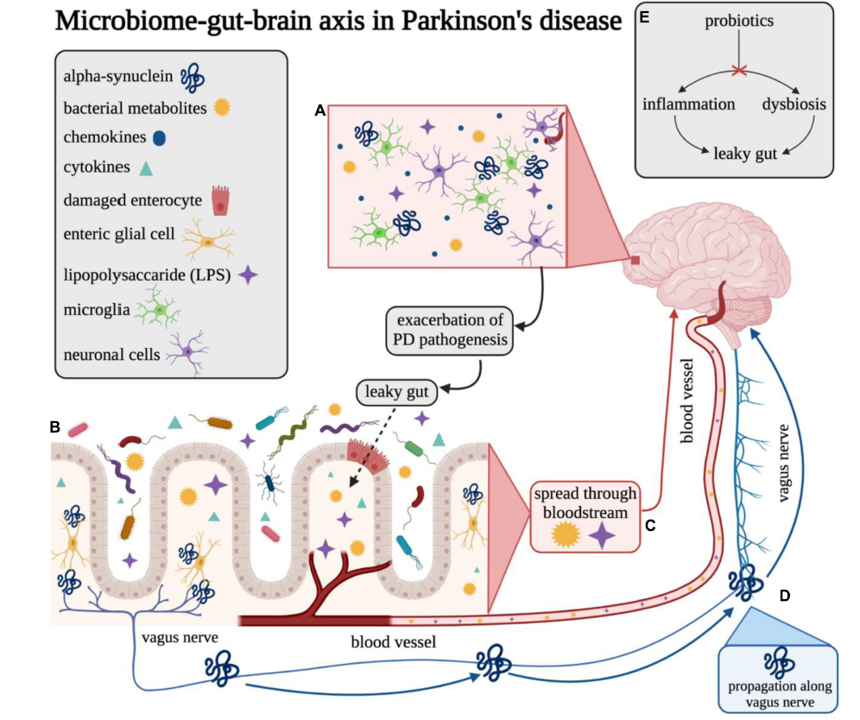
Scientific illustration of gut microbiome bacteria and brain connection for Parkinson's disease researchIllustrative image · "Overview of the gut–brain axis in Parkinson’s disease" by Emily M. Klann, Upuli Dissanayake, Anjela Gurrala, Matthew Farrer, Aparna Wagle Shukla, Adolfo Ramirez-Zamora, Volker Mai, and Vinata Vedam-Mai is licensed under CC BY 4.0. To view a copy of this license, visit https://creativecommons.org/licenses/by/4.0/. (CC BY 4.0)
New research published in Nature Medicine reveals that gut microbiome analysis could identify Parkinson's disease risk years before symptoms appear. The study found progressive microbiome changes across healthy, at-risk, and symptomatic individuals, with healthy diet showing protective effects. — "Overview of the gut–brain axis in Parkinson’s disease" by Emily M. Klann, Upuli Dissanayake, Anjela Gurrala, Matthew Farrer, Aparna Wagle Shukla, Adolfo Ramirez-Zamora, Volker Mai, and Vinata Vedam-Mai is licensed under CC BY 4.0. To view a copy of this license, visit https://creativecommons.org/licenses/by/4.0/. (CC BY 4.0)
SHARE
4 min read|762 words

Researchers have identified distinctive patterns in the gut microbiome that could serve as early warning signs for Parkinson’s disease, potentially allowing for risk assessment years before motor symptoms appear. The breakthrough study, published in Nature Medicine, reveals that specific microbial changes occur progressively from healthy individuals to those with genetic risk factors to patients with symptomatic disease.

Contents
      • Microbiome risk progression in Parkinson’s disease
  • Progressive microbiome alterations reveal disease trajectory
  • Dietary factors show protective potential
  • Clinical implications for early intervention
  • Future research directions and validation
    • Key takeaways
  • Frequently asked questions
    • How early can gut microbiome changes detect Parkinson’s risk?
    • Can dietary changes prevent Parkinson’s disease?
    • When will microbiome screening be available clinically?
Years earlier
Gut microbiome changes detectable before Parkinson’s symptoms appear, according to Nature Medicine research

Microbiome risk progression in Parkinson’s disease

Coherent changes across healthy, at-risk, and symptomatic groups

3
distinct groups
analyzed
Progressive
microbiome
changes
Early
detection
potential

Source: Nature Medicine, 2026 | Georgian Medical Journal News

Progressive microbiome alterations reveal disease trajectory

The study demonstrates that gut microbiome changes follow a coherent pattern across three distinct groups: healthy individuals, those with genetic predisposition to Parkinson’s disease, and patients already showing symptoms. According to the Nature Medicine research, these alterations occur in a predictable sequence that could enable early intervention strategies.

Submit Your Paper
GMJ_Submit_Banner

The findings suggest that microbiome analysis could complement existing diagnostic approaches and potentially identify individuals who would benefit from preventive treatments. This represents a significant advance in understanding the gut-brain connection in neurodegenerative diseases, adding to the growing body of evidence linking intestinal health to neurological function documented in previous research studies.

🎙️ Related Podcast Episodes
🎧 #26 | Denmark Becomes First EU Country to Eliminate Mother-to-Child Transmission of HIV and · 14m
🎧 #30 | GMJ Podcast | Global Health: Why Health Systems Matter · 15m
🎧 #28 | GMJ Podcast | SheniEkimi.ge #1: Top 5 Evidence-Based Public Health News · 19m
🎧 #25 | WHO Warns: Childhood Hearing Loss Must Be Addressed Early · 19m
🎧 #21 | WHO Issues New Guidance on Novel Snakebite Treatments · 14m

Dietary factors show protective potential

A particularly encouraging aspect of the research involves the relationship between diet and microbiome health. The study found that a healthy diet was inversely associated with the microbiome alterations linked to Parkinson’s risk, suggesting that nutritional interventions might help mitigate disease development.

These findings align with emerging research on the role of nutrition in neurodegenerative disease prevention, as explored in detail by public health nutrition studies. The protective effect of healthy dietary patterns could provide a accessible intervention strategy for individuals identified as being at higher risk through microbiome screening.

Clinical implications for early intervention

The ability to identify Parkinson’s disease risk through microbiome analysis opens new possibilities for clinical management. Early detection could enable healthcare providers to implement lifestyle modifications, monitor disease progression more closely, and potentially begin neuroprotective treatments before irreversible neuronal damage occurs.

This approach represents a shift toward predictive medicine in neurology, where risk assessment tools could guide personalized prevention strategies. The research contributes to broader efforts in precision medicine documented in clinical advancement reports, where molecular markers are increasingly used to guide treatment decisions.

Future research directions and validation

While these results are promising, the researchers emphasize the need for larger validation studies to confirm the predictive accuracy of microbiome screening across diverse populations. Future research will likely focus on developing standardized protocols for microbiome analysis and establishing clinical guidelines for interpreting results.

The study also raises important questions about the mechanisms underlying gut-brain communication in Parkinson’s disease and how dietary interventions might be optimized to provide maximum protective benefit. These investigations could inform both prevention strategies and therapeutic approaches for managing neurodegenerative conditions, as detailed in ongoing NIH research initiatives.

Innovative microbiome analysis revealed coherent changes from healthy individuals across those with genetic risk of Parkinson’s disease to symptomatic patients, with healthy diet inversely associated with disease-linked alterations.

— Research team, Nature Medicine (2026)

Key takeaways

  • Gut microbiome patterns can identify Parkinson’s disease risk before symptoms appear
  • Progressive microbiome changes occur across healthy, at-risk, and symptomatic individuals
  • Healthy dietary patterns may protect against disease-associated microbiome alterations
  • Early detection could enable preventive interventions and lifestyle modifications
  • Further validation studies needed to confirm clinical utility of microbiome screening

Frequently asked questions

How early can gut microbiome changes detect Parkinson’s risk?

The Nature Medicine study shows that microbiome alterations occur progressively from healthy individuals to those with genetic risk to symptomatic patients. This suggests detection could occur years before motor symptoms develop, though specific timeframes require further research.

Can dietary changes prevent Parkinson’s disease?

The research found that healthy diet patterns were inversely associated with disease-linked microbiome changes, suggesting potential protective effects. However, more studies are needed to establish whether dietary interventions can definitively prevent disease onset.

When will microbiome screening be available clinically?

While the research shows promise, clinical implementation requires validation in larger, diverse populations and development of standardized testing protocols. Timeline for clinical availability depends on successful completion of these validation studies.

The development of microbiome-based screening represents a significant step forward in the early detection of Parkinson’s disease, potentially transforming how clinicians approach neurodegenerative disease prevention. As validation studies progress and our understanding of gut-brain interactions deepens, these tools could become integral components of personalized healthcare strategies aimed at maintaining neurological health throughout aging.

Source: Gut microbiome screens could identify risk of Parkinson’s disease years before symptoms appear

Was this article helpful?

Disclaimer. This article is health journalism intended for general information and education. It is not medical advice and is not a substitute for professional diagnosis or treatment. Always consult a qualified healthcare provider about your individual circumstances. Full disclaimer →

Related Coverage

Genetic-Environmental Interactions Accelerate Brain Aging in Latin AmericaJun 14, 2026
Brain Scans Reveal No Widespread Inflammation in Long COVID Patients, Challenging Previous TheoriesJun 14, 2026
Blocking Key Protein GPNMB Shows Promise in Halting Parkinson's Disease SpreadJun 14, 2026
Continued smoking before lung cancer surgery increases pulmonary complications but not short-term mortalityJun 14, 2026
PG
Written by
Prof. Giorgi Pkhakadze, MD, MPH, PhD
Editor-in-Chief, GMJ News
Full profile →
Medical disclaimer. This article is health journalism intended for general information. It is not medical advice and is not a substitute for consultation with a qualified healthcare professional. Always seek your physician's advice regarding any medical condition.
Medically reviewed by Prof. Giorgi Pkhakadze, MD, MPH, PhD. Spotted an error? Contact the editorial team.

Get the GMJ News digest
Evidence-based health journalism in your inbox. No spam; unsubscribe anytime.
TAGGED:early detectiongut microbiomeneurologyParkinson's diseaseprevention
Share This Article
Facebook LinkedIn Bluesky Copy Link Print
GMJ
ByGMJ Research Desk
Follow:
GMJ Research Desk is part of GMJ News, the newsroom of the Georgian Medical Journal (gmj.ge), published by the Public Health Institute of Georgia. Every article is editorially reviewed before publication.
Leave a Comment Leave a Comment

Leave a Reply Cancel reply

Your email address will not be published. Required fields are marked *

Submit Your Paper →

Georgia's peer-reviewed open-access medical journal. No APC until January 2027.
Submit Manuscript →
ECDC Convenes 80 European Experts to Strengthen Respiratory Virus Surveillance

ECDC brought together 80 respiratory virus experts from across Europe in Vienna…

Genetic-Environmental Interactions Accelerate Brain Aging in Latin America

New research reveals how poverty and pollution accelerate brain aging by up…

Brain Scans Reveal No Widespread Inflammation in Long COVID Patients, Challenging Previous Theories

New brain imaging study finds no widespread inflammation in long COVID patients,…

Submit Your Paper to GMJ

No APC until January 2027.
Submit Manuscript →

You Might Also Like

Illustration of ribosome collisions in brain cells causing protein misfolding and aging
New StudiesResearch Digest

Protein ‘Traffic Jams’ in Brain Cells May Drive Aging and Memory Loss

By
GMJ Research Desk
04/06/2026
Scientific illustration of cell division failure showing tetraploid cells with doubled DNA content
New StudiesResearch Digest

Scientists discover why some DNA-doubled cells refuse to die

By
GMJ Research Desk
27/05/2026
Children laughing during therapeutic play session showing brain development benefits
New StudiesResearch Digest

Laughter Therapy Builds Brain Resilience in Children, New Research Shows

By
GMJ Research Desk
28/05/2026
Infographic showing key risk factors for child wasting in Ghana including diarrheal episodes and maternal education
New StudiesResearch Digest

Machine Learning Analysis Reveals Key Predictors of Child Wasting in Ghana

By
GMJ Research Desk
31/05/2026
Facebook Twitter Youtube Instagram
Company
  • Privacy Policy
  • Contact US
  • GMJ Journal
  • Submit Manuscript
  • Editorial Team
  • Register at GMJ
  • Terms of Use

Subscribe to GMJ News — Click here

Join Community
© 2026 Georgian Medical Journal (GMJ). Published by the Public Health Institute of Georgia (PHIG). All rights reserved.
Welcome Back!

Sign in to your account

Username or Email Address
Password

Lost your password?

Not a member? Sign Up