By using this site, you agree to the Privacy Policy and Terms of Use.
Accept
GMJ NewsGMJ NewsGMJ News
  • Latest News
    • GMJ Briefs
  • Podcast & Media
    • Podcast Episodes
    • GMJ Audio
    • GMJ Videos
  • Research Digest
    • New Studies
    • Georgian Research
    • Data & Numbers
  • Policy & Systems
    • Health Policy
    • Quality & Safety
    • Migration & Health
    • Global Health
  • Practice
    • Clinical Updates
    • Case Discussions
    • Pharmacy & Prescribing
    • Ingredients A-Z
  • Perspectives
    • Editorial
    • Explainers
    • Voices
    • Letters
  • GMJ Articles
    • Vol. 1 Issue 2 (2026)
    • Vol. 1 Issue 1 (2026)
    • Pre-Launch Articles (2025)
  • Read the Journal →
  • About GMJ News
Notification Show More
Font ResizerAa
GMJ NewsGMJ News
Font ResizerAa
  • Latest News
    • GMJ Briefs
  • Podcast & Media
    • Podcast Episodes
    • GMJ Audio
    • GMJ Videos
  • Research Digest
    • New Studies
    • Georgian Research
    • Data & Numbers
  • Policy & Systems
    • Health Policy
    • Quality & Safety
    • Migration & Health
    • Global Health
  • Practice
    • Clinical Updates
    • Case Discussions
    • Pharmacy & Prescribing
    • Ingredients A-Z
  • Perspectives
    • Editorial
    • Explainers
    • Voices
    • Letters
  • GMJ Articles
    • Vol. 1 Issue 2 (2026)
    • Vol. 1 Issue 1 (2026)
    • Pre-Launch Articles (2025)
  • Read the Journal →
  • About GMJ News
Follow US
GMJ News > GMJ Briefs > One in Four Medical Errors Traced to Language Barriers, Study Finds

One in Four Medical Errors Traced to Language Barriers, Study Finds

GMJ
Last updated: 03/07/2026 13:35
By
Prof. Giorgi Pkhakadze
Share
1 Min Read
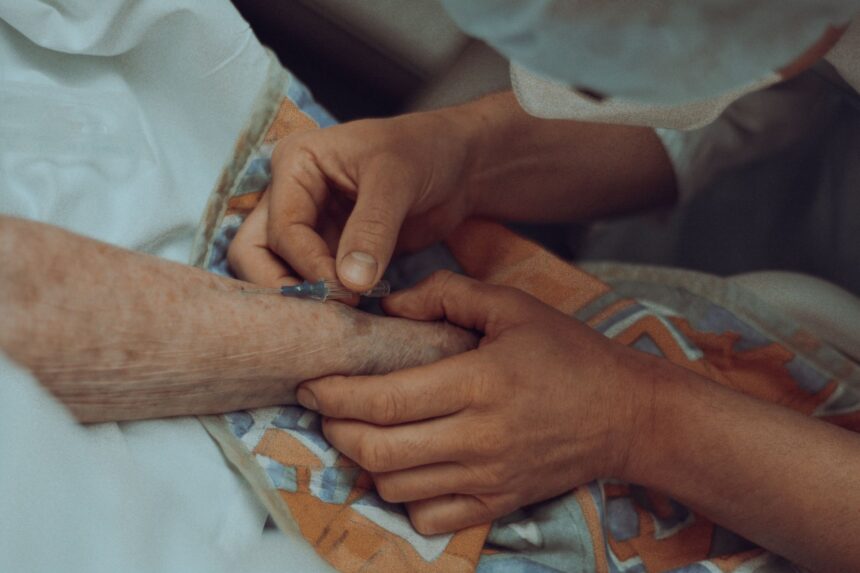
Healthcare professionals and diverse patients illustrating language barrier challenges in medical settings
Language barriers in healthcare contribute to 25% of medical errors in multicultural settings, affecting patient safety and diagnostic accuracy. Professional interpreter services reduce adverse events by up to 42% compared to informal communication methods. — Photo by Stéf -b. on Pexels (Pexels License)
SHARE
1 min read|133 words

A significant proportion of preventable medical errors in multicultural healthcare settings stem directly from communication failures between providers and patients. Research data reveals that language barriers contribute to approximately 25% of medical errors in healthcare systems serving diverse populations.

More encouraging news emerges from implementation studies: healthcare facilities deploying professional interpreter services have achieved a 42% reduction in communication-related adverse events. This evidence-based finding underscores the dramatic difference between professional interpretation and informal alternatives such as family members or untrained bilingual staff.

The data encompasses multiple categories of medical error, including medication administration errors, diagnostic delays, informed consent failures, and treatment adherence problems. These findings align with World Health Organization guidance emphasizing that culturally and linguistically appropriate services are essential components of comprehensive healthcare quality and safety systems.

Read the full article on GMJ Newsroom.

Submit Your Paper
GMJ_Submit_Banner

Was this article helpful?

GMJ Brief · Key Finding

📰 Read the full article: Language Barriers in Healthcare: How Communication Gaps Affect Patient Safety and Quality of Care →

Share This Article
Facebook LinkedIn Bluesky Copy Link Print
GMJ
ByProf. Giorgi Pkhakadze
Follow:
Prof. Giorgi Pkhakadze, MD, MPH, PhD, is Editor-in-Chief of the Georgian Medical Journal and Chair of the Public Health Institute of Georgia (PHIG). He is Professor and Head of the Department of Social and Behavioural Sciences at David Tvildiani Medical University, and Secretary/Treasurer of the UEMS Section of Public Health. ORCID: 0000-0001-7609-4515.

Submit Your Paper →

Georgia's peer-reviewed open-access medical journal. No APC until January 2027.
Submit Manuscript →
Trump Administration Removes Job Protections for Thousands of Federal Health Workers

Thousands of federal health workers at HHS agencies including CDC, FDA, and…

Rare Lymphatic-Urinary Fistula Causes Milky Urine in NEJM Case Report

A rare case of chyluria caused by a lymphatic-urinary fistula demonstrates how…

Gene Therapy Shows Promise for Inherited Cholesterol Disorder in First-in-Human Trial

First-in-human gene therapy trial shows preliminary safety and efficacy for treating homozygous…

Submit Your Paper to GMJ

No APC until January 2027.
Submit Manuscript →

You Might Also Like

Medical illustration showing stroke treatment with thrombolytic therapy

Single Case Report Highlights Tenecteplase Efficacy in 68-Year-Old Stroke Patient

By
Prof. Giorgi Pkhakadze
16/06/2026
Medical illustration showing interconnected heart and brain health management protocols

Data-Driven Guidelines: How CMAJ Addresses Heart-Brain Multimorbidity Management

By
Prof. Giorgi Pkhakadze
03/07/2026
Medical illustration showing endometriosis affecting female reproductive system

190 Million Women Suffer From Endometriosis While Waiting Years for Diagnosis

By
Prof. Giorgi Pkhakadze
15/06/2026
Medical chart showing increased mortality and cancer risks in coeliac disease patients

Landmark Study Reveals Significant Health Risks Associated with Coeliac Disease

By
Prof. Giorgi Pkhakadze
19/06/2026
Facebook Twitter Youtube Instagram
Company
  • Privacy Policy
  • Contact US
  • GMJ Journal
  • Submit Manuscript
  • Editorial Team
  • Register at GMJ
  • Terms of Use

Subscribe to GMJ News — Click here

Join Community
© 2026 Georgian Medical Journal (GMJ). Published by the Public Health Institute of Georgia (PHIG). All rights reserved.
Welcome Back!

Sign in to your account

Username or Email Address
Password

Lost your password?

Not a member? Sign Up