By using this site, you agree to the Privacy Policy and Terms of Use.
Accept
GMJ NewsGMJ NewsGMJ News
  • Latest News
    • GMJ Briefs
  • Podcast & Media
    • Podcast Episodes
    • GMJ Audio
    • GMJ Videos
  • Research Digest
    • New Studies
    • Georgian Research
    • Data & Numbers
  • Policy & Systems
    • Health Policy
    • Quality & Safety
    • Migration & Health
    • Global Health
  • Practice
    • Clinical Updates
    • Case Discussions
    • Pharmacy & Prescribing
    • Ingredients A-Z
  • Perspectives
    • Editorial
    • Explainers
    • Voices
    • Letters
  • GMJ Articles
    • Vol. 1 Issue 2 (2026)
    • Vol. 1 Issue 1 (2026)
    • Pre-Launch Articles (2025)
  • Read the Journal →
  • About GMJ News
Notification Show More
Font ResizerAa
GMJ NewsGMJ News
Font ResizerAa
  • Latest News
    • GMJ Briefs
  • Podcast & Media
    • Podcast Episodes
    • GMJ Audio
    • GMJ Videos
  • Research Digest
    • New Studies
    • Georgian Research
    • Data & Numbers
  • Policy & Systems
    • Health Policy
    • Quality & Safety
    • Migration & Health
    • Global Health
  • Practice
    • Clinical Updates
    • Case Discussions
    • Pharmacy & Prescribing
    • Ingredients A-Z
  • Perspectives
    • Editorial
    • Explainers
    • Voices
    • Letters
  • GMJ Articles
    • Vol. 1 Issue 2 (2026)
    • Vol. 1 Issue 1 (2026)
    • Pre-Launch Articles (2025)
  • Read the Journal →
  • About GMJ News
Follow US
GMJ News > GMJ Briefs > Open-Source AI System Democratizes Pancreatic Cancer Diagnosis Globally

Open-Source AI System Democratizes Pancreatic Cancer Diagnosis Globally

GMJ
Last updated: 07/06/2026 20:57
By
Prof. Giorgi Pkhakadze
Share
1 Min Read
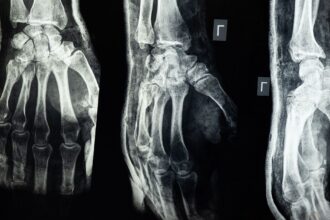
Medical imaging display showing pancreatic cancer vascular invasion assessment with AI assistance
New open-source AI system achieves 94.2% accuracy in pancreatic cancer vascular invasion assessment across multiple medical centres. The freely available tool could democratize access to advanced diagnostic capabilities in resource-limited settings.
SHARE
1 min read|126 words

A groundbreaking artificial intelligence tool developed by Shanghai Jiao Tong University researchers is set to transform pancreatic cancer diagnosis by making advanced diagnostic capabilities freely accessible worldwide. The Clinician-Centric Reliable Vascular Invasion Assessment (CRVIA) system achieved 94.2% accuracy in detecting vascular invasion across multiple medical centres, significantly outperforming traditional radiological assessment methods. Unlike proprietary medical AI systems, the researchers have released their tool as open-source software through GitHub, addressing a critical gap in diagnostic equity. This approach is particularly transformative for resource-limited healthcare settings, where access to expert radiologists and advanced imaging interpretation has historically been constrained. The multi-centre validation study demonstrated consistent performance regardless of institutional resources or radiologist experience levels, confirming the system’s reliability in diverse clinical environments. Read the full article on GMJ Newsroom.

Was this article helpful?

GMJ Brief · Announcement

📰 Read the full article: Open-Source AI Tool Improves Pancreatic Cancer Vascular Invasion Assessment Across Multiple Centres →

Related reference
  • Iron · Ingredient
Share This Article
Facebook LinkedIn Bluesky Copy Link Print
GMJ
ByProf. Giorgi Pkhakadze
Follow:
Prof. Giorgi Pkhakadze, MD, MPH, PhD, is Editor-in-Chief of the Georgian Medical Journal and Chair of the Public Health Institute of Georgia (PHIG). He is Professor and Head of the Department of Social and Behavioural Sciences at David Tvildiani Medical University, and Secretary/Treasurer of the UEMS Section of Public Health. ORCID: 0000-0001-7609-4515.

Submit Your Paper →

Georgia's peer-reviewed open-access medical journal. No APC until January 2027.
Submit Manuscript →
Protein Source and Meal Timing May Matter Less for Muscle Growth Than Assumed

A randomized controlled trial challenges two core beliefs in sports nutrition: that…

Lean protein outperforms high-fat sources for muscle growth after exercise, new trial shows

Lean protein sources stimulate muscle growth 47% more effectively than high-fat sources…

How Lutein and Zeaxanthin Protect Your Retina from Blue Light Damage

Lutein and zeaxanthin, dietary carotenoid pigments, concentrate in the retina's macula where…

Submit Your Paper to GMJ

No APC until January 2027.
Submit Manuscript →

You Might Also Like

Medical illustration showing liver fat reduction with survodutide treatment in clinical trial

Clinical Trial Data: Survodutide Achieves 67% Liver Fat Reduction with Significant Weight Loss

By
Prof. Giorgi Pkhakadze
19/07/2026
PAHO headquarters in Washington DC, seat of Pan American Health Organization leadership

35 Nations Commit to Coordinated Health System Reforms Through PAHO Initiative

By
Prof. Giorgi Pkhakadze
27/07/2026
Bar chart showing migration policy implementation progress across healthcare domains 2018-2026

Political Will, Not Capacity: COVID-19 Reveals the True Barrier to Migrant Health Integration

By
Prof. Giorgi Pkhakadze
20/07/2026
Medical illustration showing lung surgery outcomes comparison between smoking and non-smoking patients

Rethinking Smoking Cessation Requirements in Lung Cancer Surgery

By
Prof. Giorgi Pkhakadze
21/06/2026
Facebook Twitter Youtube Instagram
Company
  • Privacy Policy
  • Contact US
  • GMJ Journal
  • Submit Manuscript
  • Editorial Team
  • Register at GMJ
  • Terms of Use

Subscribe to GMJ News — Click here

Join Community
© 2026 Georgian Medical Journal (GMJ). Published by the Public Health Institute of Georgia (PHIG). All rights reserved.
Welcome Back!

Sign in to your account

Username or Email Address
Password

Lost your password?

Not a member? Sign Up