By using this site, you agree to the Privacy Policy and Terms of Use.
Accept
GMJ NewsGMJ NewsGMJ News
  • Latest News
    • GMJ Briefs
  • Podcast & Media
    • Podcast Episodes
    • GMJ Audio
    • GMJ Videos
  • Research Digest
    • New Studies
    • Georgian Research
    • Data & Numbers
  • Policy & Systems
    • Health Policy
    • Quality & Safety
    • Migration & Health
    • Global Health
  • Practice
    • Clinical Updates
    • Case Discussions
    • Pharmacy & Prescribing
    • Ingredients A-Z
  • Perspectives
    • Editorial
    • Explainers
    • Voices
    • Letters
  • GMJ Articles
    • Vol. 1 Issue 2 (2026)
    • Vol. 1 Issue 1 (2026)
    • Pre-Launch Articles (2025)
  • Read the Journal →
  • About GMJ News
Notification Show More
Font ResizerAa
GMJ NewsGMJ News
Font ResizerAa
  • Latest News
    • GMJ Briefs
  • Podcast & Media
    • Podcast Episodes
    • GMJ Audio
    • GMJ Videos
  • Research Digest
    • New Studies
    • Georgian Research
    • Data & Numbers
  • Policy & Systems
    • Health Policy
    • Quality & Safety
    • Migration & Health
    • Global Health
  • Practice
    • Clinical Updates
    • Case Discussions
    • Pharmacy & Prescribing
    • Ingredients A-Z
  • Perspectives
    • Editorial
    • Explainers
    • Voices
    • Letters
  • GMJ Articles
    • Vol. 1 Issue 2 (2026)
    • Vol. 1 Issue 1 (2026)
    • Pre-Launch Articles (2025)
  • Read the Journal →
  • About GMJ News
Follow US
GMJ News > GMJ Briefs > Privacy-Preserving AI Model Protects Patient Data Hidden in ECG Signals

Privacy-Preserving AI Model Protects Patient Data Hidden in ECG Signals

GMJ
Last updated: 16/07/2026 08:36
By
Prof. Giorgi Pkhakadze
Share
1 Min Read
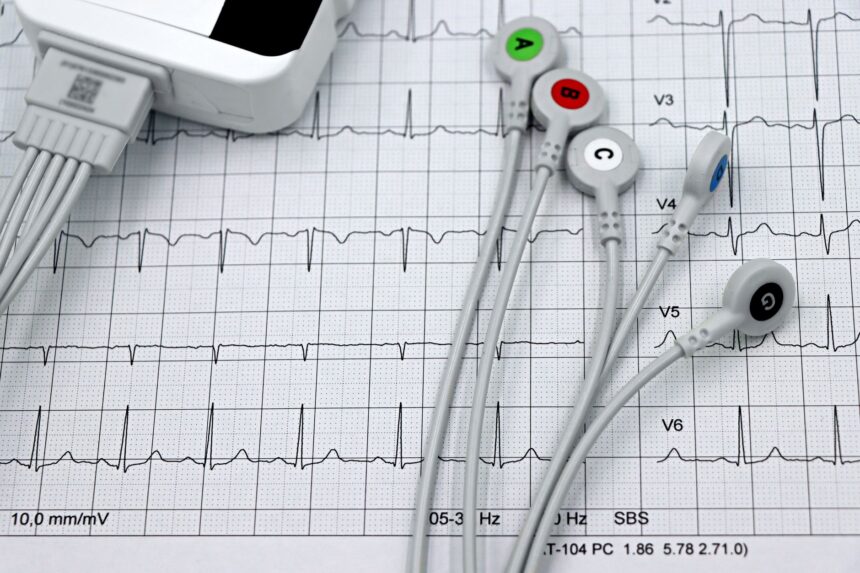
Illustration of privacy protection in electrocardiogram artificial intelligence systems
Artificial intelligence can extract age, sex, race, and individual identity from standard ECG recordings without patient knowledge. Researchers at the University of Kansas have developed a privacy-preserving AI model that removes these demographic markers while preserving clinical cardiac risk information. — Photo by Marta Branco on Pexels (Pexels License)
SHARE
1 min read|123 words

Artificial intelligence systems have revealed an overlooked vulnerability in routine cardiac diagnostics: the ability to extract sensitive demographic information—including age, sex, race, and individual identity—directly from electrocardiogram signals without explicit patient consent. Researchers at the University of Kansas have responded to this privacy threat by developing PP-VAE (Privacy-Preserving Variational Autoencoder), an innovative model designed to remove these demographic and identifying markers while preserving clinically essential heart risk information. This breakthrough demonstrates that privacy protection and diagnostic accuracy need not be mutually exclusive in modern healthcare technology. As AI integration in clinical settings accelerates, the PP-VAE model offers a practical solution for safeguarding patient biometric data while maintaining the diagnostic utility that clinicians depend on for accurate cardiac assessment and risk stratification.

Was this article helpful?

GMJ Brief · Announcement

📰 Read the full article: New AI Model Strips Personal Data From ECGs While Preserving Heart Risk Information →

Share This Article
Facebook LinkedIn Bluesky Copy Link Print
GMJ
ByProf. Giorgi Pkhakadze
Follow:
Prof. Giorgi Pkhakadze, MD, MPH, PhD, is Editor-in-Chief of the Georgian Medical Journal and Chair of the Public Health Institute of Georgia (PHIG). He is Professor and Head of the Department of Social and Behavioural Sciences at David Tvildiani Medical University, and Secretary/Treasurer of the UEMS Section of Public Health. ORCID: 0000-0001-7609-4515.

Submit Your Paper →

Georgia's peer-reviewed open-access medical journal. No APC until January 2027.
Submit Manuscript →
Daily Peanut Consumption Linked to 4% Improvement in Brain Blood Flow in Older Adults

A new study in Clinical Nutrition (2025) found that consuming 60 grams…

Brain network fragmentation at legal alcohol limits predicts subjective intoxication

Functional MRI reveals that individuals with identical blood alcohol levels show variable…

Evidence Review: Five Health Behaviours Reshaping 2025 Clinical Practice

Real-world studies and trials in 2025 reveal that timing and context shape…

Submit Your Paper to GMJ

No APC until January 2027.
Submit Manuscript →

You Might Also Like

Medical illustration showing kidney protection with finerenone drug therapy

Finerenone Expands Beyond Diabetes: New Evidence Shows Promise for Millions with Non-Diabetic Kidney Disease

By
Prof. Giorgi Pkhakadze
01/07/2026
Scientific illustration comparing olive oil and fish oil effects on cancer cells

Fish Oil Omega-3s Cut Pancreatic Cancer Risk by Half in New Mouse Study

By
Prof. Giorgi Pkhakadze
20/06/2026

PHEIC Declaration: Ebola Cross-Border Transmission DRC-Uganda

By
Prof. Giorgi Pkhakadze
31/05/2026
Healthcare professionals and diverse patients illustrating language barrier challenges in medical settings

What Healthcare Leaders Must Know About Language Barriers and Patient Safety

By
Prof. Giorgi Pkhakadze
19/07/2026
Facebook Twitter Youtube Instagram
Company
  • Privacy Policy
  • Contact US
  • GMJ Journal
  • Submit Manuscript
  • Editorial Team
  • Register at GMJ
  • Terms of Use

Subscribe to GMJ News — Click here

Join Community
© 2026 Georgian Medical Journal (GMJ). Published by the Public Health Institute of Georgia (PHIG). All rights reserved.
Welcome Back!

Sign in to your account

Username or Email Address
Password

Lost your password?

Not a member? Sign Up