By using this site, you agree to the Privacy Policy and Terms of Use.
Accept
GMJ NewsGMJ NewsGMJ News
  • Latest News
    • GMJ Briefs
  • Podcast & Media
    • Podcast Episodes
    • GMJ Audio
    • GMJ Videos
  • Research Digest
    • New Studies
    • Georgian Research
    • Data & Numbers
  • Policy & Systems
    • Health Policy
    • Quality & Safety
    • Migration & Health
    • Global Health
  • Practice
    • Clinical Updates
    • Case Discussions
    • Pharmacy & Prescribing
    • Ingredients A-Z
  • Perspectives
    • Editorial
    • Explainers
    • Voices
    • Letters
  • GMJ Articles
    • Vol. 1 Issue 2 (2026)
    • Vol. 1 Issue 1 (2026)
    • Pre-Launch Articles (2025)
  • Read the Journal →
  • About GMJ News
Notification Show More
Font ResizerAa
GMJ NewsGMJ News
Font ResizerAa
  • Latest News
    • GMJ Briefs
  • Podcast & Media
    • Podcast Episodes
    • GMJ Audio
    • GMJ Videos
  • Research Digest
    • New Studies
    • Georgian Research
    • Data & Numbers
  • Policy & Systems
    • Health Policy
    • Quality & Safety
    • Migration & Health
    • Global Health
  • Practice
    • Clinical Updates
    • Case Discussions
    • Pharmacy & Prescribing
    • Ingredients A-Z
  • Perspectives
    • Editorial
    • Explainers
    • Voices
    • Letters
  • GMJ Articles
    • Vol. 1 Issue 2 (2026)
    • Vol. 1 Issue 1 (2026)
    • Pre-Launch Articles (2025)
  • Read the Journal →
  • About GMJ News
Follow US
GMJ News > GMJ Briefs > Rethinking Influenza Risk: New Study Questions the Role of Proximity in Disease Spread

Rethinking Influenza Risk: New Study Questions the Role of Proximity in Disease Spread

GMJ
Last updated: 03/08/2026 21:29
By
Prof. Giorgi Pkhakadze
Share
1 Min Read
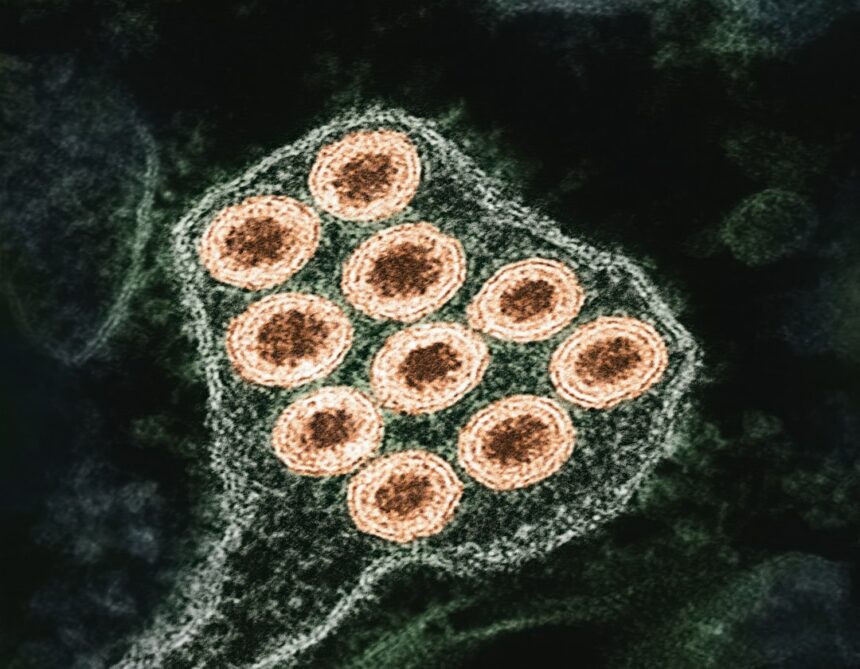
Diagram illustrating influenza transmission mechanisms: viral shedding, aerosol generation, and contact duration
A controlled human challenge–transmission study found that prolonged close contact with influenza-infected individuals did not reliably produce secondary infections, suggesting viral emission intensity rather than proximity duration drives transmission. — Photo by National Institute of Allergy and Infectious Diseases on Unsplash (Unsplash License)
SHARE
1 min read|117 words

A controlled human challenge–transmission study is challenging conventional wisdom about how influenza spreads between individuals. Researchers paired healthy volunteers with confirmed influenza patients in prolonged, close-contact settings with minimal protective measures—yet zero secondary infections occurred. The unexpected finding suggests that simple proximity may be a weaker predictor of influenza transmission than previously believed. Instead, the study indicates that viral emission dynamics—specifically coughing frequency and aerosol shedding intensity—play a more dominant role in determining transmission risk. These observations suggest that public health guidance and infection control strategies may need refinement to account for the variable nature of viral shedding rather than relying solely on contact duration thresholds. Read the full article on GMJ Newsroom.

Was this article helpful?

GMJ Brief · Announcement

📰 Read the full article: Close Contact Alone May Not Drive Influenza Transmission, Controlled Study Suggests →

Share This Article
Facebook LinkedIn Bluesky Copy Link Print
GMJ
ByProf. Giorgi Pkhakadze
Follow:
Prof. Giorgi Pkhakadze, MD, MPH, PhD, is Editor-in-Chief of the Georgian Medical Journal and Chair of the Public Health Institute of Georgia (PHIG). He is Professor and Head of the Department of Social and Behavioural Sciences at David Tvildiani Medical University, and Secretary/Treasurer of the UEMS Section of Public Health. ORCID: 0000-0001-7609-4515.

Submit Your Paper →

Georgia's peer-reviewed open-access medical journal. No APC until January 2027.
Submit Manuscript →
How the immune system learns to remember threats: the science of innate and adaptive immunity

The immune system operates in two coordinated layers: an immediate innate response…

How Brain Chemistry Shapes Mood, Sleep, and Focus: A Guide to Neurotransmitters

Neurotransmitters—chemical messengers between brain cells—regulate mood, sleep, motivation, and cognitive focus. Understanding…

Extra Virgin Olive Oil: 20 Grams Daily Linked to Lower Cancer and All-Cause Mortality

Approximately 23,000 Italian adults consuming 30 grams of extra virgin olive oil…

Submit Your Paper to GMJ

No APC until January 2027.
Submit Manuscript →

You Might Also Like

Hospital corridor during healthcare strike with reduced staffing

Hospital Leaders Confirm ‘Unavoidable’ Procedure Cancellations During BMA Strike Action

By
Prof. Giorgi Pkhakadze
12/07/2026
UK MHRA orphan medicinal products regulatory approval process and rare disease treatment classification

Transparent Access: UK’s Centralised Orphan Drug Registry Now Public

By
Prof. Giorgi Pkhakadze
20/07/2026
Medical illustration showing Listeria bacteria and food safety concepts

Genomic Evidence Confirms Single-Source Listeria Outbreak Among Pregnant Women

By
Prof. Giorgi Pkhakadze
25/06/2026
Medical laboratory equipment and healthcare infrastructure representing gene therapy capabilities in Africa

Three Essential Steps to Accelerate Sickle Cell Gene Therapy Access in Africa

By
Prof. Giorgi Pkhakadze
21/07/2026
Facebook Twitter Youtube Instagram
Company
  • Privacy Policy
  • Contact US
  • GMJ Journal
  • Submit Manuscript
  • Editorial Team
  • Register at GMJ
  • Terms of Use

Subscribe to GMJ News — Click here

Join Community
© 2026 Georgian Medical Journal (GMJ). Published by the Public Health Institute of Georgia (PHIG). All rights reserved.
Welcome Back!

Sign in to your account

Username or Email Address
Password

Lost your password?

Not a member? Sign Up