By using this site, you agree to the Privacy Policy and Terms of Use.
Accept
GMJ NewsGMJ NewsGMJ News
  • Latest News
    • GMJ Briefs
  • Podcast & Media
    • Podcast Episodes
    • GMJ Audio
    • GMJ Videos
  • Research Digest
    • New Studies
    • Georgian Research
    • Data & Numbers
  • Policy & Systems
    • Health Policy
    • Quality & Safety
    • Migration & Health
    • Global Health
  • Practice
    • Clinical Updates
    • Case Discussions
    • Pharmacy & Prescribing
    • Ingredients A-Z
  • Perspectives
    • Editorial
    • Explainers
    • Voices
    • Letters
  • GMJ Articles
    • Vol. 1 Issue 2 (2026)
    • Vol. 1 Issue 1 (2026)
    • Pre-Launch Articles (2025)
  • Read the Journal →
  • About GMJ News
Notification Show More
Font ResizerAa
GMJ NewsGMJ News
Font ResizerAa
  • Latest News
    • GMJ Briefs
  • Podcast & Media
    • Podcast Episodes
    • GMJ Audio
    • GMJ Videos
  • Research Digest
    • New Studies
    • Georgian Research
    • Data & Numbers
  • Policy & Systems
    • Health Policy
    • Quality & Safety
    • Migration & Health
    • Global Health
  • Practice
    • Clinical Updates
    • Case Discussions
    • Pharmacy & Prescribing
    • Ingredients A-Z
  • Perspectives
    • Editorial
    • Explainers
    • Voices
    • Letters
  • GMJ Articles
    • Vol. 1 Issue 2 (2026)
    • Vol. 1 Issue 1 (2026)
    • Pre-Launch Articles (2025)
  • Read the Journal →
  • About GMJ News
Follow US
GMJ News > GMJ Briefs > Syphilis Dominates HIV Co-infection Profile in China’s Largest Study

Syphilis Dominates HIV Co-infection Profile in China’s Largest Study

GMJ
Last updated: 07/06/2026 18:23
By
Prof. Giorgi Pkhakadze
Share
1 Min Read
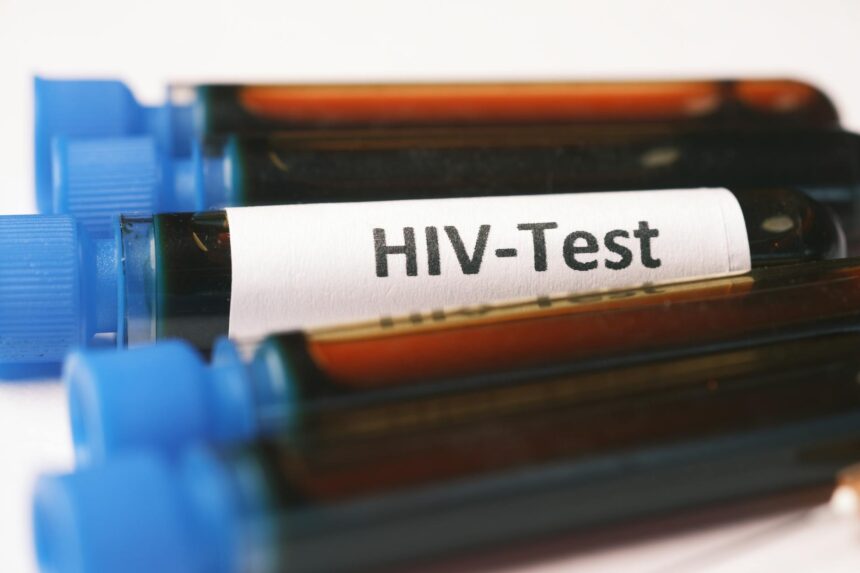
Medical chart showing STI prevalence rates among HIV-positive patients in China
A 14-year Chinese study of nearly 48,000 HIV-positive patients reveals 40% experienced recurrent sexually transmitted infections. Systematic screening identified 23% more infections than symptom-based approaches, supporting integrated care models. — Photo: Towfiqu barbhuiya / Pexels
SHARE
1 min read|141 words

A landmark 14-year longitudinal study tracking 47,892 HIV-positive individuals has identified syphilis as the predominant sexually transmitted co-infection, affecting 45.2% of participants. This finding, published in The Lancet Regional Health – Western Pacific, provides critical epidemiological data for understanding HIV-STI co-epidemics in the region.

Human papillomavirus emerged as the second most prevalent co-infection at 38.1%, followed by gonorrhea at 22.3% and chlamydia at 18.7%. These prevalence rates align with global health patterns observed in similar populations, though the scale and duration of this Chinese study offer unprecedented insights into long-term infection trends.

The persistent high syphilis co-infection rate has prompted researchers to emphasize the urgent need for integrated prevention strategies within HIV care programs. Systematic STI screening at care entry and during routine follow-up visits proved significantly more effective than symptom-based detection, identifying substantially more infections and enabling earlier intervention.

Read the full article on GMJ Newsroom.

Submit Your Paper
GMJ_Submit_Banner

Was this article helpful?

Share This Article
Facebook LinkedIn Bluesky Copy Link Print
GMJ
ByProf. Giorgi Pkhakadze
Follow:
Prof. Giorgi Pkhakadze, MD, MPH, PhD, is Editor-in-Chief of the Georgian Medical Journal and Chair of the Public Health Institute of Georgia (PHIG). He is Professor and Head of the Department of Social and Behavioural Sciences at David Tvildiani Medical University, and Secretary/Treasurer of the UEMS Section of Public Health. ORCID: 0000-0001-7609-4515.

Submit Your Paper →

Georgia's peer-reviewed open-access medical journal. No APC until January 2027.
Submit Manuscript →
How muscle movement clears blood glucose through a second pathway independent of insulin

Muscle clears glucose through two pathways after meals: one insulin-dependent and one…

Brain and Immune System Aging Emerge as True Lifespan Predictors in Major UK Biobank Study

Only two of 11 organ-aging clocks independently predicted lifespan in 44,498 UK…

Heart’s First Beat Emerges From Collective Synchronisation, Not a Single ‘Starter Switch’

Scientists have identified that the heart's first beat emerges from collective electrical…

Submit Your Paper to GMJ

No APC until January 2027.
Submit Manuscript →

You Might Also Like

SITUATION BRIEF: WHO PHEIC Declaration for Cross-Border Ebola Outbreak (DRC-Uganda)

By
Prof. Giorgi Pkhakadze
31/05/2026
Young person at dentist office representing UK dental access crisis and student financial burden

New Data: British Students Depleting Savings to Afford Private Dental Treatment

By
Prof. Giorgi Pkhakadze
11/07/2026

PHEIC Declaration: Ebola Cross-Border Transmission DRC-Uganda

By
Prof. Giorgi Pkhakadze
31/05/2026
Microscopic view of uniform nanometer-scale membrane pores for water filtration

One-Nanometer Precision: New Membrane Achieves Molecular-Level Filtration Breakthrough

By
Prof. Giorgi Pkhakadze
12/07/2026
Facebook Twitter Youtube Instagram
Company
  • Privacy Policy
  • Contact US
  • GMJ Journal
  • Submit Manuscript
  • Editorial Team
  • Register at GMJ
  • Terms of Use

Subscribe to GMJ News — Click here

Join Community
© 2026 Georgian Medical Journal (GMJ). Published by the Public Health Institute of Georgia (PHIG). All rights reserved.
Welcome Back!

Sign in to your account

Username or Email Address
Password

Lost your password?

Not a member? Sign Up