By using this site, you agree to the Privacy Policy and Terms of Use.
Accept
GMJ NewsGMJ NewsGMJ News
  • Latest News
    • GMJ Briefs
  • Podcast & Media
    • Podcast Episodes
    • GMJ Audio
    • GMJ Videos
  • Research Digest
    • New Studies
    • Georgian Research
    • Data & Numbers
  • Policy & Systems
    • Health Policy
    • Quality & Safety
    • Migration & Health
    • Global Health
  • Practice
    • Clinical Updates
    • Case Discussions
    • Pharmacy & Prescribing
    • Ingredients A-Z
  • Perspectives
    • Editorial
    • Explainers
    • Voices
    • Letters
  • Health Topics
  • GMJ Articles
    • Vol. 1 Issue 2 (2026)
    • Vol. 1 Issue 1 (2026)
    • Pre-Launch Articles (2025)
  • Read the Journal →
  • About GMJ News
Notification Show More
Font ResizerAa
GMJ NewsGMJ News
Font ResizerAa
  • Latest News
    • GMJ Briefs
  • Podcast & Media
    • Podcast Episodes
    • GMJ Audio
    • GMJ Videos
  • Research Digest
    • New Studies
    • Georgian Research
    • Data & Numbers
  • Policy & Systems
    • Health Policy
    • Quality & Safety
    • Migration & Health
    • Global Health
  • Practice
    • Clinical Updates
    • Case Discussions
    • Pharmacy & Prescribing
    • Ingredients A-Z
  • Perspectives
    • Editorial
    • Explainers
    • Voices
    • Letters
  • Health Topics
  • GMJ Articles
    • Vol. 1 Issue 2 (2026)
    • Vol. 1 Issue 1 (2026)
    • Pre-Launch Articles (2025)
  • Read the Journal →
  • About GMJ News
Follow US
GMJ News > GMJ Briefs > The 30–50% Rule: Why Light Resistance Training Delivers Aerobic and Recovery Benefits

The 30–50% Rule: Why Light Resistance Training Delivers Aerobic and Recovery Benefits

GMJ
Last updated: 05/08/2026 15:30
By
Prof. Giorgi Pkhakadze
Share
1 Min Read
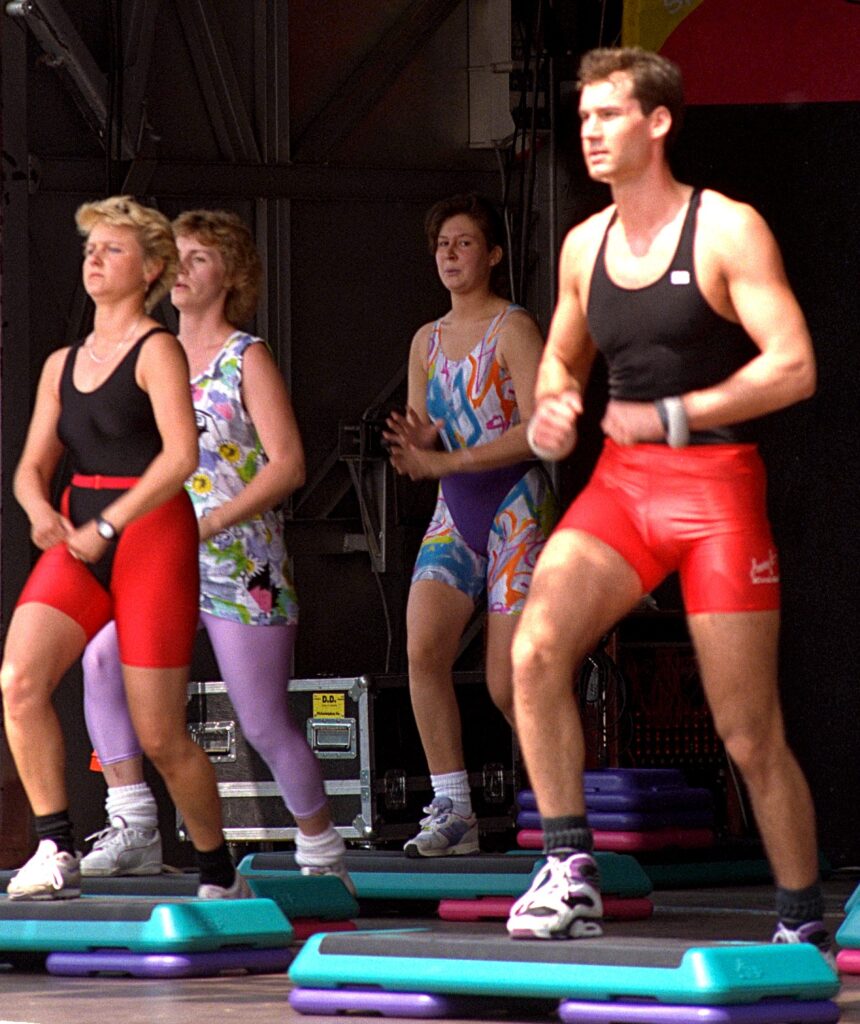
Chart showing exercise intensity zones from recovery to maximal effort across resistance and aerobic training
Exercise intensity integrates objective physiological markers, subjective effort perception, and performance metrics on a shared continuum. Low-intensity sessions (30–50% 1RM, below lactate threshold 1) build aerobic base and recovery; high-intensity efforts (80–90% 1RM, above lactate threshold 2) drive strength and VO₂max gains. — Aerobic exercise - public demonstration07.jpg by myself / CC BY-SA 2.5 via Wikimedia Commons (CC BY-SA 2.5)
SHARE
1 min read|121 words

Research quantifies a critical training zone often underutilized in conventional strength programs: resistance work performed at 30–50% of one-repetition maximum (1RM), which permits 15–20 repetitions and registers as very light to light on perceived exertion scales. This intensity range uniquely supports aerobic development and active recovery without excessive systemic stress.

In contrast, high-intensity resistance training at 80–90% 1RM allows only 4–6 repetitions per set and maximizes strength gains and power output. Understanding these distinct zones—and when to deploy each—transforms training periodization. Athletes can strategically alternate between low-intensity aerobic-focused sessions and maximal-effort strength work, optimizing adaptation while managing fatigue and injury risk.

The data demonstrates that perceived effort scales align reliably with objective physiological markers, enabling coaches to prescribe intensity without constant laboratory assessment.

Was this article helpful?

GMJ Brief · Key Finding

📰 Read the full article: How Exercise Intensity, Effort, and Physiological Stress Connect: A Unified Framework →

Share This Article
Facebook LinkedIn Bluesky Copy Link Print
GMJ
ByProf. Giorgi Pkhakadze
Follow:
Prof. Giorgi Pkhakadze, MD, MPH, PhD, is Editor-in-Chief of the Georgian Medical Journal and Chair of the Public Health Institute of Georgia (PHIG). He is Professor and Head of the Department of Social and Behavioural Sciences at David Tvildiani Medical University, and Secretary/Treasurer of the UEMS Section of Public Health. ORCID: 0000-0001-7609-4515.

Submit Your Paper →

Georgia's peer-reviewed open-access medical journal. No APC until January 2027.
Submit Manuscript →
Whey protein triggers substantial insulin response despite low carbohydrate content, research shows

Whey protein consumed on an empty stomach triggers insulin secretion 90% higher…

What makes prostate cancer aggressive? Biology, genetics, and clinical grading explained

Prostate cancer aggressiveness is determined by histological grade (Gleason score), genetic mutations…

UK childhood vaccination coverage holds steady at high levels, latest quarterly data shows

The UK's Cover of Vaccination Evaluated Rapidly (COVER) programme reports sustained high…

Submit Your Paper to GMJ

No APC until January 2027.
Submit Manuscript →

You Might Also Like

Occupational health worker wearing respiratory protective equipment during stone cutting

Takeaway: Engineered quartz surfaces linked to surge in silicosis cases among US workers

By
Prof. Giorgi Pkhakadze
12/08/2026
Chart comparing diagnostic sensitivity of B12 tests: methylmalonic acid at 98.4% versus CBC screening at 28%

Diagnostic Crisis in B12 Deficiency: Why Standard Blood Tests Are Failing Patients

By
Prof. Giorgi Pkhakadze
27/07/2026

SITUATION BRIEF: Ebola Cross-Border Transmission DRC-Uganda with WHO PHEIC Declaration

By
Prof. Giorgi Pkhakadze
31/05/2026
Adult caregiver supporting both child and elderly parent, representing sandwich generation dual caregiving responsibilities

78% Experience Financial Strain: The Hidden Cost of Dual Caregiving

By
Prof. Giorgi Pkhakadze
27/07/2026
Facebook Twitter Youtube Instagram
Company
  • Privacy Policy
  • Contact US
  • GMJ Journal
  • Submit Manuscript
  • Editorial Team
  • Register at GMJ
  • Terms of Use

Subscribe to GMJ News — Click here

Join Community
© 2026 Georgian Medical Journal (GMJ). Published by the Public Health Institute of Georgia (PHIG). All rights reserved.
Welcome Back!

Sign in to your account

Username or Email Address
Password

Lost your password?

Not a member? Sign Up