By using this site, you agree to the Privacy Policy and Terms of Use.
Accept
GMJ NewsGMJ NewsGMJ News
  • Latest News
    • GMJ Briefs
  • Podcast & Media
    • Podcast Episodes
    • GMJ Audio
    • GMJ Videos
  • Research Digest
    • New Studies
    • Georgian Research
    • Data & Numbers
  • Policy & Systems
    • Health Policy
    • Quality & Safety
    • Migration & Health
    • Global Health
  • Practice
    • Clinical Updates
    • Case Discussions
    • Pharmacy & Prescribing
    • Ingredients A-Z
  • Perspectives
    • Editorial
    • Explainers
    • Voices
    • Letters
  • Health Topics
  • GMJ Articles
    • Vol. 1 Issue 2 (2026)
    • Vol. 1 Issue 1 (2026)
    • Pre-Launch Articles (2025)
  • Read the Journal →
  • About GMJ News
Notification Show More
Font ResizerAa
GMJ NewsGMJ News
Font ResizerAa
  • Latest News
    • GMJ Briefs
  • Podcast & Media
    • Podcast Episodes
    • GMJ Audio
    • GMJ Videos
  • Research Digest
    • New Studies
    • Georgian Research
    • Data & Numbers
  • Policy & Systems
    • Health Policy
    • Quality & Safety
    • Migration & Health
    • Global Health
  • Practice
    • Clinical Updates
    • Case Discussions
    • Pharmacy & Prescribing
    • Ingredients A-Z
  • Perspectives
    • Editorial
    • Explainers
    • Voices
    • Letters
  • Health Topics
  • GMJ Articles
    • Vol. 1 Issue 2 (2026)
    • Vol. 1 Issue 1 (2026)
    • Pre-Launch Articles (2025)
  • Read the Journal →
  • About GMJ News
Follow US
GMJ News > GMJ Briefs > The Hidden Variability: Caffeine Half-Life Ranges from 2 to 10+ Hours Across Populations

The Hidden Variability: Caffeine Half-Life Ranges from 2 to 10+ Hours Across Populations

GMJ
Last updated: 30/07/2026 19:30
By
Prof. Giorgi Pkhakadze
Share
1 Min Read
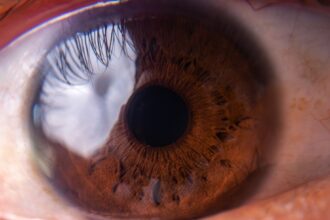
Diagram showing caffeine half-life variation across fast and slow metabolizers, smokers, and contraceptive users
A new systematic review reveals that caffeine half-life varies 15- to 40-fold across healthy adults, making the popular '2pm cutoff' rule inaccurate. Genetics and lifestyle factors including smoking, oral contraceptives, and pregnancy dramatically reshape how quickly the body clears caffeine. — Photo by Alari Tammsalu on Pexels (Pexels License)
SHARE
1 min read|129 words

New data from a comprehensive pharmacokinetic analysis reveals striking individual differences in how quickly the body eliminates caffeine. Caffeine elimination half-life spans from just 2 hours in fast metabolizers to over 10 hours in slow ones—a fivefold range that fundamentally challenges universal caffeine timing guidelines. The CYP1A2 liver enzyme, responsible for clearing roughly 95% of ingested caffeine, shows activity levels that vary dramatically based on genetics and modifiable factors. Smoking accelerates clearance by 30–50%, while oral contraceptives roughly double elimination time. Particularly striking is pregnancy: women in the third trimester experience caffeine half-lives exceeding 15 hours—three times longer than non-pregnant individuals. These findings underscore why a standardized ‘2pm rule’ fails to account for the biochemical diversity across populations and why personalized monitoring remains the most evidence-based approach to caffeine consumption.

Was this article helpful?

GMJ Brief · Key Finding

📰 Read the full article: Why the ‘2pm coffee cutoff’ is a myth: genetics and lifestyle create a 15-fold range in caffeine metabolism →

Share This Article
Facebook LinkedIn Bluesky Copy Link Print
GMJ
ByProf. Giorgi Pkhakadze
Follow:
Prof. Giorgi Pkhakadze, MD, MPH, PhD, is Editor-in-Chief of the Georgian Medical Journal and Chair of the Public Health Institute of Georgia (PHIG). He is Professor and Head of the Department of Social and Behavioural Sciences at David Tvildiani Medical University, and Secretary/Treasurer of the UEMS Section of Public Health. ORCID: 0000-0001-7609-4515.

Submit Your Paper →

Georgia's peer-reviewed open-access medical journal. No APC until January 2027.
Submit Manuscript →
Africa’s Regional Research Hubs: Building Local Capacity for Drug Manufacturing and Health Innovation

Africa needs strategically distributed regional research and development hubs to accelerate local…

New optical imaging technique could improve donor liver assessment before transplantation

Researchers have developed polarization-sensitive optical coherence tomography (PS-OCT) to assess donor liver…

AI-designed ‘master key’ vaccine could target entire virus families, not individual strains

Artificial intelligence is enabling vaccine designers to target conserved viral proteins shared…

Submit Your Paper to GMJ

No APC until January 2027.
Submit Manuscript →

You Might Also Like

Healthcare workers in hospital corridor representing patient care standards

Internal Documents Expose Systemic Patient Disrespect in NHS Maternity Services

By
Prof. Giorgi Pkhakadze
15/06/2026
Bar chart showing caffeine effects on back squat and bench press strength across different intensity levels

Caffeine’s Strength Boost Comes From the Brain, Not Bigger Muscles

By
Prof. Giorgi Pkhakadze
03/08/2026

Three Critical Gaps Hindering Global Antimicrobial Resistance Response

By
Prof. Giorgi Pkhakadze
28/06/2026
Chart comparing protein dose-response evidence from 2009 to 2023 showing increasing efficacy of higher doses with whole-body exercise

Why a 6-Subject Study Became Nutritional Gospel: The Evidence Timeline

By
Prof. Giorgi Pkhakadze
30/07/2026
Facebook Twitter Youtube Instagram
Company
  • Privacy Policy
  • Contact US
  • GMJ Journal
  • Submit Manuscript
  • Editorial Team
  • Register at GMJ
  • Terms of Use

Subscribe to GMJ News — Click here

Join Community
© 2026 Georgian Medical Journal (GMJ). Published by the Public Health Institute of Georgia (PHIG). All rights reserved.
Welcome Back!

Sign in to your account

Username or Email Address
Password

Lost your password?

Not a member? Sign Up