By using this site, you agree to the Privacy Policy and Terms of Use.
Accept
GMJ NewsGMJ NewsGMJ News
  • Latest News
    • GMJ Briefs
  • Podcast & Media
    • Podcast Episodes
    • GMJ Audio
    • GMJ Videos
  • Research Digest
    • New Studies
    • Georgian Research
    • Data & Numbers
  • Policy & Systems
    • Health Policy
    • Quality & Safety
    • Migration & Health
    • Global Health
  • Practice
    • Clinical Updates
    • Case Discussions
    • Pharmacy & Prescribing
    • Ingredients A-Z
  • Perspectives
    • Editorial
    • Explainers
    • Voices
    • Letters
  • Health Topics
  • GMJ Articles
    • Vol. 1 Issue 2 (2026)
    • Vol. 1 Issue 1 (2026)
    • Pre-Launch Articles (2025)
  • Read the Journal →
  • About GMJ News
Notification Show More
Font ResizerAa
GMJ NewsGMJ News
Font ResizerAa
  • Latest News
    • GMJ Briefs
  • Podcast & Media
    • Podcast Episodes
    • GMJ Audio
    • GMJ Videos
  • Research Digest
    • New Studies
    • Georgian Research
    • Data & Numbers
  • Policy & Systems
    • Health Policy
    • Quality & Safety
    • Migration & Health
    • Global Health
  • Practice
    • Clinical Updates
    • Case Discussions
    • Pharmacy & Prescribing
    • Ingredients A-Z
  • Perspectives
    • Editorial
    • Explainers
    • Voices
    • Letters
  • Health Topics
  • GMJ Articles
    • Vol. 1 Issue 2 (2026)
    • Vol. 1 Issue 1 (2026)
    • Pre-Launch Articles (2025)
  • Read the Journal →
  • About GMJ News
Follow US
GMJ News > GMJ Briefs > The Three-Level Neural Blueprint: How Brain-Spine Circuits Control Every Step

The Three-Level Neural Blueprint: How Brain-Spine Circuits Control Every Step

GMJ
Last updated: 06/08/2026 01:30
By
Prof. Giorgi Pkhakadze
Share
1 Min Read
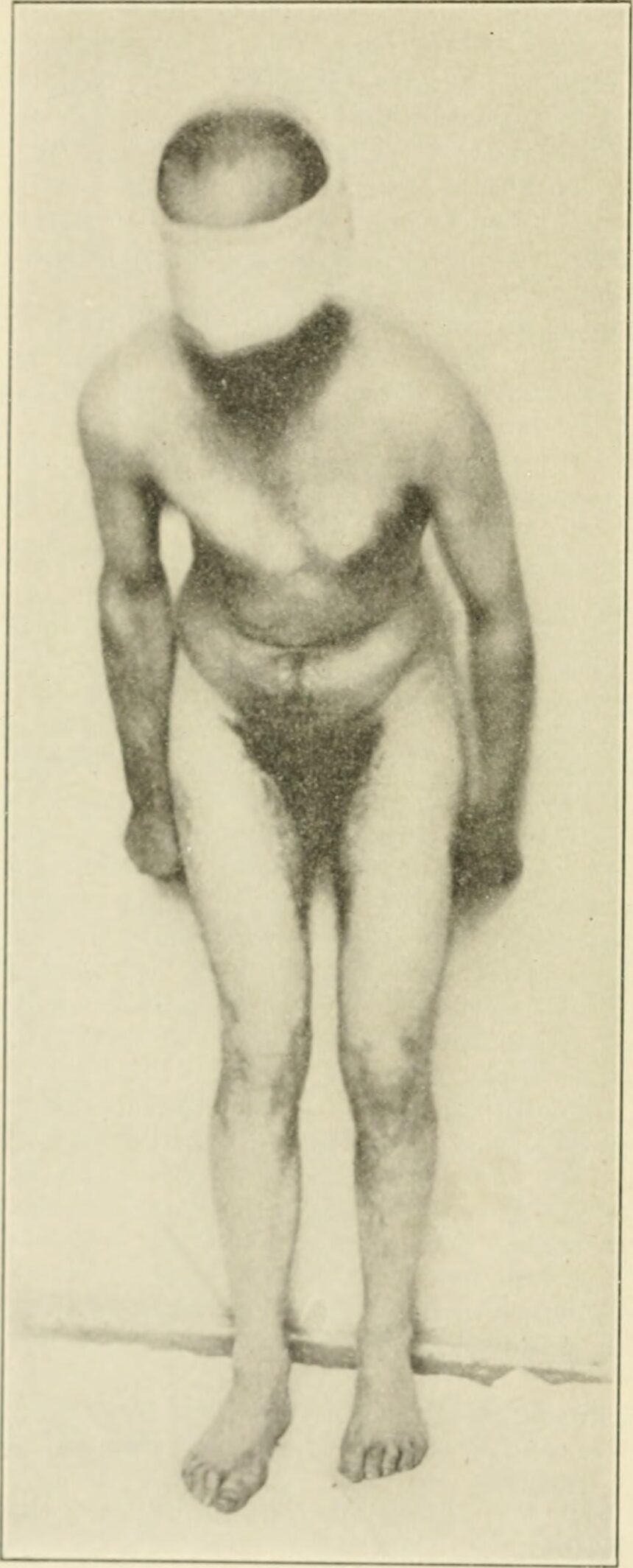
Anatomical illustration of brain-spine circuits controlling upright posture and gait
Walking relies on integrated brain-spine circuits controlling posture, balance, and rhythm. New evidence shows aging and Parkinson's disease preferentially damage these circuits before leg strength declines, making balance loss under real-world conditions the earliest warning sign. — The Journal of nervous and mental disease (1874) (14592167658).jpg by Internet Archive Book Images / No restrictions via Wikimedia Commons (No restrictions)
SHARE
1 min read|120 words

Three integrated neural levels work in concert to enable effortless walking: the cortex orchestrates planning and balance strategy, the brainstem manages autopilot regulation and rhythm, and the spinal cord executes movement and resists gravity. Recent research from Asahikawa Medical University demonstrates that age-related decline in these cortico-brainstem-spinal pathways selectively compromises balance control before muscular strength diminishes.

This finding has profound clinical implications. Patients experiencing balance failures under real-world conditions—navigating stairs, crowds, or uneven surfaces—may show no measurable leg weakness. Early recognition of gait and postural decline as neural circuit dysfunction, rather than muscle pathology, enables targeted interventions aimed at preserving the distributed systems that keep us upright and mobile throughout life.

Read the full article on GMJ Newsroom.

Was this article helpful?

GMJ Brief · Key Finding

📰 Read the full article: How Brain-Spine Circuits Control Walking—And Why They Fail First in Aging and Parkinson’s Disease →

Share This Article
Facebook LinkedIn Bluesky Copy Link Print
GMJ
ByProf. Giorgi Pkhakadze
Follow:
Prof. Giorgi Pkhakadze, MD, MPH, PhD, is Editor-in-Chief of the Georgian Medical Journal and Chair of the Public Health Institute of Georgia (PHIG). He is Professor and Head of the Department of Social and Behavioural Sciences at David Tvildiani Medical University, and Secretary/Treasurer of the UEMS Section of Public Health. ORCID: 0000-0001-7609-4515.

Submit Your Paper →

Georgia's peer-reviewed open-access medical journal. No APC until January 2027.
Submit Manuscript →
Timing of Second Stent Placement After Heart Attack: New Trial Challenges Immediate Intervention Strategy

A randomized controlled trial published in the New England Journal of Medicine…

Africa’s Regional Research Hubs: Building Local Capacity for Drug Manufacturing and Health Innovation

Africa needs strategically distributed regional research and development hubs to accelerate local…

New optical imaging technique could improve donor liver assessment before transplantation

Researchers have developed polarization-sensitive optical coherence tomography (PS-OCT) to assess donor liver…

Submit Your Paper to GMJ

No APC until January 2027.
Submit Manuscript →

You Might Also Like

Pharmacy & PrescribingPolicy & SystemsPracticeQuality & Safety

FDA Alerts on Glass Particulates in Papaverine Injection Vials

By
Prof. Giorgi Pkhakadze
28/07/2026
Infographic showing physiological systems damaged by sleep deprivation across hormonal, metabolic, muscular, and appetite regulation pathways

Announcement: Sleep Deprivation Damages Multiple Body Systems Simultaneously, Six Studies Show

By
Prof. Giorgi Pkhakadze
08/08/2026
Pregnant Sudanese refugee women waiting for prenatal consultation at Birao District Hospital in Central African Republic

Maternal Mortality Disparity: Sudanese Refugee Women Face 138-Fold Higher Death Risk

By
Prof. Giorgi Pkhakadze
09/07/2026
Anatomical illustration of brain-spine circuits controlling upright posture and gait

Brain-Spine Circuits Fail Before Muscles Do: What Aging and Parkinson’s Disease Reveal About Walking

By
Prof. Giorgi Pkhakadze
30/07/2026
Facebook Twitter Youtube Instagram
Company
  • Privacy Policy
  • Contact US
  • GMJ Journal
  • Submit Manuscript
  • Editorial Team
  • Register at GMJ
  • Terms of Use

Subscribe to GMJ News — Click here

Join Community
© 2026 Georgian Medical Journal (GMJ). Published by the Public Health Institute of Georgia (PHIG). All rights reserved.
Welcome Back!

Sign in to your account

Username or Email Address
Password

Lost your password?

Not a member? Sign Up