By using this site, you agree to the Privacy Policy and Terms of Use.
Accept
GMJ NewsGMJ NewsGMJ News
  • Latest News
    • GMJ Briefs
  • Podcast & Media
    • Podcast Episodes
    • GMJ Audio
    • GMJ Videos
  • Research Digest
    • New Studies
    • Georgian Research
    • Data & Numbers
  • Policy & Systems
    • Health Policy
    • Quality & Safety
    • Migration & Health
    • Global Health
  • Practice
    • Clinical Updates
    • Case Discussions
    • Pharmacy & Prescribing
    • Ingredients A-Z
  • Perspectives
    • Editorial
    • Explainers
    • Voices
    • Letters
  • GMJ Articles
    • Vol. 1 Issue 2 (2026)
    • Vol. 1 Issue 1 (2026)
    • Pre-Launch Articles (2025)
  • Read the Journal →
  • About GMJ News
Notification Show More
Font ResizerAa
GMJ NewsGMJ News
Font ResizerAa
  • Latest News
    • GMJ Briefs
  • Podcast & Media
    • Podcast Episodes
    • GMJ Audio
    • GMJ Videos
  • Research Digest
    • New Studies
    • Georgian Research
    • Data & Numbers
  • Policy & Systems
    • Health Policy
    • Quality & Safety
    • Migration & Health
    • Global Health
  • Practice
    • Clinical Updates
    • Case Discussions
    • Pharmacy & Prescribing
    • Ingredients A-Z
  • Perspectives
    • Editorial
    • Explainers
    • Voices
    • Letters
  • GMJ Articles
    • Vol. 1 Issue 2 (2026)
    • Vol. 1 Issue 1 (2026)
    • Pre-Launch Articles (2025)
  • Read the Journal →
  • About GMJ News
Follow US
GMJ News > Practice > Clinical Updates > How Brain-Spine Circuits Control Walking—And Why They Fail First in Aging and Parkinson’s Disease
Clinical UpdatesPractice

How Brain-Spine Circuits Control Walking—And Why They Fail First in Aging and Parkinson’s Disease

GMJ
Last updated: 12/07/2026 13:29
By
GMJ Practice Desk
Share
10 Min Read
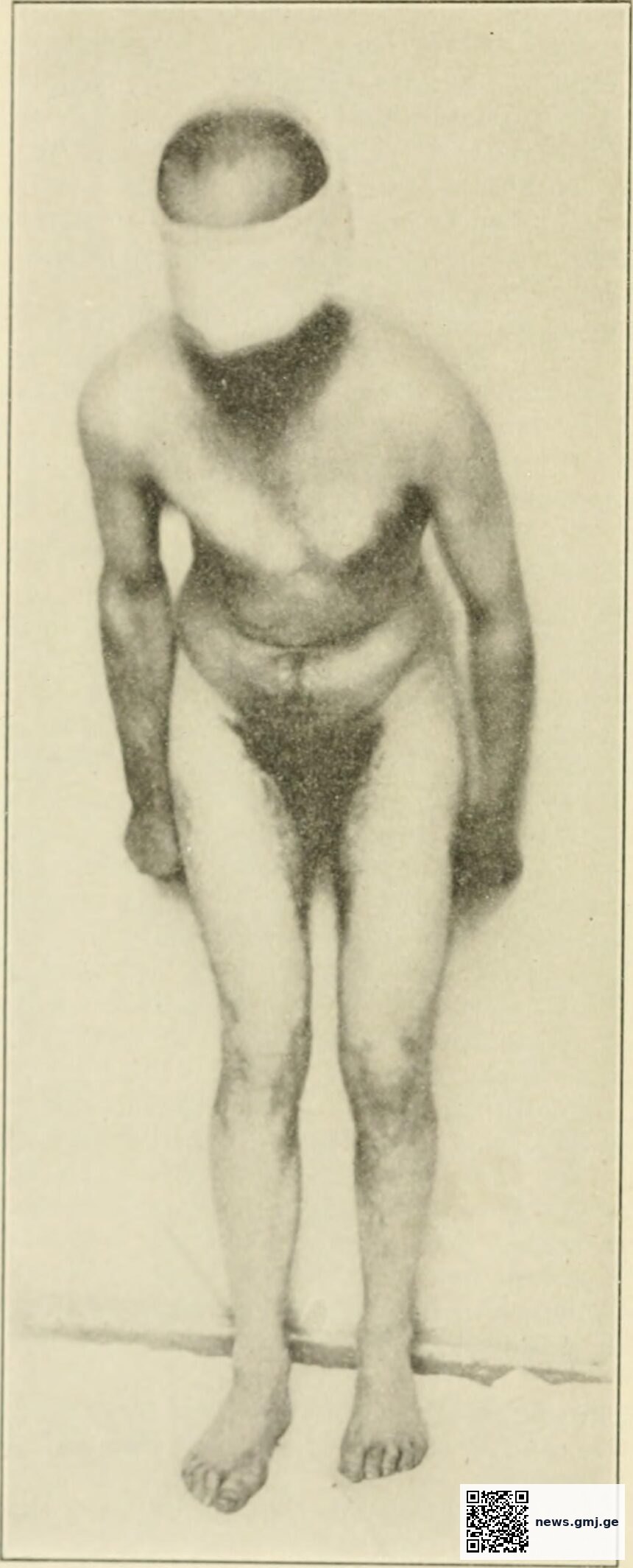
Anatomical illustration of brain-spine circuits controlling upright posture and gaitIllustrative image · The Journal of nervous and mental disease (1874) (14592167658).jpg by Internet Archive Book Images / No restrictions via Wikimedia Commons (No restrictions)
Walking relies on integrated brain-spine circuits controlling posture, balance, and rhythm. New evidence shows aging and Parkinson's disease preferentially damage these circuits before leg strength declines, making balance loss under real-world conditions the earliest warning sign. — The Journal of nervous and mental disease (1874) (14592167658).jpg by Internet Archive Book Images / No restrictions via Wikimedia Commons (No restrictions)
SHARE
6 min read|1,277 words
✓ Medically reviewed by Prof. Giorgi Pkhakadze, MD, MPH, PhD · ORCID 0000-0001-7609-4515

🟠 Moderate Evidence

Contents
    • Key takeaways
      • Study at a Glance
      • The Three Neural Levels of Gait Control
  • The Architecture of Balance: Why Posture Fails Before Strength
  • Practical Circuits: Training Posture and Gait Transitions
  • Red Flags: Shuffling, Freezing, and “Sticky Feet”
  • Beyond Strength: Why Coordination and Anticipation Matter
    • What this means
  • Frequently asked questions
    • Is balance loss just a normal part of getting older?
    • Can leg-strengthening exercises alone restore gait control?
    • Why is checking my phone while walking dangerous for my balance?

Walking appears effortless, but it relies on a distributed brain-to-spinal circuit that coordinates posture, balance, and rhythm simultaneously. According to research by Prof. Kaoru Takakusaki and colleagues at Asahikawa Medical University, published in Ageing and Neurodegeneration (2024), age-related decline in these cortico–brainstem–spinal pathways explains why loss of postural and gait control—not leg weakness—is the earliest warning sign of neurodegenerative disease.

Key takeaways

  • Upright gait depends on three integrated neural levels: cortex (planning), brainstem (autopilot regulation), and spinal cord (rhythm and posture execution)
  • Aging and Parkinson’s disease preferentially damage posture-gait circuits before strength declines, making balance loss under real-world conditions the earliest clinical marker
  • Practical interventions—postural training, gait transitions (starting, stopping, turning), and dual-task avoidance—can help preserve mobility by targeting the neural circuits that control dynamic balance

Study at a Glance

Source Ageing and Neurodegeneration
Study type Mechanistic review of neural circuits and clinical correlates
Focus Cortico–brainstem–spinal pathways in posture-gait control across aging and neurodegeneration
Key finding Posture-gait dyscontrol emerges before strength loss in aging and Parkinson’s disease due to circuit decline
Country Japan
3 integrated neural levels
Cortical planning, brainstem regulation, and spinal execution form the distributed circuit controlling upright gait

The Three Neural Levels of Gait Control

Hierarchical organization of brain circuits controlling walking and posture

Cortex (planning, multitasking, balance strategy)
100%
Brainstem (autopilot, posture regulation, rhythm)
100%
Spinal cord (execution of rhythm and gravity resistance)
100%

Source: Takakusaki et al., Ageing and Neurodegeneration, 2024 | Georgian Medical Journal News

Submit Your Paper
GMJ_Submit_Banner

The Architecture of Balance: Why Posture Fails Before Strength

Upright bipedal walking requires seamless integration across three neural tiers, according to Takakusaki’s framework in Ageing and Neurodegeneration. The cortex generates motor plans and handles attentional demands—deciding when to navigate crowds or check your phone while walking. The brainstem maintains constant gravitational posture control and regulates stepping rhythm automatically. The spinal cord executes the actual motor commands, coordinating muscle timing and limb mechanics under gravity.

When this distributed circuit begins to degrade—through aging, Parkinson’s disease, or other neurodegenerative conditions—the first casualty is not muscle strength but postural stability under real-world demands. This explains why older adults or patients with early Parkinson’s disease often report balance problems on stairs, in crowds, or while turning, even though leg strength may test normal on clinical examination. See our Clinical Updates section for more on early signs of gait dysfunction.

Age-related decline in cortico–brainstem–spinal pathways causes loss of posture-gait control under dynamic conditions before measurable strength loss occurs.

— Prof. Kaoru Takakusaki, Asahikawa Medical University (Ageing and Neurodegeneration, 2024)

Practical Circuits: Training Posture and Gait Transitions

Given that neural circuit function—not muscle alone—drives real-world balance, intervention should target the specific circuits that fail first. According to Takakusaki’s model, this means focusing on three areas: postural antigravity control, gait transitions (where most falls occur), and the avoidance of cognitive multitasking during high-risk walking.

Postural training (2–3 minutes daily): Practice tall posture with slow nasal breathing, chin tucked, ribs stacked, and glutes lightly engaged. This is “antigravity” practice—deliberate resistance to gravitational collapse. The cortex and brainstem must coordinate to maintain this posture as a baseline, and repetition strengthens that circuit.

Gait transition drills (10–15 minutes weekly): Most falls happen during transitions—starting, stopping, sharp turns, and obstacle steps. Practice 10 controlled starts and stops, 10 slow turns in each direction, and step-over drills using a low object. Smoothness, not speed, is the goal. These drills train the brainstem-spinal coordination that enables safe dynamic balance.

Dual-task avoidance in high-risk settings: When walking in crowds, on stairs, on uneven ground, or making quick turns, eliminate phone use and other cognitive demands. Multitasking diverts frontal cortex resources away from balance control—a trade-off that becomes dangerous when brainstem posture circuits are already compromised. Learn more in our patient care section on fall prevention.

Red Flags: Shuffling, Freezing, and “Sticky Feet”

Shuffling, gait freezing (sudden inability to initiate or continue walking), and “sticky feet” (feet seeming to adhere to the floor during turns or obstacles) are not inevitable consequences of aging. Instead, according to Takakusaki’s mechanistic framework, these signs reflect specific decline in brainstem posture-gait circuits. They warrant clinical evaluation for neurodegenerative disease, particularly Parkinson’s disease, rather than dismissal as normal aging.

Early recognition matters because targeted interventions—physical therapy emphasizing posture and transitions, dopaminergic therapy (if Parkinson’s is confirmed), and environmental modification—can slow functional decline and reduce fall risk. See our Health Policy section for current guidelines on fall prevention in aging populations.

Beyond Strength: Why Coordination and Anticipation Matter

Traditional strength training—leg presses, squats, resistance bands—builds muscle but may not fully restore the anticipatory postural adjustments (APAs) that prevent falls. APAs are automatic, centrally-programmed adjustments the brain makes milliseconds before a voluntary movement (like reaching for a shelf) to protect balance. These require intact cortico–brainstem circuits and cannot be recovered by strength alone.

Real-world training—carrying light groceries while navigating obstacles, changing direction intentionally, stepping over low objects—engages both strength and the neural circuits that drive APAs. This functional approach aligns with Takakusaki’s evidence that coordination and anticipatory control are the true limiting factors in fall risk for aging and neurodegenerative populations.

What this means

For patients: If you notice shuffling, freezing, or difficulty with balance on stairs or uneven ground, report these to your clinician promptly—they may signal early decline in gait circuits, not just normal aging. Incorporate 2–3 minutes daily of postural practice and practice gait transitions (starting, stopping, turning) at least weekly. Avoid multitasking (phone use, cognitive tasks) when walking in risky environments.
For clinicians: Clinical gait assessment should focus on posture maintenance and dynamic balance under perturbation (turns, obstacles, dual-task demands) rather than isolated strength testing. Early loss of postural control under real-world conditions may precede strength decline and should prompt investigation for neurodegenerative pathology. Refer patients to physical therapy targeting cortico–brainstem–spinal circuit function, not strength alone.
For policymakers: Falls in older adults represent a major public health burden. Evidence-based fall prevention programs should emphasize gait circuit retraining and postural control over generic strength programs. Implementation of community-based transition-focused gait training and dual-task awareness campaigns may reduce fall incidence and associated morbidity. Integration of these principles into aging-in-place and workplace safety policies is warranted.

Frequently asked questions

Is balance loss just a normal part of getting older?

No. While some age-related decline is expected, significant balance loss—especially during transitions or on stairs—reflects specific circuit dysfunction (cortico–brainstem–spinal pathway decline), not inevitable aging. Early detection and targeted retraining can slow progression and prevent falls.

Can leg-strengthening exercises alone restore gait control?

Strength is necessary but not sufficient. According to Takakusaki’s framework, real-world gait control depends equally on coordination, anticipatory postural adjustments, and brainstem autopilot function. Functional training (obstacle negotiation, transitions, posture maintenance) is needed to retrain these circuits.

Why is checking my phone while walking dangerous for my balance?

Multitasking diverts cortical resources away from balance planning and vigilance. When your brainstem posture circuits are already aging or compromised (as in early Parkinson’s disease), this attentional trade-off eliminates the redundancy your brain needs to prevent falls on stairs, in crowds, or on uneven surfaces.

As populations age and neurodegenerative diseases become more prevalent, understanding the neural circuits that underlie gait control offers a precision-medicine approach to fall prevention. Rather than treating all balance loss as synonymous with weakness, clinicians and patients can now recognize posture-gait dysfunction as a targetable circuit-level problem—one that responds to specific postural and transition-based retraining before strength interventions become the focus.

Source: Takakusaki K, Takahashi M, Ota J. Neural mechanisms underlying upright bipedal gait: role of cortico-brainstem-spinal pathways involved in posture-gait control. Ageing and Neurodegeneration. 2024;4:14.

Was this article helpful?

Disclaimer. This article is health journalism intended for general information and education. It is not medical advice and is not a substitute for professional diagnosis or treatment. Always consult a qualified healthcare provider about your individual circumstances. Full disclaimer →

Related Coverage
Thyroid Health Depends on Three Nutrients Working Together, Not One AloneJul 22, 2026
Coffee's Microbiome Effect Goes Beyond Caffeine: New Study Maps Shifts in Gut BacteriaJul 22, 2026
Vitamin C and Iron Supplements: The Evidence Falls Short of the HypeJul 22, 2026
The Melatonin Myth: Why Taking a Pill Misses the Biochemical PictureJul 22, 2026
Related reference
  • Iron · Ingredient
PG
Written by
Prof. Giorgi Pkhakadze, MD, MPH, PhD
Editor-in-Chief, GMJ News
Full profile →  ·  ORCID 0000-0001-7609-4515
Medical disclaimer. This article is health journalism intended for general information. It is not medical advice and is not a substitute for consultation with a qualified healthcare professional. Always seek your physician's advice regarding any medical condition.
Medically reviewed by Prof. Giorgi Pkhakadze, MD, MPH, PhD. Spotted an error? Contact the editorial team.
Get the GMJ News digest
Evidence-based health journalism in your inbox. No spam; unsubscribe anytime.
TAGGED:agingbalanceclinical neurosciencefall preventiongaitneurodegenerative diseaseParkinson's diseaseposture
Share This Article
Facebook LinkedIn Bluesky Copy Link Print
GMJ
ByGMJ Practice Desk
Follow:
GMJ Practice Desk is part of GMJ News, the newsroom of the Georgian Medical Journal (gmj.ge), published by the Public Health Institute of Georgia. Every article is editorially reviewed before publication.
Leave a Comment Leave a Comment

Leave a Reply Cancel reply

Your email address will not be published. Required fields are marked *

Submit Your Paper →

Georgia's peer-reviewed open-access medical journal. No APC until January 2027.
Submit Manuscript →
Magnesium and Heart Disease: What the Evidence Actually Shows

A meta-analysis of 40 population studies involving over one million people found…

How Your Cells Build New Mitochondria: The Science of Energy Production

When energy demand increases—during exercise, fasting, or cold exposure—cells activate mitochondrial biogenesis…

Light Roast Retains Most Chlorogenic Acids, But Dark Roast Offers Different Antioxidants

Light roast coffee retains 8.0 mg/g of chlorogenic acids—nearly twice the concentration…

Submit Your Paper to GMJ

No APC until January 2027.
Submit Manuscript →

You Might Also Like

Infographic showing pharmaceutical waste management statistics among Malaysian pharmacists
Pharmacy & Prescribing

Malaysian Pharmacists Show Critical Gaps in Pharmaceutical Waste Management

By
GMJ Practice Desk
21/05/2026
Infographic showing physiological gains from brief daily vigorous exercise bouts: 10% peak power, 7% fitness, 3% body fat reductionIllustrative image · Photo by Li Sun on Pexels (Pexels License)
Clinical UpdatesNew StudiesPracticeResearch Digest

Eleven Minutes Daily of Vigorous Exercise Boosts Fitness and Body Composition

By
GMJ Practice Desk
20/07/2026
Conceptual illustration of human brain with stress pathways and botanical compounds highlightedIllustrative image · Photo by www.kaboompics.com on Pexels (Pexels License)
Clinical UpdatesExplainersNew StudiesPerspectivesPracticeResearch Digest

Stress impairs memory and attention by up to 20%, study finds—but botanical interventions show promise

By
GMJ Practice Desk
21/07/2026
Microscopic image of chromoblastomycosis showing characteristic sclerotic bodies in skin tissueIllustrative image · National Lab Week 130410-F-TT327-015.jpg by Airman 1st Class Jason Couillard / Public domain via Wikimedia Commons (Public domain)
Clinical UpdatesExplainersPerspectivesPractice

Chromoblastomycosis: A Neglected Tropical Infection Resurfacing in Clinical Practice

By
GMJ Practice Desk
12/07/2026
Facebook Twitter Youtube Instagram
Company
  • Privacy Policy
  • Contact US
  • GMJ Journal
  • Submit Manuscript
  • Editorial Team
  • Register at GMJ
  • Terms of Use

Subscribe to GMJ News — Click here

Join Community
© 2026 Georgian Medical Journal (GMJ). Published by the Public Health Institute of Georgia (PHIG). All rights reserved.
Welcome Back!

Sign in to your account

Username or Email Address
Password

Lost your password?

Not a member? Sign Up