By using this site, you agree to the Privacy Policy and Terms of Use.
Accept
GMJ NewsGMJ NewsGMJ News
  • Latest News
    • GMJ Briefs
  • Podcast & Media
    • Podcast Episodes
    • GMJ Audio
    • GMJ Videos
  • Research Digest
    • New Studies
    • Georgian Research
    • Data & Numbers
  • Policy & Systems
    • Health Policy
    • Quality & Safety
    • Migration & Health
    • Global Health
  • Practice
    • Clinical Updates
    • Case Discussions
    • Pharmacy & Prescribing
    • Ingredients A-Z
  • Perspectives
    • Editorial
    • Explainers
    • Voices
    • Letters
  • Health Topics
  • GMJ Articles
    • Vol. 1 Issue 2 (2026)
    • Vol. 1 Issue 1 (2026)
    • Pre-Launch Articles (2025)
  • Read the Journal →
  • About GMJ News
Notification Show More
Font ResizerAa
GMJ NewsGMJ News
Font ResizerAa
  • Latest News
    • GMJ Briefs
  • Podcast & Media
    • Podcast Episodes
    • GMJ Audio
    • GMJ Videos
  • Research Digest
    • New Studies
    • Georgian Research
    • Data & Numbers
  • Policy & Systems
    • Health Policy
    • Quality & Safety
    • Migration & Health
    • Global Health
  • Practice
    • Clinical Updates
    • Case Discussions
    • Pharmacy & Prescribing
    • Ingredients A-Z
  • Perspectives
    • Editorial
    • Explainers
    • Voices
    • Letters
  • Health Topics
  • GMJ Articles
    • Vol. 1 Issue 2 (2026)
    • Vol. 1 Issue 1 (2026)
    • Pre-Launch Articles (2025)
  • Read the Journal →
  • About GMJ News
Follow US
GMJ News > GMJ Briefs > The Whey-Casein Story: Why Context Matters in Protein Science

The Whey-Casein Story: Why Context Matters in Protein Science

GMJ
Last updated: 26/07/2026 01:30
By
Prof. Giorgi Pkhakadze
Share
1 Min Read
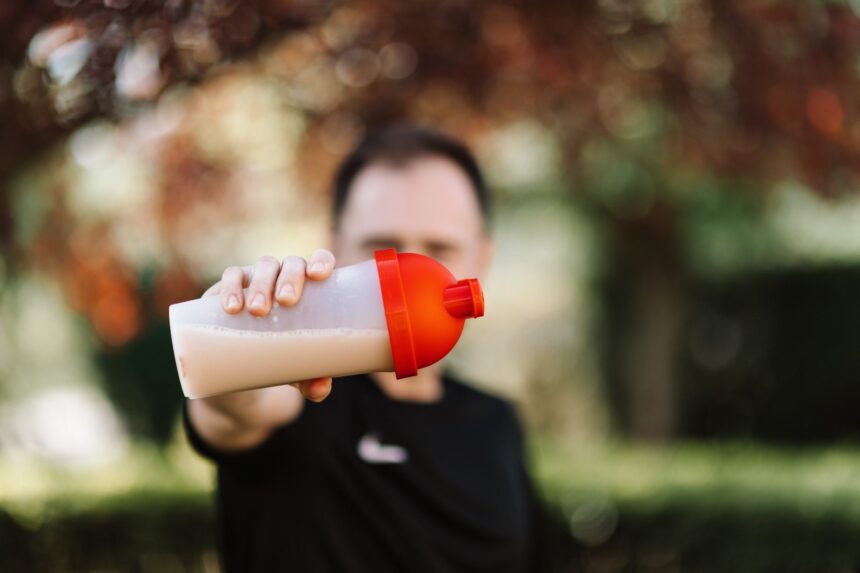
Bar chart comparing protein synthesis and breakdown between whey and casein from 1997 Boirie study
The 1997 Boirie study showing whey as "fast" and casein as "slow" protein has become nutrition dogma — but the paper's actual finding was that casein produced superior net protein retention. Here's what the research really showed. — Photo by www.kaboompics.com on Pexels (Pexels License)
SHARE
1 min read|136 words

The 1997 Boirie study has shaped sports nutrition messaging for nearly three decades, establishing whey as the “fast” protein and casein as “slow.” However, widespread citations of this landmark research often overlook a critical finding: while whey protein triggered faster synthesis rates at 68% compared to casein’s 31%, casein demonstrated a distinct metabolic advantage by suppressing protein breakdown by 34%—an effect whey failed to produce.

This incomplete interpretation has created a narrative gap in nutritional science. Net protein balance—the true determinant of tissue maintenance—favored casein over the seven-hour measurement window. When dietary patterns shift to multiple meals throughout the day, as they do in real-world nutrition, the performance gap between these proteins narrows substantially.

The findings underscore an essential principle: individual metabolic metrics tell incomplete stories without broader physiological context.

Read the full article on GMJ Newsroom.

Submit Your Paper
GMJ_Submit_Banner

Was this article helpful?

GMJ Brief · Announcement

📰 Read the full article: How one 1997 protein study became nutrition dogma — and what the data actually shows →

Related reference
  • Whey Protein · Ingredient
Share This Article
Facebook LinkedIn Bluesky Copy Link Print
GMJ
ByProf. Giorgi Pkhakadze
Follow:
Prof. Giorgi Pkhakadze, MD, MPH, PhD, is Editor-in-Chief of the Georgian Medical Journal and Chair of the Public Health Institute of Georgia (PHIG). He is Professor and Head of the Department of Social and Behavioural Sciences at David Tvildiani Medical University, and Secretary/Treasurer of the UEMS Section of Public Health. ORCID: 0000-0001-7609-4515.

Submit Your Paper →

Georgia's peer-reviewed open-access medical journal. No APC until January 2027.
Submit Manuscript →
Physicians as Political Voices: 250 Years of Medicine and American Democracy

A New England Journal of Medicine historical analysis examines 250 years of…

Cat Scratch Disease Returns: What Clinicians and Patients Need to Know

Cat scratch disease, caused by Bartonella henselae, presents with varied clinical manifestations…

Mechanism of chemotherapy resistance in ovarian cancer identified—and reversible

Michigan State University researchers have identified a protein mechanism that confers chemotherapy…

Submit Your Paper to GMJ

No APC until January 2027.
Submit Manuscript →

You Might Also Like

Medical illustration showing blood filtration equipment used in immunoadsorption therapy trial

Zero Significant Benefit: Immunoadsorption Trial Data Challenges Blood Filtration for Long COVID

By
Prof. Giorgi Pkhakadze
14/07/2026
Illustration of microglia immune cells in brain tissue with amyloid-beta plaques

Novel Molecule OLE Shows Promise in Reprogramming Brain Immune Cells Against Alzheimer’s

By
Prof. Giorgi Pkhakadze
21/07/2026
Medical illustration showing DNA helix with cancer risk assessment data for pediatric genetic testing

Precision Genetics: How Early Testing Transforms Pediatric Cancer Care

By
Prof. Giorgi Pkhakadze
06/06/2026
Medical illustration showing HIV viral particles and treatment monitoring

What HIV-Positive Patients and Clinicians Need to Know About Low-Level Viral Detection

By
Prof. Giorgi Pkhakadze
05/08/2026
Facebook Twitter Youtube Instagram
Company
  • Privacy Policy
  • Contact US
  • GMJ Journal
  • Submit Manuscript
  • Editorial Team
  • Register at GMJ
  • Terms of Use

Subscribe to GMJ News — Click here

Join Community
© 2026 Georgian Medical Journal (GMJ). Published by the Public Health Institute of Georgia (PHIG). All rights reserved.
Welcome Back!

Sign in to your account

Username or Email Address
Password

Lost your password?

Not a member? Sign Up