🟠 Moderate Evidence
Glycine, one of the body’s most abundant amino acids, promotes sleep not through sedation but by triggering a drop in core body temperature—a mechanism distinct from traditional sleep medications. Research at Stanford University mapped this thermoregulatory pathway, showing that when 3 grams of glycine is consumed before bed, it activates heat-loss mechanisms that mimic the natural temperature cascade preceding sleep onset.
Key takeaways
- Glycine lowers core body temperature by increasing peripheral blood flow to hands and feet, a mechanism mapped in animal models by Stanford researchers
- In human trials, 3g of glycine before bed reduced sleep-onset latency and next-day fatigue in people with sleep complaints, with effects correlating to temperature shifts
- At roughly nine cents per 3g dose, glycine is one of the cheapest amino acids available and produces no sedative hangover because it operates through thermoregulation, not central nervous system depression
Study at a Glance
| Primary source | Neuropsychopharmacology |
| Study design | Mechanistic investigation (animal models + human trials) |
| Intervention | 3g glycine oral dose before bed |
| Primary outcome | Core body temperature, sleep-onset latency, subjective sleep quality |
| Institution | Stanford University |
Glycine’s Thermoregulatory Pathway to Sleep
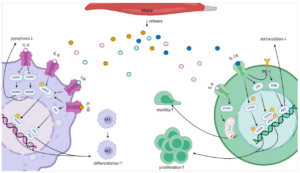
Mechanism of action: central activation of peripheral heat loss, distinct from sedative mechanisms
Source: Stanford University research (Kawai et al., Neuropsychopharmacology, 2015) | Georgian Medical Journal News

The Central Mechanism: NMDA Receptors and the Suprachiasmatic Nucleus
When glycine reaches the brain, it binds to N-methyl-D-aspartate (NMDA) receptors located in the suprachiasmatic nucleus (SCN), the brain’s master circadian clock. This binding activates the medial preoptic area, a region responsible for thermoregulation. The cascade that follows is not a pharmacological side effect but the primary mechanism: blood vessels in the peripheral tissues dilate, shunting blood flow to the skin of the hands and feet, where heat dissipates into the environment and core body temperature declines.
Researchers at Stanford, led by Kawai and colleagues, used animal models to ablate the suprachiasmatic nucleus and observed that glycine’s sleep-promoting and temperature-lowering effects disappeared entirely when the SCN was removed. This finding was critical: it proved that the SCN is the target organ, not a secondary effect of glycine’s action elsewhere in the nervous system.
When the SCN was surgically ablated in animal models, glycine’s sleep-promoting and hypothermic effects vanished entirely, confirming the suprachiasmatic nucleus as the primary target rather than a downstream consequence of the intervention.
— Kawai et al., Neuropsychopharmacology (2015)
Human Evidence: Sleep Latency and Subjective Quality Improvement
Translating these mechanistic findings to clinical practice, polysomnographic studies in humans demonstrated that a 3-gram glycine dose reduced sleep-onset latency in volunteers with self-reported sleep complaints. Participants also reported lower next-day fatigue. Importantly, the improvements in subjective sleep quality correlated directly with measurable drops in core body temperature recorded during the night.
Research published in Frontiers in Neurology by Bannai and colleagues examined additional pathways through which glycine supports sleep architecture. Because glycine works through thermoregulation rather than central nervous system depression, it produces no sedative hangover—the grogginess that characterizes many pharmaceutical sleep aids. The mechanism is functionally identical to the reason a hot bath before bed promotes sleep: peripheral vasodilation followed by core body cooling triggers the natural sleep cascade.
Glycine vs. Sedative Sleep Aids: A Fundamentally Different Approach
The distinction between glycine’s mechanism and traditional sedative-hypnotics is clinically significant. Benzodiazepines, Z-drugs, and other sedatives work by enhancing GABAergic inhibition in the central nervous system—dampening brain activity across multiple regions. This produces the sedative hangover many patients experience: impaired cognitive function, psychomotor slowing, and residual drowsiness into the following morning.
Glycine, by contrast, operates through a specific neuroendocrine pathway: NMDA receptor modulation in the SCN, followed by efferent signals to the medial preoptic area that initiate thermoregulation. Because it targets a physiological process (temperature regulation) rather than broadly suppressing neural activity, it leaves cognitive and motor function intact. This also explains why glycine is among the safest and most cost-effective amino acid interventions available—at nine cents per dose, it falls far below the cost of prescription sleep medications.
Clinical Limitations and Sleep Hygiene Primacy
Despite its promising mechanistic and safety profile, glycine is not a replacement for addressing underlying sleep disorders or foundational sleep hygiene. Chronic insomnia often reflects circadian misalignment, untreated sleep apnea, restless leg syndrome, or psychiatric comorbidities that glycine cannot address. Similarly, inconsistent sleep schedules, blue-light exposure, caffeine use, and poor sleep environment remain primary determinants of sleep quality. Glycine should be understood as a supplementary intervention that optimizes the natural thermoregulatory cascade in individuals whose sleep complaints arise from subtle temperature dysregulation or mild circadian desynchrony.
What this means
Frequently asked questions
How does glycine’s mechanism differ from melatonin?
Melatonin signals circadian phase through receptor-mediated pathways in the suprachiasmatic nucleus; glycine, by contrast, initiates the physiological temperature-drop signal that immediately precedes sleep. Both can support sleep, but through distinct mechanisms. Clinical Updates on sleep pharmacology distinguish these pathways further.
Is 3 grams the only effective dose?
The dose of 3 grams was used in the Stanford and human trial studies cited here. Individual variation in glycine metabolism and circadian sensitivity may mean some people respond to lower or higher doses, but 3g represents the evidence-based starting point. Consultation with a healthcare provider is advisable before beginning supplementation.
Can glycine replace sleep medication prescribed for a diagnosed sleep disorder?
No. Glycine is not indicated as a replacement for prescribed treatments for insomnia, sleep apnea, narcolepsy, or other diagnosed sleep disorders. It may complement sleep hygiene in mild cases or be integrated into multimodal treatment under clinical supervision, but self-discontinuation of prescribed medications in favor of glycine is unsafe.
As sleep medicine increasingly recognizes the primacy of thermoregulation in sleep physiology, interventions like glycine that target this mechanism through low-cost, physiologically aligned pathways may gain traction in clinical practice. Future research should compare glycine’s efficacy across diverse populations—older adults, shift workers, and those with circadian rhythm disorders—to clarify its role in precision sleep medicine.
Source: Kawai et al., Neuropsychopharmacology (2015); Bannai et al., Frontiers in Neurology (2012); Yamadera et al., Sleep and Biological Rhythms (2007)
Was this article helpful?
Disclaimer. This article is health journalism intended for general information and education. It is not medical advice and is not a substitute for professional diagnosis or treatment. Always consult a qualified healthcare provider about your individual circumstances. Full disclaimer →
Related Coverage

Editorial standards. This article was produced under the GMJ News editorial process, with oversight by the GMJ Editorial Board. Our editorial process. Spotted an error? Contact the editorial team.