


Home › Topics › Lymphatic Filariasis
Lymphatic Filariasis
GMJ News knowledge hub · last reviewed October 2026 · Georgian Medical Journal
SummaryStatisticsGlossaryGMJ newsFAQDocumentsOrganizationsResearch
Lymphatic filariasis — transmitted by mosquitoes carrying filarial worm larvae — is the world's leading infectious cause of disability after mental illness: approximately 51 million people are currently infected and over 36 million have chronic disease — including the grotesque swelling of limbs (elephantiasis) and genitalia (hydrocele) that causes profound disability and stigma (WHO). WHO's Global Programme to Eliminate Lymphatic Filariasis (GPELF) — using annual Mass Drug Administration (MDA) with ivermectin + albendazole or diethylcarbamazine + albendazole — has achieved elimination in 17 countries and dramatically reduced global burden since 2000.
Key messages
51 million infected, 36 million disabled
Lymphatic filariasis (LF) — transmitted by mosquitoes — is the world's leading infectious cause of disability after mental illness: 51 million currently infected and over 36 million with chronic disability (lymphoedema or hydrocele) (WHO).
Elephantiasis and hydrocele
LF causes disfiguring, disabling and deeply stigmatising conditions: lymphoedema (swelling of limbs — grotesquely enlarged "elephant legs") and hydrocele (scrotal swelling from obstructed lymph drainage) in men — together causing social exclusion, poverty and psychological devastation.
MDA — a global success story
WHO's Global Programme to Eliminate LF (GPELF) — distributing ivermectin + albendazole or diethylcarbamazine (DEC) + albendazole annually through mass drug administration — has treated over 9 billion doses since 2000, achieving elimination in 17 countries.
Morbidity management
People already living with lymphoedema require ongoing care: limb hygiene and exercise (proven to reduce acute attacks); surgery for hydrocele (curative); and psychological support. This morbidity management is a neglected component of LF programmes.
Co-endemic with onchocerciasis
In some African regions co-endemic for LF and onchocerciasis (river blindness), ivermectin alone (not DEC) is used for MDA — because DEC can cause severe reactions in people with onchocerciasis.
2030 elimination target
WHO's NTD Roadmap targets complete elimination of LF transmission (confirmed by <1% antigen prevalence in children) in all endemic countries by 2030.
Key statistics
Lymphatic filariasis — people requiring MDA by region (millions) — WHO 2023
Source: WHO Global Programme to Eliminate Lymphatic Filariasis. Sub-Saharan Africa and South Asia dominate.
Glossary of key terms
Latest GMJ coverage

Rare Lymphatic-Urinary Fistula Causes Milky Urine in NEJM Case Report
08/07/2026
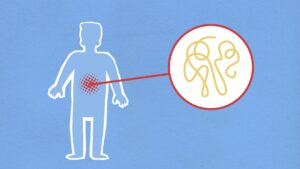
PAHO Partners with Mundo Sano Foundation to Eliminate Neglected Diseases and Cervical Cancer
29/05/2026
Frequently asked questions 12 Q&A — structured for Google featured snippets and AI discovery
Knowledge hub: guidelines, conventions and reports
Organizations working in migration and health
Related health topics
NTDsSchistosomiasisMalaria (vector control)DisabilityWASHMental health (stigma)
About this hub. Produced by the GMJ News Editorial Team as a public-good service. Every statistic is linked to its primary source. Documents are preserved in the GMJ Repository with full attribution. Georgian Medical Journal · Contact the editorial team