


Home › Topics › Disability and Health
Disability and Health
GMJ News knowledge hub · last reviewed September 2026 · Georgian Medical Journal
SummaryStatisticsGlossaryGMJ newsFAQDocumentsOrganizationsResearch
At least 1.3 billion people — 1 in 6 globally — live with a significant disability, yet people with disabilities face systematic exclusion from health services, employment and social participation (WHO World Disability Report). People with disabilities have worse health outcomes, higher rates of poverty and face greater barriers to healthcare than the general population — driven by physical barriers, discrimination, inadequate training of health workers and the absence of disability-responsive services. The UN Convention on the Rights of Persons with Disabilities (CRPD, 2006) and the WHO Global Disability Action Plan 2014-2021 provide the international framework for disability inclusion as a human rights issue.
Key messages
1 in 6 globally
1.3 billion people — 1 in 6 globally — live with significant disability. 80% live in LMICs where services, infrastructure and social protection are weakest (WHO World Disability Report 2023).
Worse health outcomes
People with disabilities experience worse health outcomes, higher poverty rates, and face greater barriers to healthcare than the general population — due to physical barriers, discrimination, unaffordable costs and lack of disability-responsive services.
CRPD — a human rights framework
The UN Convention on the Rights of Persons with Disabilities (CRPD, 2006) — ratified by 190 countries — recognises disability as a human rights issue, not a medical problem. It mandates equal access to health, education, employment and participation.
Disability-inclusive health
WHO's Rehabilitation 2030 initiative calls for universal access to rehabilitation — the health strategy that enables people with disabilities to function optimally. Rehabilitation is severely under-resourced globally: only 50% of people who need it have access.
Assistive technology gap
Approximately 2.5 billion people need at least one assistive product (hearing aids, wheelchairs, glasses, prostheses). Only 1 in 10 has access. WHO's Global Report on Assistive Technology (2022) calls for accelerated scale-up.
Disability and COVID-19
COVID-19 disproportionately affected people with disabilities: higher mortality, greater healthcare access disruption, and severe economic impacts. The pandemic reinforced the urgency of disability-inclusive health systems.
Key statistics
Prevalence of disability by type globally (millions) — WHO World Disability Report 2023
Source: WHO World Disability Report 2023. Based on ICF framework and global household surveys.
Glossary of key terms
Latest GMJ coverage

Assistive Technology Access in Sri Lanka Reveals Stark Disparities Across Age, Sex, and Geography
12/08/2026

Brain-Computer Interface Restores Speech in ALS Patient After Two Years of Home Use
11/07/2026

Mental Health Disorders Now Leading Global Disability Cause as Cases Approach 1.2 Billion
01/06/2026
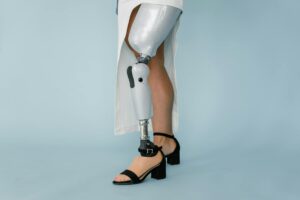
New grid-based method improves prosthetic foot wear assessment in resource-limited settings
31/05/2026

Waist Circumference Outperforms BMI in Predicting Disability Risk, Whitehall II Cohort Study Shows
05/08/2026

UNICEF warns of devastating toll on children in armed conflict zones across globe
22/09/2026
Frequently asked questions 12 Q&A — structured for Google featured snippets and AI discovery
Knowledge hub: guidelines, conventions and reports
Organizations working in migration and health
Related health topics
Eye careHearing lossMental healthRoad injuries (disability)UHCAgeing
About this hub. Produced by the GMJ News Editorial Team as a public-good service. Every statistic is linked to its primary source. Documents are preserved in the GMJ Repository with full attribution. Georgian Medical Journal · Contact the editorial team