


Home › Topics › Eye Care and Vision
Eye Care and Vision
GMJ News knowledge hub · last reviewed September 2026 · Georgian Medical Journal
SummaryStatisticsGlossaryGMJ newsFAQDocumentsOrganizationsResearch
At least 2.2 billion people globally have a vision impairment — and in at least 1 billion of those cases it is preventable or has not yet been addressed (WHO World Report on Vision 2019). The leading causes — uncorrected refractive error and cataract — are both treatable with spectacles and a 10-minute surgical procedure. The WHO integrated people-centred eye care (IPEC) model places eye health within primary health care; Vision 2020: The Right to Sight coordinates the global response.
Key messages
2.2 billion affected
At least 2.2 billion people have a vision impairment or blindness — and in at least 1 billion cases the condition is preventable or has not yet been addressed (WHO World Report on Vision 2019).
Leading causes are treatable
Uncorrected refractive error (826 million people — correctable with spectacles) and cataract (94 million — treatable with a 10-minute outpatient procedure) together dominate the vision impairment burden.
90% in LMICs
90% of visually impaired people live in LMICs where ophthalmologists, spectacles and surgery are scarce — reflecting profound inequities in health system development.
Diabetic retinopathy rising
Diabetic retinopathy — the leading cause of blindness in working-age adults — is rising with the global diabetes epidemic. Annual retinal screening and timely treatment prevent blindness.
IPEC model
WHO's integrated people-centred eye care (IPEC) model embeds eye health within primary health care — training community health workers to screen, refer and link to specialist services.
UHC gap
Eye care is excluded from most national health insurance schemes globally — a direct barrier to UHC. WHO calls for integration of essential eye care services into national health packages.
Key statistics
People with vision impairment by cause globally (millions) — WHO World Report on Vision 2019
Source: WHO World Report on Vision 2019. Refractive error and cataract dominate — both readily treatable.
Glossary of key terms
Latest GMJ coverage

Lab-Grown Retinal Cells Restore Vision in Mice, Opening Path to Human Eye Therapies
14/09/2026
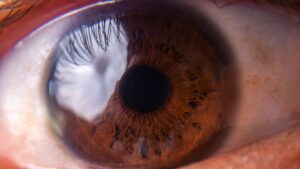
NEJM Images Show Advanced Diabetic Eye Disease Progression and Treatment Response
13/06/2026

Blood Protein Patterns Predict Early Diabetic Eye Damage Years Before Symptoms
06/06/2026

Antimicrobial Stewardship Knowledge Gaps Found Among Healthcare Workers in Somalia
18/09/2026

European Public Backs State-Funded Fertility Care and Embryo Research, Survey Finds
17/09/2026
📰
15 Years of Eye Disease in Georgia: The Largest Descriptive Study Yet
28/08/2026
Frequently asked questions 12 Q&A — structured for Google featured snippets and AI discovery
Knowledge hub: guidelines, conventions and reports
Organizations working in migration and health
Related health topics
DiabetesAgeingNutrition (vitamin A)Child healthUHCAMR (trachoma)
About this hub. Produced by the GMJ News Editorial Team as a public-good service. Every statistic is linked to its primary source. Documents are preserved in the GMJ Repository with full attribution. Georgian Medical Journal · Contact the editorial team