


Malaria
GMJ News knowledge hub · last reviewed September 2026 · Georgian Medical Journal
SummaryStatisticsGlossaryGMJ newsFAQDocumentsOrganizationsResearch
Malaria still causes about 263 million cases and nearly 600,000 deaths a year — around 95% in Africa, most of them children under five (WHO World Malaria Report 2024). After decades that halved mortality through insecticide-treated nets, rapid tests and artemisinin-based therapy, progress has stalled against funding gaps, insecticide and emerging artemisinin resistance. Hope now rides on the first-ever malaria vaccines — RTS,S and the cheaper, highly effective R21/Matrix-M — rolling out across African childhood immunization programmes, alongside next-generation nets. The artemisinin story itself, from traditional Chinese medicine to Nobel Prize, remains global health's defining tradition-to-therapy translation.
Key messages
Scale
Malaria caused about 263 million cases and 597,000 deaths in 2023 — nearly all in Africa, and more than two thirds of deaths in children under five (WHO World Malaria Report 2024).
Vaccine era
The WHO pre-qualified RTS,S/AS01 (Mosquirix) malaria vaccine in 2021 and recommended the second vaccine R21/Matrix-M in 2023 — the first disease-specific vaccines to protect against a parasitic infection.
Artemisinin resistance
Resistance to artemisinin — the backbone of first-line malaria treatment — is now documented in parts of sub-Saharan Africa as well as South-East Asia, threatening the therapeutic gains of the last two decades.
Climate link
Climate change is expanding the geographic range and seasonality of Anopheles mosquitoes, putting new populations at risk and complicating malaria elimination programmes.
COVID-19 setback
The pandemic caused the worst disruption to malaria services in 20 years — malaria deaths spiked by 15% in 2020 before recovering slowly. Supply chain and health worker disruptions were the main drivers.
End Malaria goal
The WHO Global Technical Strategy for Malaria 2016-2030 targets a 90% reduction in malaria incidence and mortality by 2030. Progress is severely off-track and will require roughly doubling current investment.
Key statistics
Malaria deaths per year (thousands) 2000-2023 — WHO World Malaria Report
Source: WHO World Malaria Report (annual series). Includes COVID-19 disruption spike 2020.
Glossary of key terms
Latest GMJ coverage

Malaria in Infancy Linked to Delayed Development at Age 1 and 6, Benin Study Shows
21/09/2026
Ethiopia Study Reveals Stakeholder Concerns Over Novel Malaria Treatments
23/08/2026

WHO Prequalifies Infant-Friendly Malaria Treatment and New Diagnostic Tests
22/08/2026

Blood Type O Shows Lower Risk in Severe Malaria: Updated Meta-Analysis
31/07/2026

Point-of-care G6PD testing safely enables primaquine treatment for vivax malaria in Southeast Asia
10/07/2026
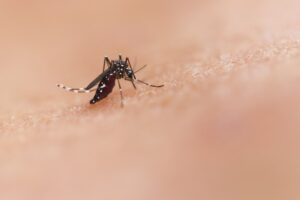
Climate-Driven Mosquito Season Shifts Earlier, Threatening Disease Spread Across Northern Regions
23/09/2026
Frequently asked questions 12 Q&A — structured for Google featured snippets and AI discovery
Knowledge hub: guidelines, conventions and reports
Organizations working in migration and health
Related health topics
TCIM (artemisinin story)Child healthClimate and healthHIV/AIDSVaccinesMigration and health
About this hub. Produced by the GMJ News Editorial Team as a public-good service. Every statistic is linked to its primary source. Documents are preserved in the GMJ Repository with full attribution. Georgian Medical Journal · Contact the editorial team