By using this site, you agree to the Privacy Policy and Terms of Use.
Accept
GMJ NewsGMJ NewsGMJ News
  • Latest News
    • GMJ Briefs
  • Podcast & Media
    • Podcast Episodes
    • GMJ Audio
    • GMJ Videos
  • Research Digest
    • New Studies
    • Georgian Research
    • Data & Numbers
  • Policy & Systems
    • Health Policy
    • Quality & Safety
    • Migration & Health
    • Global Health
  • Practice
    • Clinical Updates
    • Case Discussions
    • Pharmacy & Prescribing
    • Ingredients A-Z
  • Dictionary
    • Browse A–Z
    • About the Project
    • Contribute a Term
  • Perspectives
    • Editorial
    • Explainers
    • Voices
    • Letters
  • Health Topics
  • GMJ Articles
    • Vol. 1 Issue 2 (2026)
    • Vol. 1 Issue 1 (2026)
    • Pre-Launch Articles (2025)
  • Read the Journal →
  • About GMJ News
Notification Show More
Font ResizerAa
GMJ NewsGMJ News
Font ResizerAa
  • Latest News
    • GMJ Briefs
  • Podcast & Media
    • Podcast Episodes
    • GMJ Audio
    • GMJ Videos
  • Research Digest
    • New Studies
    • Georgian Research
    • Data & Numbers
  • Policy & Systems
    • Health Policy
    • Quality & Safety
    • Migration & Health
    • Global Health
  • Practice
    • Clinical Updates
    • Case Discussions
    • Pharmacy & Prescribing
    • Ingredients A-Z
  • Dictionary
    • Browse A–Z
    • About the Project
    • Contribute a Term
  • Perspectives
    • Editorial
    • Explainers
    • Voices
    • Letters
  • Health Topics
  • GMJ Articles
    • Vol. 1 Issue 2 (2026)
    • Vol. 1 Issue 1 (2026)
    • Pre-Launch Articles (2025)
  • Read the Journal →
  • About GMJ News
Follow US
GMJ News > Practice > Clinical Updates > WHO Prequalifies Infant-Friendly Malaria Treatment and New Diagnostic Tests
Clinical UpdatesGlobal HealthPolicy & SystemsPractice

WHO Prequalifies Infant-Friendly Malaria Treatment and New Diagnostic Tests

GMJ
Last updated: 12/07/2026 13:30
By
GMJ Practice Desk
Share
9 Min Read
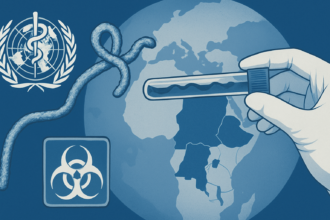
WHO prequalification announcement for artemether–lumefantrine infant formulation and malaria rapid diagnostic testsIllustrative image · Photo by Castorly Stock on Pexels (Pexels License)
The World Health Organization prequalified an artemether–lumefantrine formulation for infants and three rapid diagnostic tests in April 2026. These regulatory approvals address critical gaps in paediatric malaria treatment and diagnosis, expanding access across sub-Saharan Africa. — Photo by Castorly Stock on Pexels (Pexels License)
SHARE
🎧 Listen to this article7:28 min · 1,085 words · GMJ Audio
5 min read|1,085 words
✓ Reviewed by GMJ News Editorial Team

🟢 Strong Evidence

Contents
    • Key takeaways
      • Regulatory Action at a Glance
      • WHO Prequalification Impact: Expanding Paediatric Malaria Tools
  • Closing a critical paediatric treatment gap
  • Diagnostic capacity as the foundation of treatment access
  • Market dynamics and manufacturing incentives
  • Implications for childhood malaria mortality
    • What this means
  • Frequently asked questions
    • What does WHO prequalification mean?
    • Why is an infant-specific artemether–lumefantrine formulation important?
    • Will these new products immediately reduce malaria deaths?

The World Health Organization prequalified a new artemether–lumefantrine formulation designed specifically for infants in April 2026, alongside three novel rapid diagnostic tests for malaria. The regulatory approvals represent a significant step toward simplifying treatment protocols in sub-Saharan Africa, where malaria mortality remains concentrated among children under five years old.

Key takeaways

  • WHO prequalified the first artemether–lumefantrine formulation specifically formulated for infants in April 2026
  • Three new rapid diagnostic tests were simultaneously prequalified, expanding diagnostic capacity in resource-limited settings
  • The approvals address a critical gap in paediatric malaria treatment, where dosing and formulation constraints have limited options
  • Prequalification enables procurement by UN agencies and opens market access for manufacturers in endemic countries

Regulatory Action at a Glance

Regulatory body World Health Organization
Action type Prequalification of medicines and diagnostics
Products approved 1 artemether–lumefantrine formulation (paediatric) + 3 rapid diagnostic tests
Target population Infants and young children in malaria-endemic regions
Date April 2026
4
new WHO prequalified products for malaria treatment and diagnosis approved in April 2026

WHO Prequalification Impact: Expanding Paediatric Malaria Tools

New products approved in April 2026, by type and availability pathway

Rapid diagnostic tests approved
3
Artemether–lumefantrine paediatric formulations
1

Source: WHO Prequalification Unit, April 2026 | Georgian Medical Journal News

Submit Your Paper
GMJ_Submit_Banner

Closing a critical paediatric treatment gap

Malaria treatment in infants has long posed a clinical challenge. Standard artemether–lumefantrine formulations, while effective in older children and adults, are often difficult to dose accurately in infants due to their smaller body weight and pharmacokinetic differences. This new WHO-prequalified formulation addresses that gap directly, according to reporting by The Lancet Infectious Diseases (April 2026). The approval signals confidence in the product’s safety, efficacy, and quality standards, enabling purchase by the UN Children’s Fund (UNICEF), the Global Fund to Fight AIDS, Tuberculosis and Malaria, and other UN procurement mechanisms.

🎙️ Related Podcast Episodes
🎬 GMJ Video Series | Rare Case: Lung Cancer & Tuberculosis Coexistence

Prequalification is not a clinical recommendation but rather a regulatory pathway that certifies manufacturing standards and quality assurance. It does not imply that the product is superior to existing treatments—rather, it confirms that the product meets international standards for safety and efficacy. The WHO prequalification process typically involves submission of dossiers, laboratory testing, and inspection of manufacturing facilities.

Diagnostic capacity as the foundation of treatment access

The simultaneous prequalification of three rapid diagnostic tests reflects the reality that malaria treatment cannot be effective without accurate diagnosis. In many sub-Saharan African settings, parasitological confirmation remains limited by access to microscopy and polymerase chain reaction (PCR) testing. Rapid diagnostic tests provide point-of-care results within minutes, enabling treatment initiation at the community level. WHO’s Global Malaria Programme has prioritised diagnostic expansion as essential to the broader malaria elimination agenda, particularly in regions with high childhood mortality.

The three newly prequalified tests represent diverse manufacturers and geographies, which typically increases supply stability and competition-driven pricing. Prequalification creates a streamlined pathway for these products to reach procurement agents and national malaria control programmes in resource-limited settings.

Market dynamics and manufacturing incentives

WHO prequalification serves a dual regulatory function: it assures quality to purchasers and it opens markets for manufacturers. Manufacturers in endemic countries—particularly in India, Kenya, and other regional hub economies—have strong incentives to develop and prequalify new formulations and diagnostics, knowing that prequalification unlocks access to major procurement pathways. This encourages competition, which historically drives down prices and improves availability.

The artemether–lumefantrine combination remains one of the most widely used artemisinin-based combination therapies (ACTs) globally. Published efficacy data support its use, though emerging artemisinin resistance in Southeast Asia has prompted sustained research into next-generation ACTs. For sub-Saharan Africa, where malaria transmission remains high and resistance to artemether–lumefantrine is not yet widespread, this formulation addresses an immediate clinical need.

Implications for childhood malaria mortality

Malaria remains the leading cause of death in children under five in sub-Saharan Africa, according to WHO child health data. The introduction of an infant-specific artemether–lumefantrine formulation could streamline dosing, reduce administration errors, and improve treatment adherence by caregivers. However, prequalification alone does not guarantee uptake. National malaria programmes must integrate these products into treatment guidelines, health workers must be trained in their use, and supply chains must be secured. The Roll Back Malaria Partnership coordinates many of these efforts across endemic countries.

WHO prequalified an artemether–lumefantrine formulation specifically designed for infants and three rapid diagnostic tests in April 2026, expanding treatment options in sub-Saharan Africa where paediatric malaria burden remains highest.

— Sanjeet Bagcchi, reporting for The Lancet Infectious Diseases (April 2026)

What this means

For patients: Caregivers of infants with malaria now have access to a formulation designed for accurate, safe dosing. Faster diagnostic tests enable treatment initiation at community clinics, reducing treatment delays that could lead to severe disease or death.
For clinicians: Paediatricians and community health workers can use a standardised, WHO-prequalified formulation with simplified dosing guidance. Confidence in diagnostic accuracy reduces the risk of overtreatment and unnecessary antimalarial exposure.
For policymakers: National malaria programmes can now procure prequalified products through UN mechanisms, typically at negotiated prices. Integration of these tools into treatment algorithms could reduce childhood malaria mortality and accelerate progress toward malaria elimination targets.

Frequently asked questions

What does WHO prequalification mean?

WHO prequalification is a regulatory assessment that certifies a medicine or diagnostic has met international standards for quality, safety, and efficacy. It does not replace national regulatory approval but enables procurement by UN agencies and streamlines market access. Prequalification is based on dossier review, laboratory testing, and manufacturing site inspections conducted by WHO and partner agencies.

Why is an infant-specific artemether–lumefantrine formulation important?

Infants have different pharmacokinetics and smaller body weights than older children, making accurate dosing with standard formulations difficult and error-prone. A formulation designed for infants enables appropriate drug exposure and reduces the risk of underdosing or overdosing. This is particularly critical in settings where malaria mortality is highest.

Will these new products immediately reduce malaria deaths?

Prequalification is a necessary but not sufficient step. Uptake depends on integration into national treatment guidelines, health worker training, supply chain security, and affordability. Countries must implement these tools as part of comprehensive malaria control strategies that also include vector control, case management, and surveillance.

The prequalification of these products reflects sustained international commitment to expanding malaria treatment options in sub-Saharan Africa. However, malaria elimination remains a long-term goal requiring parallel investment in health system strengthening, surveillance, and vector control. Continued monitoring of efficacy and safety post-prequalification will be essential, particularly as resistance patterns evolve across endemic regions. Global health initiatives will need to coordinate with clinical guidelines updates to ensure these prequalified products reach patients who need them most.

Source: WHO prequalifications signal hope for malaria, Sanjeet Bagcchi, The Lancet Infectious Diseases, April 2026

Was this article helpful?

Disclaimer. This article is health journalism intended for general information and education. It is not medical advice and is not a substitute for professional diagnosis or treatment. Always consult a qualified healthcare provider about your individual circumstances. Full disclaimer →

Related Coverage
Disseminated herpes zoster with hepatic necrosis reveals late HIV diagnosis in young womanAug 22, 2026
Opioid agonist treatment cuts mortality risk in French primary care—largest nationwide study yetAug 22, 2026
AI-assisted mammography screening shows promise but requires careful interpretation of benefitsAug 22, 2026
Haitian Women in Florida Face Health Crisis as TPS Uncertainty Deepens Stress and Healthcare AccessAug 21, 2026
Explore more on this topic:🧭 Malaria hub🧭 Child Health hub🧭 Sexually Transmitted Infections hub
🔥 Most read this week
1High-Dose Zinc Supplements May Create Copper Deficiency, Warn Nutrition Experts
2Evidence-Based Hydration Protocol: How Much Fluid and Sodium Athletes Actually Need
3L-Theanine Improves Sleep Quality Without Drowsiness, Systematic Review Finds
4How Coffee Brewing Method Affects Cholesterol: The Science Behind Diterpenes and Filters
Related reference
  • Tuberculosis · Condition
  • Malaria · Condition
PG
Editorial oversight
Prof. Giorgi Pkhakadze, MD, MPH, PhD
Editor-in-Chief, GMJ News
Full profile →  ·  ORCID 0000-0001-7609-4515
Medical disclaimer. This article is health journalism intended for general information. It is not medical advice and is not a substitute for consultation with a qualified healthcare professional. Always seek your physician's advice regarding any medical condition.
Editorial standards. This article was produced under the GMJ News editorial process, with oversight by the GMJ Editorial Board. Our editorial process. Spotted an error? Contact the editorial team.

📬 GMJ Health Digest
Evidence-based medical news, once a week. Free, no spam, unsubscribe anytime.
TAGGED:diagnosticsmalariapaediatric-medicineprequalificationWHO
Share This Article
Facebook LinkedIn Bluesky Copy Link Print
GMJ
ByGMJ Practice Desk
Follow:
GMJ Practice Desk is part of GMJ News, the newsroom of the Georgian Medical Journal (gmj.ge), published by the Public Health Institute of Georgia. Every article is editorially reviewed before publication.
Leave a Comment Leave a Comment

Leave a Reply Cancel reply

Your email address will not be published. Required fields are marked *

Submit Your Paper →

Georgia's peer-reviewed open-access medical journal. No APC until January 2027.
Submit Manuscript →
Disseminated herpes zoster with hepatic necrosis reveals late HIV diagnosis in young woman

A 24-year-old Haitian woman underwent cholecystectomy before tissue diagnosis revealed disseminated herpes…

Opioid agonist treatment cuts mortality risk in French primary care—largest nationwide study yet

A nationwide French cohort study published in The Lancet Public Health demonstrates…

AI-assisted mammography screening shows promise but requires careful interpretation of benefits

Researchers clarify MASAI trial findings on AI-assisted mammography, emphasizing careful interpretation of…

Submit Your Paper to GMJ

No APC until January 2027.
Submit Manuscript →

You Might Also Like

Self-test products on UK high street retailer shelf, representing growing unregulated diagnostics market
Clinical Updates

UK tightens oversight of high-street health self-tests after BMJ finds safety gaps

By
GMJ Practice Desk
21/05/2026
Chart showing cardiovascular risk elevation from light smoking and recovery timeline after cessationIllustrative image · Photo by Fabiana Zambrano on Pexels (Pexels License)
Clinical UpdatesNew StudiesPracticeResearch Digest

Even Light Smoking Raises Heart Disease Risk by 50–60%, Study Shows—and Quitting Doesn’t Fully Reverse It

By
GMJ Practice Desk
30/07/2026
SAHPRA building with pharmaceutical industry collaboration meetingIllustrative image · Photo by Abdul batin on Pexels (Pexels License)
Health PolicyPolicy & Systems

South Africa’s drug regulator strengthens industry partnerships to improve medicine access

By
GMJ Policy Desk
05/07/2026
UNICEF Ambassador Millie Bobby Brown speaking at child health awareness event
Global HealthPolicy & Systems

UNICEF Ambassador Millie Bobby Brown Highlights Global Child Health Challenges in New Parenting Campaign

By
GMJ Policy Desk
05/06/2026
Facebook Twitter Youtube Instagram
Company
  • Privacy Policy
  • Contact US
  • GMJ Journal
  • Submit Manuscript
  • Editorial Team
  • Register at GMJ
  • Terms of Use

Subscribe to GMJ News — Click here

Join Community
© 2026 Georgian Medical Journal (GMJ). Published by the Public Health Institute of Georgia (PHIG). All rights reserved.
Welcome Back!

Sign in to your account

Username or Email Address
Password

Lost your password?