Updated 14/09/2026
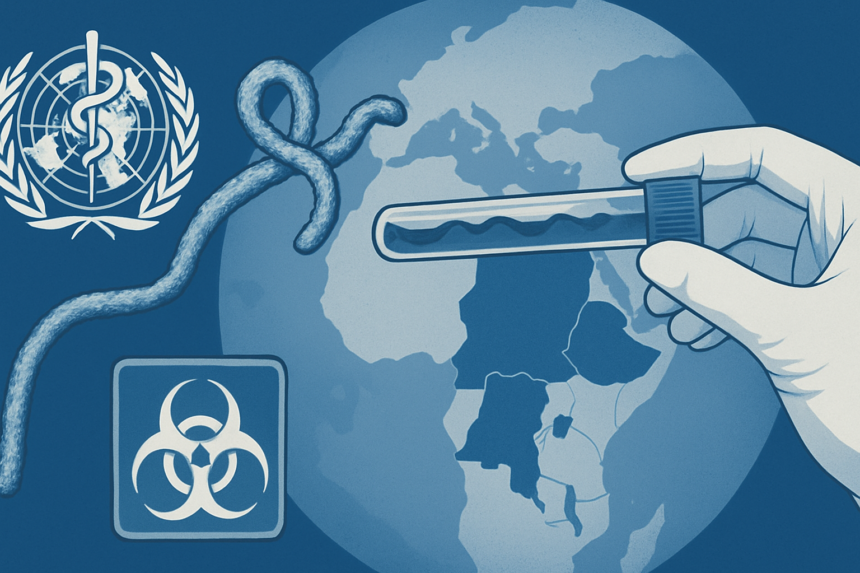
The World Health Organization has declared the Ebola Bundibugyo virus disease outbreak in the Democratic Republic of the Congo and Uganda a public health emergency of international concern (PHEIC), following the first meeting of the International Health Regulations Emergency Committee on May 22, 2026. The WHO Director-General, acting on the Committee’s advice, determined that while the outbreak constitutes a PHEIC, it does not meet the criteria for a pandemic emergency.
Cross-border transmission triggers emergency response
The World Health Organization Emergency Committee convened after confirmed cases of Ebola Bundibugyo virus disease were reported in both the Democratic Republic of the Congo and Uganda. This cross-border spread of the hemorrhagic fever prompted accelerated international health security measures under the International Health Regulations framework.
The Bundibugyo strain of Ebola virus was first identified in Uganda in 2007. This strain differs from the Zaire ebolavirus that caused the West Africa epidemic of 2014-2016.

Temporary recommendations issued to member states
Following the Emergency Committee’s deliberations, the WHO Director-General issued temporary recommendations to all States Parties under the International Health Regulations. These measures are designed to prevent further international spread while avoiding unnecessary interference with international traffic and trade, as outlined in the WHO’s standard emergency protocols.
PHEIC designation stops short of pandemic status
The Committee’s determination that the outbreak does not constitute a pandemic emergency reflects current epidemiological assessments of the virus’s spread and transmission patterns. According to WHO pandemic preparedness guidelines, pandemic emergency status requires evidence of sustained human-to-human transmission across multiple WHO regions with significant community spread.
This measured approach follows lessons learned from previous emergency declarations, where the balance between urgent response and proportionate measures proved crucial for effective outbreak control. The distinction allows for targeted international support while maintaining appropriate public health responses calibrated to the current threat level.
The outbreak constitutes a public health emergency of international concern but does not meet the criteria for pandemic emergency status
— WHO Director-General (WHO Emergency Committee Report, May 22, 2026)
Key takeaways
- WHO declared the Ebola Bundibugyo outbreak in DRC and Uganda a public health emergency of international concern on May 22, 2026
- The Emergency Committee determined the outbreak does not meet pandemic emergency criteria despite cross-border transmission
- Temporary recommendations have been issued to all WHO member states under International Health Regulations
Frequently asked questions
What is the difference between a PHEIC and pandemic emergency?
A PHEIC indicates a serious public health situation requiring international coordination, while pandemic emergency status requires evidence of sustained transmission across multiple WHO regions. The current outbreak shows cross-border spread but limited geographic scope.
What measures will be implemented under the PHEIC declaration?
The WHO Director-General has issued temporary recommendations to all member states under the International Health Regulations framework. Specific details depend on the epidemiological situation and affected countries’ response capacities.
The WHO Emergency Committee will continue monitoring the outbreak’s evolution and may adjust recommendations based on new epidemiological evidence.
{“@context”:”https://schema.org”,”@type”:”FAQPage”,”mainEntity”:[{“@type”:”Question”,”name”:”What is the difference between a PHEIC and pandemic emergency?”,”acceptedAnswer”:{“@type”:”Answer”,”text”:”A PHEIC indicates a serious public health situation requiring international coordination, while pandemic emergency status requires evidence of sustained transmission across multiple WHO regions. The current outbreak shows cross-border spread but limited geographic scope.”}},{“@type”:”Question”,”name”:”What measures will be implemented under the PHEIC declaration?”,”acceptedAnswer”:{“@type”:”Answer”,”text”:”The WHO Director-General has issued temporary recommendations to all member states under the International Health Regulations framework. Specific details depend on the epidemiological situation and affected countries’ response capacities.”}}]}
🗺️ Find certified Georgian healthcare providers: sheniekimi.ge — Georgia Health Map · 998 clinics · 6,600+ doctors · 2,296 pharmacies
Was this article helpful?
Disclaimer. This article is health journalism intended for general information and education. It is not medical advice and is not a substitute for professional diagnosis or treatment. Always consult a qualified healthcare provider about your individual circumstances. Full disclaimer →
Related Coverage


Editorial standards. This article was produced under the GMJ News editorial process, with oversight by the GMJ Editorial Board. Our editorial process. Spotted an error? Contact the editorial team.