
Updated 13/09/2026
🟠 Moderate Evidence
A safety study published in The Lancet Regional Health – Western Pacific demonstrates that point-of-care glucose-6-phosphate dehydrogenase (G6PD) testing can safely guide high-dose, short-course primaquine treatment for Plasmodium vivax malaria in Papua New Guinea and Indonesia. The findings suggest that rapid G6PD screening is both feasible and effective at the clinical level, paving the way for scaled implementation across endemic regions where vivax malaria remains a public health challenge.
Key takeaways
- Point-of-care G6PD testing proved feasible to implement in routine clinical settings in Papua New Guinea and Indonesia
- High-dose, short-course primaquine regimens showed acceptable safety profiles in G6PD-normal and G6PD-heterozygous patients when guided by rapid testing
- The intervention removes a major barrier to radical cure of vivax malaria by enabling safe, evidence-based treatment stratification at the point of care
- Researchers recommend advancing to large-scale implementation studies to assess efficacy and effectiveness across endemic countries
Study at a Glance
| Source | The Lancet Regional Health – Western Pacific |
| Study type | Safety feasibility study |
| Population | Patients with confirmed P. vivax malaria in endemic areas |
| Intervention | Point-of-care G6PD testing followed by risk-stratified primaquine dosing |
| Countries | Papua New Guinea, Indonesia |
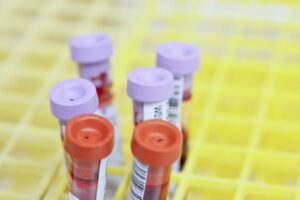
G6PD Testing as a Gatekeeper to Safe Primaquine Use
Point-of-care screening enables risk-stratified treatment in vivax malaria endemic regions

Source: The Lancet Regional Health – Western Pacific, 2026 | Georgian Medical Journal News
The G6PD barrier: why testing matters for vivax elimination
Plasmodium vivax malaria presents a distinct public health challenge across Asia-Pacific, South America, and parts of Africa. Unlike P. falciparum, vivax parasites can remain dormant in the liver as hypnozoites, causing relapses weeks or months after the initial infection. Primaquine remains the only widely available drug capable of eliminating these dormant forms and achieving true cure—but its use has been sharply limited by safety concerns.
The critical barrier is G6PD deficiency, an inherited red blood cell enzyme disorder affecting millions globally. Patients with G6PD deficiency who receive standard primaquine face severe haemolytic anaemia, potentially fatal in severe cases. This toxicity fear has led many clinicians to avoid primaquine entirely, leaving patients at risk of repeated relapses and ongoing transmission. The lack of rapid diagnostic testing at the point of care has meant that G6PD screening—when performed at all—requires laboratory infrastructure often unavailable in remote malaria-endemic areas.
The study published in The Lancet Regional Health – Western Pacific directly addresses this implementation gap. By demonstrating that rapid, point-of-care G6PD testing can be successfully integrated into routine malaria treatment workflows, the research removes a major logistical and safety obstacle to scaled primaquine use across endemic regions.
Feasibility and safety in real-world settings
The safety study enrolled patients with confirmed P. vivax malaria across health facilities in Papua New Guinea and Indonesia—two nations where vivax malaria remains endemic and elimination efforts are actively underway. The intervention combined rapid G6PD screening at point of care with risk-stratified primaquine dosing regimens: standard high-dose, short-course primaquine for G6PD-normal individuals, and modified regimens for those identified as G6PD-heterozygous or G6PD-deficient.
The research team documented not only the feasibility of integrating point-of-care G6PD testing into routine clinical care but also systematically monitored safety outcomes—haemoglobin levels, adverse events, and clinical tolerability—across all patient groups. The acceptable safety profile across stratified populations suggests that when patients are correctly phenotyped via rapid testing, high-dose primaquine can be safely administered to those who will tolerate it, while alternative management strategies can be offered to G6PD-deficient individuals.
This practical demonstration is crucial because it shifts G6PD testing from a theoretical ideal to an operationally proven intervention. Many malaria-endemic countries lack access to laboratory-based G6PD diagnostics, and even where available, turnaround times delay treatment. Point-of-care testing—producing results in minutes—removes this delay, enabling immediate treatment decisions at the moment of diagnosis.
Implications for malaria control and elimination strategies
The World Health Organization recommends primaquine for the radical cure of vivax and ovale malaria, yet uptake remains inconsistent across endemic regions due to precisely the safety and logistical barriers this study addresses. Large-scale deployment of point-of-care G6PD testing paired with risk-stratified primaquine represents a potential inflection point for vivax malaria control in Asia-Pacific, where elimination is increasingly feasible.
For countries advancing toward malaria elimination, sustained primaquine use is essential. Every untreated case of vivax malaria carries the risk of relapse and continued transmission during subsequent mosquito seasons. By removing the G6PD uncertainty barrier, this intervention directly supports the shift from malaria control (reducing burden) to elimination (interrupting transmission entirely). The safety evidence presented also builds confidence among clinicians who have been hesitant about primaquine, potentially increasing treatment uptake in countries that have adopted WHO guidance but face implementation gaps.
Point-of-care G6PD testing enables safe, risk-stratified primaquine treatment for vivax malaria in routine clinical settings, removing a major implementation barrier to achieving radical cure and supporting malaria elimination efforts across endemic regions.
— Study findings, The Lancet Regional Health – Western Pacific, 2026
Next steps: from safety to effectiveness
The researchers explicitly state that this safety feasibility study creates the evidence foundation for advancing to large-scale implementation studies. The next phase will need to assess not only continued safety but also clinical effectiveness (does the intervention actually prevent relapses?) and cost-effectiveness (is it sustainable across resource-limited health systems?) across diverse endemic settings.
Critical questions remain: What is the optimal point-of-care G6PD test in terms of accuracy and cost? How should supply chains be established to ensure consistent test availability in remote clinics? How can training and quality assurance be maintained across multiple countries? These practical implementation questions must be resolved before the intervention can be truly scaled.
The findings suggest that one of malaria’s most persistent barriers—the inability to safely identify who can tolerate primaquine—is now surmountable. With continued investment in point-of-care diagnostics and implementation science, this intervention has potential to accelerate vivax elimination across the Asia-Pacific region and beyond.
What this means
Frequently asked questions
What is G6PD deficiency and why does it matter for malaria treatment?
G6PD (glucose-6-phosphate dehydrogenase) deficiency is an inherited red blood cell enzyme disorder. Affected individuals are at risk of severe haemolytic anaemia if exposed to certain drugs, including primaquine. Because primaquine is the only drug that can cure vivax malaria by eliminating dormant liver parasites, identifying G6PD status before treatment is essential for both efficacy and safety.
How does point-of-care G6PD testing differ from laboratory testing?
Point-of-care tests deliver results in minutes at the clinic or hospital bedside, enabling immediate treatment decisions. Laboratory-based testing often requires samples to be sent away, delaying results by hours or days—time during which patients remain at risk of relapse and transmission. The rapid turnaround of point-of-care testing makes treatment feasible in remote, resource-limited settings where most vivax malaria occurs.
Does this study prove that the new primaquine regimens prevent relapses?
No. This was a safety and feasibility study, demonstrating that point-of-care G6PD testing can be implemented and that primaquine is safe when guided by test results. The study did not measure relapse prevention. The researchers recommend that large-scale implementation studies now evaluate whether the intervention actually prevents vivax relapses and interrupts transmission in real-world settings.
The convergence of rapid diagnostics, evidence-based primaquine regimens, and operational feasibility demonstrated in this study marks a turning point for vivax malaria control. As countries across the Asia-Pacific region move toward elimination targets, this intervention offers a practical, safety-proven pathway to breaking the cycle of relapses and reinfection that has sustained transmission for decades. Investment in scaling point-of-care G6PD testing, alongside implementation science, is now justified by robust evidence.
🗺️ Find certified Georgian healthcare providers: sheniekimi.ge — Georgia Health Map · 998 clinics · 6,600+ doctors · 2,296 pharmacies
Was this article helpful?
Disclaimer. This article is health journalism intended for general information and education. It is not medical advice and is not a substitute for professional diagnosis or treatment. Always consult a qualified healthcare provider about your individual circumstances. Full disclaimer →
Related Coverage



Editorial standards. This article was produced under the GMJ News editorial process, with oversight by the GMJ Editorial Board. Our editorial process. Spotted an error? Contact the editorial team.