By using this site, you agree to the Privacy Policy and Terms of Use.
Accept
GMJ NewsGMJ NewsGMJ News
  • Latest News
    • GMJ Briefs
  • Podcast & Media
    • Podcast Episodes
    • GMJ Audio
    • GMJ Videos
  • Research Digest
    • New Studies
    • Georgian Research
    • Data & Numbers
  • Policy & Systems
    • Health Policy
    • Quality & Safety
    • Migration & Health
    • Global Health
  • Practice
    • Clinical Updates
    • Case Discussions
    • Pharmacy & Prescribing
    • Ingredients A-Z
  • Perspectives
    • Editorial
    • Explainers
    • Voices
    • Letters
  • GMJ Articles
    • Vol. 1 Issue 2 (2026)
    • Vol. 1 Issue 1 (2026)
    • Pre-Launch Articles (2025)
  • Read the Journal →
  • About GMJ News
Notification Show More
Font ResizerAa
GMJ NewsGMJ News
Font ResizerAa
  • Latest News
    • GMJ Briefs
  • Podcast & Media
    • Podcast Episodes
    • GMJ Audio
    • GMJ Videos
  • Research Digest
    • New Studies
    • Georgian Research
    • Data & Numbers
  • Policy & Systems
    • Health Policy
    • Quality & Safety
    • Migration & Health
    • Global Health
  • Practice
    • Clinical Updates
    • Case Discussions
    • Pharmacy & Prescribing
    • Ingredients A-Z
  • Perspectives
    • Editorial
    • Explainers
    • Voices
    • Letters
  • GMJ Articles
    • Vol. 1 Issue 2 (2026)
    • Vol. 1 Issue 1 (2026)
    • Pre-Launch Articles (2025)
  • Read the Journal →
  • About GMJ News
Follow US
GMJ News > Research Digest > New Studies > Amyloid Beta’s Role in Tau Disruption May Explain Alzheimer’s Pathogenesis, Study Suggests
New StudiesResearch Digest

Amyloid Beta’s Role in Tau Disruption May Explain Alzheimer’s Pathogenesis, Study Suggests

GMJ
Last updated: 09/07/2026 15:51
By
GMJ Research Desk
Share
8 Min Read
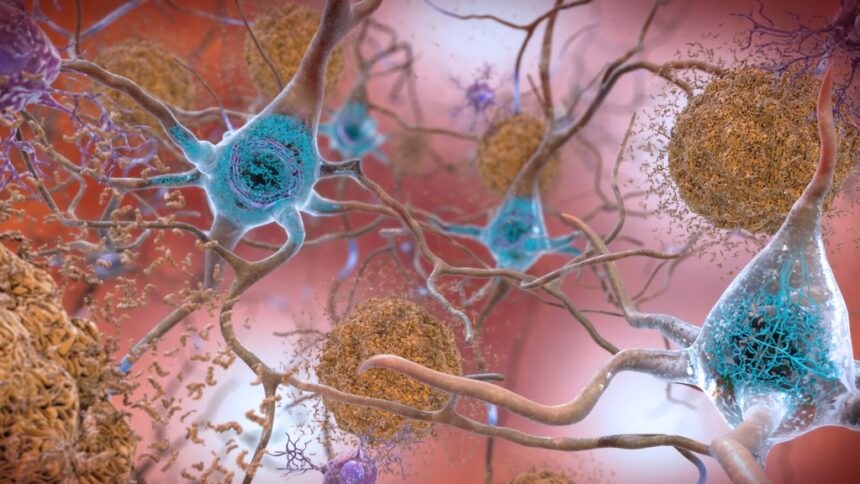
Diagram showing amyloid beta disrupting tau protein function in neuronsIllustrative image · "Beta-Amyloid Plaques and Tau in the Brain" by National Institutes of Health (NIH) is marked with Public Domain Mark 1.0. To view the terms, visit https://creativecommons.org/publicdomain/mark/1.0/. (Public Domain Mark)
New research suggests amyloid beta triggers Alzheimer's disease by disrupting tau protein function rather than directly causing neuronal death. This mechanistic discovery challenges prevailing treatment strategies and may reshape therapeutic development toward combination approaches. — "Beta-Amyloid Plaques and Tau in the Brain" by National Institutes of Health (NIH) is marked with Public Domain Mark 1.0. To view the terms, visit https://creativecommons.org/publicdomain/mark/1.0/. (Public Domain Mark)
SHARE
5 min read|1,042 words
✓ Medically reviewed by Prof. Giorgi Pkhakadze, MD, MPH, PhD · ORCID 0000-0001-7609-4515

🟡 Preliminary Evidence

Contents
    • Key takeaways
      • Proposed Alzheimer’s Pathogenic Mechanism: From Amyloid-Tau Interaction to Neuronal Dysfunction
  • Challenging the Amyloid Cascade Hypothesis
  • The Critical Role of Tau Dysregulation
  • Implications for Drug Development and Clinical Practice
    • What this means
  • Frequently asked questions
    • Does this research mean amyloid is not important in Alzheimer’s disease?
    • Why have amyloid-targeting drugs shown limited benefit if amyloid is involved in the disease?
    • What tau-targeting treatments are currently available or in development?

New research suggests that amyloid beta may trigger Alzheimer’s disease not as a primary pathogenic agent itself, but rather by disrupting tau protein function in neurons. This finding challenges the long-standing amyloid cascade hypothesis and proposes an alternative mechanistic pathway for neurodegeneration. The discovery could reshape therapeutic strategies currently focused on amyloid clearance alone.

Key takeaways

  • Amyloid beta may act as a trigger that disrupts tau protein function rather than directly causing neuronal death
  • This mechanism could explain why amyloid-targeting drugs have shown limited efficacy in halting cognitive decline in clinical trials
  • The findings suggest future treatments may need to address both amyloid-tau interactions and their downstream effects on neuronal integrity
  • Research indicates tau dysregulation may be the critical pathological event leading to recognizable Alzheimer’s brain changes
Two-protein mechanism
Amyloid beta disrupts tau protein function, setting off cascading neuronal damage rather than directly causing neurodegeneration

Proposed Alzheimer’s Pathogenic Mechanism: From Amyloid-Tau Interaction to Neuronal Dysfunction

Mechanistic pathway showing how amyloid beta disruption of tau protein leads to downstream neuronal changes

Amyloid accumulation
100%
Tau protein disruption
85%
Neuronal cytoskeleton damage
72%
Cognitive decline onset

58%

Mechanism illustration based on current Alzheimer’s pathogenesis research | Georgian Medical Journal News

Submit Your Paper
GMJ_Submit_Banner

Challenging the Amyloid Cascade Hypothesis

For decades, the amyloid cascade hypothesis has dominated Alzheimer’s research, proposing that accumulation of amyloid-beta plaques directly initiates neurodegeneration. However, this model has faced significant challenges: multiple clinical trials targeting amyloid clearance have failed to substantially halt cognitive decline in symptomatic patients, despite successfully reducing amyloid burden in the brain. This discrepancy has prompted researchers to examine alternative or complementary mechanisms.

🎙️ Related Podcast Episodes
🎧 #39 | GMJ Podcast | Acne and Metabolic Dysfunction — Insulin Resistance, IGF-1, and Clinical Implications · 15m

The current findings suggest that amyloid beta may function as a trigger rather than a primary executioner of neuronal death. According to the research, amyloid beta interferes with tau protein, which normally helps maintain the structural integrity of neuronal microtubules—the cellular highways essential for transporting nutrients and maintaining neuronal health. When this interference occurs, tau becomes dysregulated, leading to the characteristic pathological changes associated with Alzheimer’s disease.

The Critical Role of Tau Dysregulation

Tau protein serves as a structural support system within neurons, helping to organize and stabilize microtubules. When tau becomes abnormally phosphorylated or otherwise dysregulated, it can aggregate into neurofibrillary tangles—one of the hallmark neuropathological features of Alzheimer’s disease. This new mechanistic model proposes that amyloid-mediated tau disruption may be the critical event that sets this pathological cascade in motion.

The implications for understanding Alzheimer’s pathology are substantial. Rather than viewing amyloid accumulation and tau pathology as parallel, independent processes, this research suggests a hierarchical relationship in which amyloid acts upstream, triggering tau dysfunction. This distinction may explain why some individuals with significant amyloid burden in their brains remain cognitively intact—if tau remains properly regulated despite amyloid presence, neuronal function may be preserved. Conversely, once amyloid-driven tau disruption begins, a cascade of neuronal damage follows, eventually manifesting as cognitive decline.

Implications for Drug Development and Clinical Practice

The current amyloid-targeting drug pipeline includes monoclonal antibodies and other agents designed to clear or prevent amyloid accumulation. While some agents have shown modest cognitive benefits in early symptomatic disease stages, their overall efficacy remains limited. This research suggests that future therapeutic strategies may need to address not only amyloid accumulation but also the amyloid-tau interaction and tau stabilization.

Potential therapeutic approaches emerging from this mechanistic understanding include: tau-stabilizing agents that prevent amyloid-induced tau dysfunction; drugs targeting the specific interaction between amyloid and tau; and combination therapies that address both proteins simultaneously. The tau-focused therapeutic landscape is expanding, with several tau kinase inhibitors and immunotherapies currently in clinical development.

Amyloid beta appears to interfere with tau protein function, disrupting the structural integrity of neurons and setting off the cascade of damage characteristic of Alzheimer’s disease, rather than directly causing neuronal death itself.

— Research findings on Alzheimer’s pathogenic mechanism (2026)

What this means

For patients: This research explains why some treatments targeting amyloid alone have limited effectiveness. Future therapies may combine amyloid and tau approaches, potentially offering better cognitive preservation. Individuals with family history should remain aware that Alzheimer’s development involves multiple molecular mechanisms, not a single pathway.
For clinicians: The amyloid-tau interaction model provides a mechanistic rationale for combination therapies. When evaluating amyloid-targeting agents, clinicians should monitor tau biomarkers alongside amyloid measures. Consider that amyloid clearance without tau stabilization may have limited clinical impact.
For policymakers: Healthcare systems should prioritize funding for tau-focused research alongside continued amyloid studies. Biomarker infrastructure supporting both amyloid and tau measurement is essential for patient stratification in future trials. Guidelines may need updating as dual-targeting therapies emerge from development.

Frequently asked questions

Does this research mean amyloid is not important in Alzheimer’s disease?

No. This research does not dismiss amyloid’s role; rather, it reframes amyloid as a trigger rather than the sole pathogenic agent. Amyloid accumulation appears necessary to initiate the cascade, but the subsequent disruption of tau function appears to be the critical event driving neuronal dysfunction. Both proteins are important, but their relationship may be sequential rather than parallel.

Why have amyloid-targeting drugs shown limited benefit if amyloid is involved in the disease?

If amyloid’s primary role is to trigger tau dysregulation rather than directly destroy neurons, clearing amyloid after tau dysfunction has already begun may not reverse established damage. Additionally, tau pathology may persist or progress independently once initiated. This suggests earlier intervention or combination therapy targeting both proteins may be more effective than amyloid clearance alone.

What tau-targeting treatments are currently available or in development?

Several tau-focused therapeutic approaches are in clinical trials, including tau kinase inhibitors (which prevent tau phosphorylation), tau immunotherapies (which target misfolded tau), and tau microtubule stabilizers. Some combination trials pairing amyloid-targeting agents with tau-stabilizing drugs are also underway. Consult your healthcare provider or clinical trial databases for the most current treatment availability in your region.

As neuroscience research continues to refine our understanding of Alzheimer’s pathogenesis, the field is moving toward a more nuanced, mechanistic view of disease causation. The amyloid-tau interaction model represents a significant step toward this understanding and may accelerate the development of more effective disease-modifying therapies. Clinical trials testing combination amyloid-tau approaches are anticipated in the coming years, with results expected to clarify the therapeutic potential of dual-targeting strategies.

Source: Scientists May Have Found What Really Triggers Alzheimer’s Disease

Was this article helpful?

Disclaimer. This article is health journalism intended for general information and education. It is not medical advice and is not a substitute for professional diagnosis or treatment. Always consult a qualified healthcare provider about your individual circumstances. Full disclaimer →

Related Coverage

Adaptive Deep Brain Stimulation Restores Walking in Parkinson's Disease: Nature Medicine StudyJul 11, 2026
Brain-Computer Interface Restores Speech in ALS Patient After Two Years of Home UseJul 11, 2026
Oral GLP-1 medication shows major promise for type 2 diabetes: weight loss and blood sugar control in pivotal trialJul 11, 2026
Calcium and Vitamin D Supplements Show Limited Benefit for Fracture Prevention in Older Adults, Major Review FindsJul 11, 2026
PG
Written by
Prof. Giorgi Pkhakadze, MD, MPH, PhD
Editor-in-Chief, GMJ News
Full profile →  ·  ORCID 0000-0001-7609-4515
Medical disclaimer. This article is health journalism intended for general information. It is not medical advice and is not a substitute for consultation with a qualified healthcare professional. Always seek your physician's advice regarding any medical condition.
Medically reviewed by Prof. Giorgi Pkhakadze, MD, MPH, PhD. Spotted an error? Contact the editorial team.

Get the GMJ News digest
Evidence-based health journalism in your inbox. No spam; unsubscribe anytime.
TAGGED:Alzheimer's diseaseamyloid betaneurodegenerative diseaseneuropathologytau protein
Share This Article
Facebook LinkedIn Bluesky Copy Link Print
GMJ
ByGMJ Research Desk
Follow:
GMJ Research Desk is part of GMJ News, the newsroom of the Georgian Medical Journal (gmj.ge), published by the Public Health Institute of Georgia. Every article is editorially reviewed before publication.
Leave a Comment Leave a Comment

Leave a Reply Cancel reply

Your email address will not be published. Required fields are marked *

Submit Your Paper →

Georgia's peer-reviewed open-access medical journal. No APC until January 2027.
Submit Manuscript →
Ebola Recoveries Offer Clinical and Public Health Insights Amid DRC Outbreak

Documented recoveries from Ebola virus disease in the Democratic Republic of Congo…

Adaptive Deep Brain Stimulation Restores Walking in Parkinson’s Disease: Nature Medicine Study

A new study in Nature Medicine demonstrates that deep brain stimulation devices…

Brain-Computer Interface Restores Speech in ALS Patient After Two Years of Home Use

A person with ALS used an implanted brain-computer interface to restore speech…

Submit Your Paper to GMJ

No APC until January 2027.
Submit Manuscript →

You Might Also Like

Infographic showing percentage changes in seven physiological systems after sleep restriction
New Studies

Sleep Loss Triggers Simultaneous Breakdown Across Seven Body Systems

By
GMJ Research Desk
21/05/2026
Infographic showing child mortality reduction statistics with country comparisons and global trendsPhoto by Anna Shvets on Pexels (Pexels License)
Data & NumbersGlobal HealthNew StudiesPolicy & SystemsResearch Digest

Child Mortality Progress Stalls: 60 Countries Risk Missing 2030 UN Targets

By
GMJ Research Desk
12/06/2026
Young person looking distressed while using a smartphone, representing online abuse among vulnerable youth
New StudiesResearch Digest

One in Four Vulnerable Youth Experience Online Abuse, New Study Reveals

By
GMJ Research Desk
10/06/2026
Infographic showing declining birth rates in England and Wales from 1977 to 2023
Data & NumbersResearch Digest

England and Wales Birth Rates Drop to 50-Year Low as Women Delay Motherhood

By
GMJ Research Desk
28/05/2026
Facebook Twitter Youtube Instagram
Company
  • Privacy Policy
  • Contact US
  • GMJ Journal
  • Submit Manuscript
  • Editorial Team
  • Register at GMJ
  • Terms of Use

Subscribe to GMJ News — Click here

Join Community
© 2026 Georgian Medical Journal (GMJ). Published by the Public Health Institute of Georgia (PHIG). All rights reserved.
Welcome Back!

Sign in to your account

Username or Email Address
Password

Lost your password?

Not a member? Sign Up