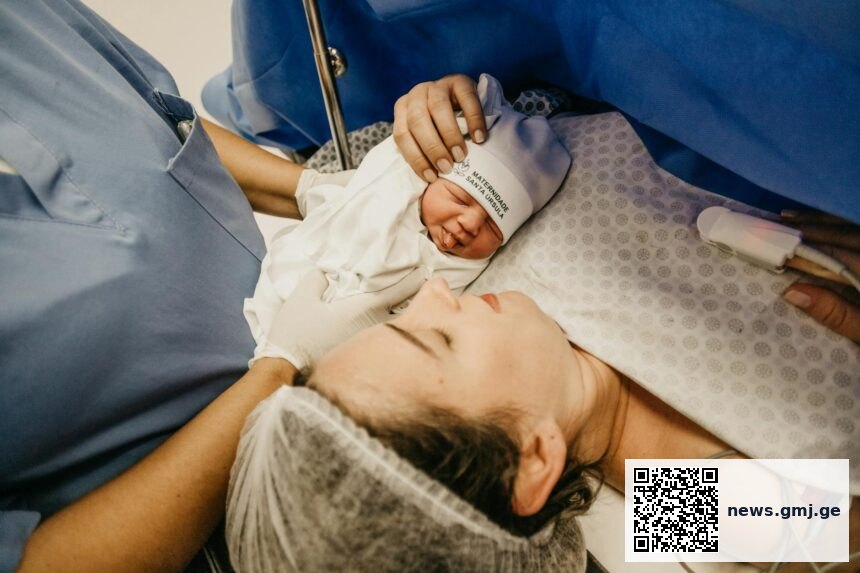
Live births in England and Wales have fallen to their lowest level since 1977, according to new data from the Office for National Statistics. The data shows women continue to delay starting families.
Live births in England and Wales reach 50-year low
Annual births (thousands), 1977-2023
2023
first mothers
per woman
500k
600k
700k
800k
1977
1990
2005
2023
Source: ONS, 2024 | Georgian Medical Journal News
Fertility rates hit record lows across age groups
The total fertility rate declined to 1.49 children per woman in 2023, well below the 2.1 replacement level needed to maintain population stability, according to the ONS fertility statistics. Women are increasingly delaying childbearing, with the average age of first-time mothers rising to 30.9 years in 2023, according to ONS data.

Implications for healthcare and social policy
The declining birth rate poses long-term challenges for healthcare system sustainability and social care provision. An aging population with fewer working-age adults will strain pension systems and increase healthcare demands, requiring policy adaptations across multiple sectors.
Healthcare planners must consider the implications for maternity services, pediatric care, and long-term demographic health trends. The Department of Health and Social Care continues monitoring these demographic shifts to inform future healthcare capacity planning and resource allocation strategies.
The total fertility rate of 1.49 children per woman represents the lowest level recorded in England and Wales, falling significantly below the 2.1 replacement rate needed for population stability.
— Office for National Statistics (ONS Birth Statistics, 2024)
Key takeaways
- Live births fell to 591,072 in 2023, the lowest level since 1977 according to ONS data
- Average age of first-time mothers rose to 30.9 years according to ONS data
- Total fertility rate dropped to 1.49 children per woman according to ONS data
Frequently asked questions
What is replacement level fertility and why does it matter?
Replacement level fertility is approximately 2.1 children per woman, the rate needed to maintain population size without immigration. Current rates of 1.49 indicate population decline without sustained immigration, affecting long-term economic and social planning.
The demographic shift toward lower birth rates and delayed childbearing reflects complex interactions between economic, social, and environmental factors that require comprehensive policy responses. Healthcare systems must adapt to serve both an aging population and changing reproductive patterns.
Source: ‘It’s not a nice world to bring children into’: Births fall to the lowest level in 50 years
Was this article helpful?
Disclaimer. This article is health journalism intended for general information and education. It is not medical advice and is not a substitute for professional diagnosis or treatment. Always consult a qualified healthcare provider about your individual circumstances. Full disclaimer →
Related Coverage



Editorial standards. This article was produced under the GMJ News editorial process, with oversight by the GMJ Editorial Board. Our editorial process. Spotted an error? Contact the editorial team.