By using this site, you agree to the Privacy Policy and Terms of Use.
Accept
GMJ NewsGMJ NewsGMJ News
  • Latest News
    • GMJ Briefs
  • Podcast & Media
    • Podcast Episodes
    • GMJ Audio
    • GMJ Videos
  • Research Digest
    • New Studies
    • Georgian Research
    • Data & Numbers
  • Policy & Systems
    • Health Policy
    • Quality & Safety
    • Migration & Health
    • Global Health
  • Practice
    • Clinical Updates
    • Case Discussions
    • Pharmacy & Prescribing
    • Ingredients A-Z
  • Perspectives
    • Editorial
    • Explainers
    • Voices
    • Letters
  • GMJ Articles
    • Vol. 1 Issue 2 (2026)
    • Vol. 1 Issue 1 (2026)
    • Pre-Launch Articles (2025)
  • Read the Journal →
  • About GMJ News
Notification Show More
Font ResizerAa
GMJ NewsGMJ News
Font ResizerAa
  • Latest News
    • GMJ Briefs
  • Podcast & Media
    • Podcast Episodes
    • GMJ Audio
    • GMJ Videos
  • Research Digest
    • New Studies
    • Georgian Research
    • Data & Numbers
  • Policy & Systems
    • Health Policy
    • Quality & Safety
    • Migration & Health
    • Global Health
  • Practice
    • Clinical Updates
    • Case Discussions
    • Pharmacy & Prescribing
    • Ingredients A-Z
  • Perspectives
    • Editorial
    • Explainers
    • Voices
    • Letters
  • GMJ Articles
    • Vol. 1 Issue 2 (2026)
    • Vol. 1 Issue 1 (2026)
    • Pre-Launch Articles (2025)
  • Read the Journal →
  • About GMJ News
Follow US
GMJ News > Practice > Clinical Updates > UK Guidance on Inadvertent Vaccination in Pregnancy: What Healthcare Providers Need to Know
Clinical UpdatesHealth PolicyPolicy & SystemsPractice

UK Guidance on Inadvertent Vaccination in Pregnancy: What Healthcare Providers Need to Know

GMJ
Last updated: 12/07/2026 13:29
By
GMJ Practice Desk
Share
9 Min Read
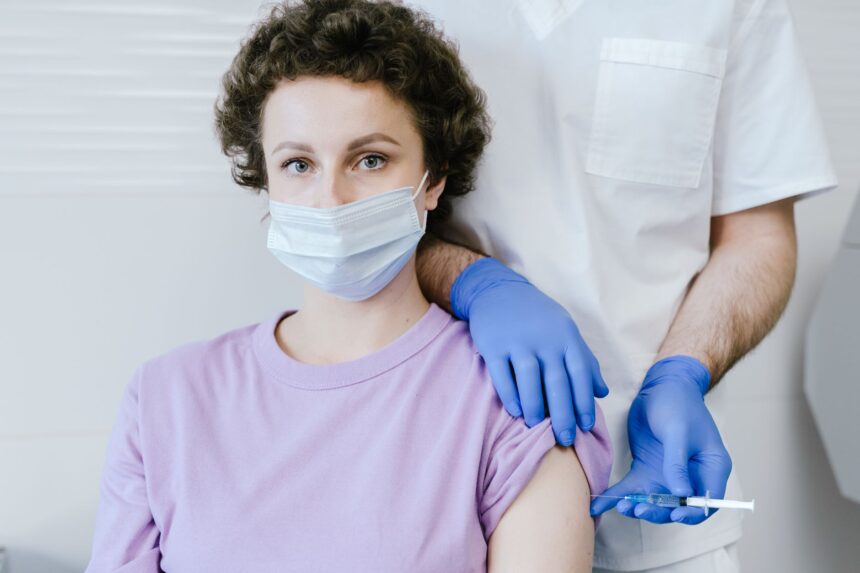
Infographic showing three live attenuated vaccines contraindicated in pregnancy: MMR, varicella, and shingles, with risk assessment frameworkIllustrative image · Photo by SHVETS production on Pexels (Pexels License)
UK health authorities have published guidance for healthcare professionals managing inadvertent live vaccine exposure in pregnancy, emphasizing that exposure to varicella, MMR, or shingles vaccines does not automatically warrant pregnancy termination. The guidance focuses on individual risk assessment and specialist counselling rather than categorical prohibition. — Photo by SHVETS production on Pexels (Pexels License)
SHARE
6 min read|1,120 words
✓ Medically reviewed by Prof. Giorgi Pkhakadze, MD, MPH, PhD · ORCID 0000-0001-7609-4515

The UK Department of Health and Social Care has published updated guidance for healthcare professionals managing cases where pregnant women receive live attenuated vaccines inadvertently. The guidance addresses vaccination against varicella (chickenpox), herpes zoster (shingles), and measles, mumps, and rubella (MMR)—all of which are contraindicated in pregnancy due to theoretical teratogenic risk, though actual harm from inadvertent administration remains poorly documented in the medical literature.

Contents
    • Key takeaways
      • Live Attenuated Vaccines Contraindicated in Pregnancy
  • Clinical Background: Why Live Vaccines Are Contraindicated
  • Management Framework for Inadvertent Vaccination
  • Counselling and Shared Decision-Making
    • What this means
  • Frequently asked questions
    • If I received an MMR vaccine early in pregnancy without knowing I was pregnant, does this mean I must terminate my pregnancy?
    • What is the actual risk of birth defects from inadvertent live vaccine exposure in pregnancy?
    • Should I inform my healthcare team if I received a live vaccine during pregnancy?

Key takeaways

  • Live attenuated vaccines (varicella, MMR, shingles) are contraindicated in pregnancy but inadvertent administration does not automatically require termination of pregnancy
  • Risk of congenital infection from inadvertent live vaccine exposure is considered theoretical rather than proven, with limited documented cases of harm in medical literature
  • Healthcare professionals should provide counselling based on individual risk assessment and current evidence, with referral to maternal medicine specialists when appropriate
3
Live attenuated vaccines requiring special consideration when inadvertently given during pregnancy: varicella, MMR, and shingles (herpes zoster)

Live Attenuated Vaccines Contraindicated in Pregnancy

Three vaccine types require risk assessment following inadvertent administration during pregnancy

Measles, Mumps, Rubella (MMR)
Highest risk group
Varicella (Chickenpox)
Live virus vaccine
Herpes Zoster (Shingles)
Recently approved

Source: UK Department of Health and Social Care, 2024 | Georgian Medical Journal News

Clinical Background: Why Live Vaccines Are Contraindicated

Live attenuated vaccines contain weakened but replicating virus strains, which theoretically pose a risk to the developing fetus during pregnancy. According to UK Department of Health and Social Care guidance, pregnant women should not receive live vaccines due to this theoretical risk of teratogenicity, even though documented cases of harm from inadvertent exposure remain rare in the clinical literature. This precautionary principle reflects a long-standing public health standard established decades ago.

Submit Your Paper
GMJ_Submit_Banner

However, the distinction between theoretical risk and proven harm is critical for counselling. Healthcare professionals must understand this difference when advising women who have already received inadvertent vaccination during pregnancy. The guidance emphasizes that exposure alone does not create an automatic indication for pregnancy termination.

Management Framework for Inadvertent Vaccination

According to the UK Department of Health and Social Care, healthcare professionals should take a structured approach when managing inadvertently vaccinated pregnant women. The first step involves accurate documentation of which vaccine was administered, at what stage of pregnancy, and whether the woman was aware of her pregnancy status at the time of vaccination.

Risk stratification forms the foundation of counselling. Women vaccinated in the first trimester face slightly higher theoretical risk than those vaccinated later in pregnancy, though absolute risk remains low across all trimesters. The guidance recommends referral to a maternal medicine specialist or infectious disease expert when the case presents diagnostic or counselling uncertainty, ensuring that women receive evidence-based information rather than reassurance based solely on policy rather than data.

Counselling and Shared Decision-Making

The UK guidance emphasizes that healthcare professionals should provide comprehensive, balanced counselling that acknowledges both the theoretical risk of live vaccine exposure and the absence of proven teratogenic harm in most documented cases. This shared decision-making approach respects women’s autonomy while ensuring they understand the evidence base for different management options.

Women should be informed that while live vaccines are contraindicated in pregnancy as a general rule, inadvertent administration does not constitute a medical emergency requiring immediate intervention. Specialist input from maternal medicine teams can help women understand their individual risk profile and explore options aligned with their values and preferences. For related information on vaccination safety, see GMJ’s Clinical Updates section.

Inadvertent administration of live attenuated vaccines during pregnancy does not automatically warrant pregnancy termination; individual risk assessment and specialist counselling should guide management decisions.

— UK Department of Health and Social Care, Vaccination in Pregnancy (VIP) Guidance, 2024

What this means

For patients: If you have received a live vaccine (MMR, varicella, or shingles) during early pregnancy, inform your maternity care team immediately. Discuss your individual circumstances with a maternal medicine specialist rather than making assumptions about risk. Terminate your pregnancy only after careful counselling and informed shared decision-making with your healthcare team.
For clinicians: Establish clear protocols for identifying inadvertent live vaccine exposure in pregnant women. Document the vaccine type, trimester of exposure, and maternal awareness at time of vaccination. Refer to maternal medicine specialists or infectious disease experts for risk stratification and counselling. Distinguish between theoretical contraindication and proven harm when communicating with patients.
For policymakers: Strengthen pre-pregnancy vaccination screening programs to identify women of childbearing age who require MMR, varicella, or shingles vaccination before conception. Enhance healthcare provider training on pregnancy status verification prior to live vaccine administration. Support maternal medicine specialist networks to ensure equitable access to expert counselling for inadvertent exposure cases.

Frequently asked questions

If I received an MMR vaccine early in pregnancy without knowing I was pregnant, does this mean I must terminate my pregnancy?

No. According to UK Department of Health and Social Care guidance, inadvertent live vaccine exposure does not automatically require pregnancy termination. Although MMR is contraindicated in pregnancy as a preventive measure, documented cases of congenital harm from inadvertent vaccination remain rare. Contact your maternity care team and request referral to a maternal medicine specialist who can review your specific circumstances and provide evidence-based counselling.

What is the actual risk of birth defects from inadvertent live vaccine exposure in pregnancy?

The actual documented risk is very low. While live vaccines are theoretically contraindicated in pregnancy to apply a precautionary principle, healthcare professionals distinguish between theoretical risk based on vaccine characteristics and proven teratogenic harm in real-world cases. UK Department of Health and Social Care guidance emphasizes that individual risk assessment should account for trimester of exposure, vaccine type, and available epidemiological evidence when counselling pregnant women.

Should I inform my healthcare team if I received a live vaccine during pregnancy?

Yes, absolutely. Contact your maternity care team or general practitioner immediately if you received varicella, MMR, or shingles vaccination during pregnancy, whether or not you were aware of your pregnancy at the time. This documentation allows your healthcare team to provide appropriate counselling and specialist referral if needed. Do not assume this is an emergency, but do ensure proper recording in your medical notes.

The UK Department of Health and Social Care’s guidance on inadvertent vaccination in pregnancy represents an evidence-based, individualized approach to a situation that many pregnant women encounter. By distinguishing between theoretical contraindication and proven harm, the guidance empowers healthcare professionals and pregnant women to make informed decisions grounded in current evidence rather than categorical prohibition. Enhanced training for primary care providers on pregnancy status verification, combined with accessible maternal medicine specialist networks, will reduce inadvertent exposures while ensuring that those who do occur are managed with appropriate counselling and support. For healthcare policy updates, visit GMJ’s Health Policy section.

Source: UK Department of Health and Social Care: Vaccination in Pregnancy (VIP) Guidance

Was this article helpful?

Disclaimer. This article is health journalism intended for general information and education. It is not medical advice and is not a substitute for professional diagnosis or treatment. Always consult a qualified healthcare provider about your individual circumstances. Full disclaimer →

Related Coverage
UK Charity Maggie's to Open Two New Cancer Care Centres in Coventry and BirminghamJul 14, 2026
Beyond the Breakthrough: Pancreatic Cancer Researchers Warn Real Work Is Just BeginningJul 14, 2026
The profound human connection at the heart of oncology practiceJul 14, 2026
Eye-tracking study reveals depression shifts children's attention to sad facesJul 14, 2026
PG
Written by
Prof. Giorgi Pkhakadze, MD, MPH, PhD
Editor-in-Chief, GMJ News
Full profile →  ·  ORCID 0000-0001-7609-4515
Medical disclaimer. This article is health journalism intended for general information. It is not medical advice and is not a substitute for consultation with a qualified healthcare professional. Always seek your physician's advice regarding any medical condition.
Medically reviewed by Prof. Giorgi Pkhakadze, MD, MPH, PhD. Spotted an error? Contact the editorial team.

Get the GMJ News digest
Evidence-based health journalism in your inbox. No spam; unsubscribe anytime.
TAGGED:live vaccinesMaternal HealthpregnancyUK guidancevaccination
Share This Article
Facebook LinkedIn Bluesky Copy Link Print
GMJ
ByGMJ Practice Desk
Follow:
GMJ Practice Desk is part of GMJ News, the newsroom of the Georgian Medical Journal (gmj.ge), published by the Public Health Institute of Georgia. Every article is editorially reviewed before publication.
Leave a Comment Leave a Comment

Leave a Reply Cancel reply

Your email address will not be published. Required fields are marked *

Submit Your Paper →

Georgia's peer-reviewed open-access medical journal. No APC until January 2027.
Submit Manuscript →
UK Charity Maggie’s to Open Two New Cancer Care Centres in Coventry and Birmingham

Charity Maggie's will open two new dedicated cancer care centres in Coventry…

Beyond the Breakthrough: Pancreatic Cancer Researchers Warn Real Work Is Just Beginning

A new STAT News commentary warns that while breakthrough pancreatic cancer drugs…

The profound human connection at the heart of oncology practice

Oncologists describe cancer care as uniquely privileged not for curative power alone,…

Submit Your Paper to GMJ

No APC until January 2027.
Submit Manuscript →

You Might Also Like

American Diabetes Association annual convention with attendees and medical professionalsIllustrative image · "President Trump Delivers Remarks on Protecting Seniors with Diabetes" by The White House is marked with Public Domain Mark 1.0. To view the terms, visit https://creativecommons.org/publicdomain/mark/1.0/. (Public Domain Mark)
Health PolicyPolicy & Systems

American Diabetes Association CEO Apologizes After Members Expelled from Annual Convention

By
GMJ Policy Desk
26/06/2026
International health organisations collaborating on One Health education initiativeIllustrative image · Photo by RF._.studio _ on Pexels (Pexels License)
Global HealthPolicy & Systems

WHO, FAO, and WOAH Launch Unified One Health Learning Platform

By
GMJ Policy Desk
20/06/2026
MHRA logo and pharmaceutical regulatory approval documentation
Health PolicyPolicy & Systems

MHRA Grants Marketing Authorisations to 47 New Medicines in 2026

By
GMJ Policy Desk
02/06/2026
Healthcare professional using digital tablet to access public health resources on government platform
Health PolicyPolicy & Systems

UK Launches Comprehensive Digital Public Health Resource Hub for Healthcare Professionals

By
GMJ Policy Desk
24/05/2026
Facebook Twitter Youtube Instagram
Company
  • Privacy Policy
  • Contact US
  • GMJ Journal
  • Submit Manuscript
  • Editorial Team
  • Register at GMJ
  • Terms of Use

Subscribe to GMJ News — Click here

Join Community
© 2026 Georgian Medical Journal (GMJ). Published by the Public Health Institute of Georgia (PHIG). All rights reserved.
Welcome Back!

Sign in to your account

Username or Email Address
Password

Lost your password?

Not a member? Sign Up