Updated 13/09/2026
🟠 Moderate Evidence
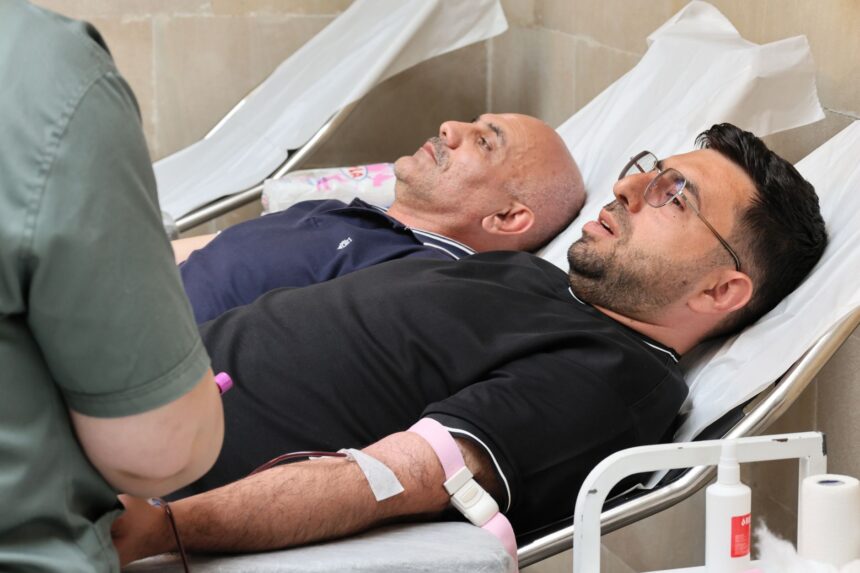
A community-led voluntary blood donation programme in rural Sierra Leone has achieved a 40% reduction in cost per unit while establishing a sustainable donor base from zero baseline donations, according to a quality improvement study published in BMJ Global Health. The Gi4SaveLife initiative, implemented in Kono and Kenema districts over 8 months, collected 539 units from 376 unique donors, with 43% returning as repeat donors—demonstrating the viability of local ownership in resource-limited settings where family replacement and paid donation have historically dominated blood supply chains.
Key takeaways
- Gi4SaveLife mobilised 376 unique blood donors and collected 539 units over 8 months in rural Sierra Leone, moving from zero voluntary donations at baseline
- Repeat donation rate of 43% indicates a committed voluntary donor pool, a critical marker of sustainable supply
- Cost per unit decreased by 40% compared with standard NGO-led models, with altruism (71%) and social recognition (52%) as primary motivators
- Community-led peer education and non-monetary incentives proved more effective than traditional top-down blood drives in building local trust
Study at a Glance
| Source | BMJ Global Health |
| Study type | Quality improvement initiative with baseline survey and 8-month prospective tracking |
| Sample size | 376 unique donors; 539 total units collected |
| Population | Rural communities in Kono and Kenema districts, Sierra Leone |
| Country | Sierra Leone |
Gi4SaveLife donor mobilisation and retention
Unique donors, repeat donors, and collection volume over 8-month implementation period

Source: BMJ Global Health Gi4SaveLife study | Georgian Medical Journal News
The blood supply crisis in low-resource settings
Sierra Leone faces a critical blood shortage that directly contributes to high maternal mortality and preventable deaths from haemorrhage and anaemia. According to the BMJ Global Health publication describing Gi4SaveLife, the country’s blood transfusion services have historically relied on family replacement donors and paid donation—models that are epidemiologically unsafe, financially unsustainable, and vulnerable to supply interruption. Traditional top-down blood drives, imported from high-income health systems, have repeatedly failed to establish durable voluntary donor networks because they ignored local social structures, trust barriers, and community autonomy.
This challenge is not unique to Sierra Leone. The World Health Organization estimates that 118.5 million blood donations are collected annually worldwide, yet about 40% of these occur in high-income countries serving only 16% of the global population. Low- and middle-income countries, where transfusion need is often highest, struggle with fragmented collection infrastructure and donor attrition. The WHO’s blood safety and availability fact sheet emphasises that sustainable voluntary donation is the only long-term solution.
How community leadership transformed blood donation
The Gi4SaveLife model inverted the traditional top-down approach by embedding blood collection within existing community structures. Rather than imposing external targets, the initiative trained local volunteers as ‘hub leaders’ responsible for peer-to-peer education, donor recruitment, and retention within their own networks. According to the BMJ Global Health report, this approach recognised that trust—eroded by historical exploitation and health system neglect—must be rebuilt by people within the community itself, not by external actors.
The programme began with a baseline survey that explicitly identified barriers: fear of weakness after donation, misconceptions about blood use, perceived risk of infection, and scepticism toward health facilities. Hub leaders were then trained not to overcome these objections through persuasion, but to address them through authentic peer dialogue, demonstrating their own donation, and gradually shifting community norms. Non-monetary incentives—certificates of appreciation, modest meals at donation events, and public recognition—replaced the transactional payment model that had previously dominated.
Monthly blood drives coordinated by these community hubs replaced the irregular, externally-organised campaigns. Data collection tracked donor demographics, repeat donation patterns, collection volumes, and operational costs over 8 months—standard quality improvement methodology applied to a social intervention. Follow our coverage of new studies in global health innovation to stay informed on similar community-driven models.
Results: sustainability, cost-efficiency, and local commitment
The results, published in BMJ Global Health, exceeded projections for a rural setting. Over 8 months, Gi4SaveLife mobilised 376 unique donors and collected 539 blood units—moving from zero voluntary donations at baseline to a reliable supply chain. Critically, 161 donors (43%) returned to donate again, a repeat donation rate that signals genuine community ownership rather than one-time participation. This metric is essential: sustainable blood supply depends on a committed core of regular donors, not sporadic recruitment.
The cost analysis revealed a 40% reduction per unit collected compared with standard NGO-led models operating in similar settings. This reflects both lower mobilisation costs (volunteers unpaid) and improved efficiency (monthly routine rather than ad-hoc drives). While absolute operational costs were not specified in the published account, the proportional saving demonstrates that community-led models compete economically with conventional approaches—and win.
Survey data on donor motivations clarified why this model succeeded where others failed. Altruism was cited by 71% of donors as their primary motivation, and social recognition by 52%. These findings suggest that Kono and Kenema residents did wish to donate—but required a trustworthy local mechanism aligned with community values. External NGO models, even well-intentioned, had not created that trust. Hub leaders, embedded in daily community life, did.
Community-led voluntary blood donation in rural Sierra Leone achieved a 43% repeat donation rate and 40% cost reduction, with altruism and social recognition as primary motivators—demonstrating that local ownership, not external mobilisation, builds sustainable supply chains in resource-limited settings.
— Gi4SaveLife implementation team, BMJ Global Health, 2024
Implications for blood transfusion services across Africa and beyond
The Gi4SaveLife model offers a scalable framework for national blood transfusion services seeking to transition from family replacement and paid donation to voluntary supply. Key design principles—community leadership, peer education, local ownership, and non-monetary recognition—are transportable across cultural and geographic contexts. The quality improvement methodology used to evaluate outcomes (baseline survey, prospective tracking, cost analysis) creates an evidence base that enables replication and adaptation.
For policymakers, Gi4SaveLife demonstrates that sustainable blood supply is not fundamentally a resource problem—it is a trust and governance problem. Low-income countries cannot afford imported infrastructure or large-scale paid donor programmes. But they can mobilise community leadership, which costs little and generates legitimacy. The 8-month timeframe suggests that volunteer networks can mature quickly when grounded in local social structures. The GMJ News global health section regularly covers innovations in low-resource health systems; this initiative exemplifies that trend.
What this means
Frequently asked questions
Why did traditional blood drives fail in rural Sierra Leone?
According to the Gi4SaveLife study, top-down external programmes ignored community trust barriers, local social structures, and the need for peer-led education. Misconceptions about donation (fear of weakness, infection risk) and scepticism toward health facilities persisted because external actors lacked embedded credibility. Community hubs overcame this by having local volunteers—already trusted within their networks—deliver peer education.
How quickly can volunteer blood donor networks mature?
Gi4SaveLife achieved a 43% repeat donation rate and consistent monthly collections within 8 months, suggesting that volunteer networks can establish quickly when grounded in existing community relationships and cultural values. However, scaling and long-term sustainability require sustained investment in hub leader training, non-monetary incentives, and linkage to national blood transfusion services. The 8-month timeframe reflects proof of concept, not necessarily full maturity.
Can this model work in other low-resource settings?
The design principles—community leadership, peer education, local ownership, and recognition-based incentives—are context-agnostic and adaptable. However, implementation requires baseline assessment of local barriers (as Gi4SaveLife conducted), training of community leaders, and alignment with national blood safety standards. Success depends on political will to devolve authority from health systems to communities, not simply on replicating the Kono and Kenema model unchanged.
Gi4SaveLife represents a shift in how global health systems approach blood supply in low-income countries. Rather than importing high-income models or accepting dependence on paid donors, the programme demonstrates that community-led voluntary donation is both ethically sound and economically competitive. As Sierra Leone and neighbouring countries strengthen their transfusion services, scaling this model—grounded in local ownership and peer trust—could establish a durable foundation for safe, sufficient blood supply across the region. The next step is systematic evaluation of scalability and adaptation across West African health systems.
Source: Gi4SaveLife: a community-led model for sustainable voluntary blood donation in rural Sierra Leone, BMJ Global Health
🗺️ Find certified Georgian healthcare providers: sheniekimi.ge — Georgia Health Map · 998 clinics · 6,600+ doctors · 2,296 pharmacies
Was this article helpful?
Disclaimer. This article is health journalism intended for general information and education. It is not medical advice and is not a substitute for professional diagnosis or treatment. Always consult a qualified healthcare provider about your individual circumstances. Full disclaimer →
Related Coverage



Editorial standards. This article was produced under the GMJ News editorial process, with oversight by the GMJ Editorial Board. Our editorial process. Spotted an error? Contact the editorial team.