By using this site, you agree to the Privacy Policy and Terms of Use.
Accept
GMJ NewsGMJ NewsGMJ News
  • Latest News
    • GMJ Briefs
  • Podcast & Media
    • Podcast Episodes
    • GMJ Audio
    • GMJ Videos
  • Research Digest
    • New Studies
    • Georgian Research
    • Data & Numbers
  • Policy & Systems
    • Health Policy
    • Quality & Safety
    • Migration & Health
    • Global Health
  • Practice
    • Clinical Updates
    • Case Discussions
    • Pharmacy & Prescribing
    • Ingredients A-Z
  • Perspectives
    • Editorial
    • Explainers
    • Voices
    • Letters
  • GMJ Articles
    • Vol. 1 Issue 2 (2026)
    • Vol. 1 Issue 1 (2026)
    • Pre-Launch Articles (2025)
  • Read the Journal →
  • About GMJ News
Notification Show More
Font ResizerAa
GMJ NewsGMJ News
Font ResizerAa
  • Latest News
    • GMJ Briefs
  • Podcast & Media
    • Podcast Episodes
    • GMJ Audio
    • GMJ Videos
  • Research Digest
    • New Studies
    • Georgian Research
    • Data & Numbers
  • Policy & Systems
    • Health Policy
    • Quality & Safety
    • Migration & Health
    • Global Health
  • Practice
    • Clinical Updates
    • Case Discussions
    • Pharmacy & Prescribing
    • Ingredients A-Z
  • Perspectives
    • Editorial
    • Explainers
    • Voices
    • Letters
  • GMJ Articles
    • Vol. 1 Issue 2 (2026)
    • Vol. 1 Issue 1 (2026)
    • Pre-Launch Articles (2025)
  • Read the Journal →
  • About GMJ News
Follow US
GMJ News > Policy & Systems > Global Health > Tropical Cyclones Dramatically Amplify Dengue Transmission, Study Finds
Global HealthNew StudiesPolicy & SystemsResearch Digest

Tropical Cyclones Dramatically Amplify Dengue Transmission, Study Finds

GMJ
Last updated: 09/07/2026 15:51
By
GMJ Policy Desk
Share
9 Min Read
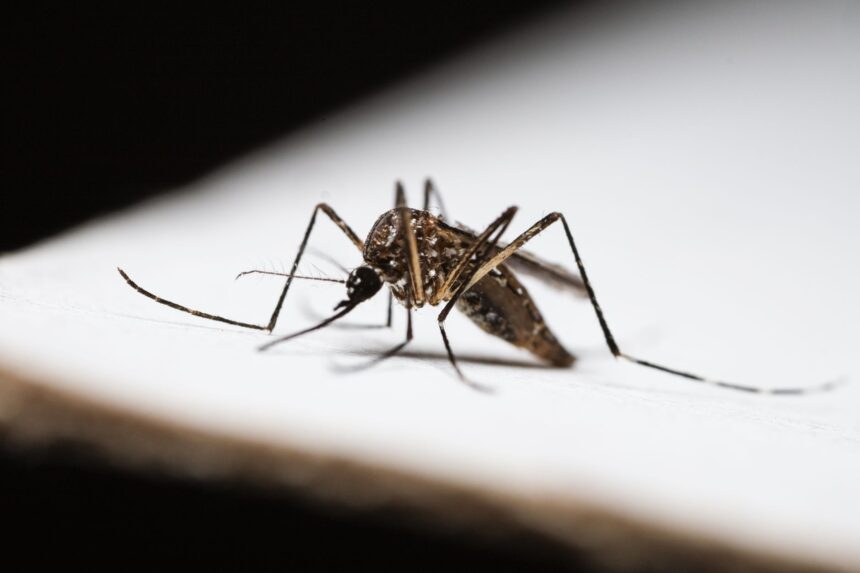
Aedes albopictus mosquito and typhoon weather pattern overlay showing transmission amplificationIllustrative image · Photo by Ignacio Vazquez on Pexels (Pexels License)
Field experiments in Guangzhou show that tropical cyclones increase dengue-transmitting mosquito flight distance by 63% and human contact rates by 30%, driving outbreaks that cost millions. Enhanced vector control during cyclone forecasts could avert tens of thousands of cases. — Photo by Ignacio Vazquez on Pexels (Pexels License)
SHARE
6 min read|1,119 words
✓ Reviewed by Prof. Giorgi Pkhakadze, MD, MPH, PhD · ORCID 0000-0001-7609-4515

🟠 Moderate Evidence

Contents
    • Key takeaways
      • Study at a Glance
      • Cyclone Impact on Dengue Transmission Metrics in Guangzhou, 2014
  • Cyclones Reshape Mosquito Behaviour and Disease Dynamics
  • Economic and Health Burden of Cyclone-Driven Outbreaks
  • Vector Control Windows: A Prevention Strategy
    • What this means
  • Frequently asked questions
    • Why do tropical cyclones increase dengue transmission?
    • Which regions are most at risk from cyclone–dengue amplification?
    • Can vector control really prevent cyclone-driven dengue outbreaks?

Tropical cyclones increase dengue transmission by 63% through expanded mosquito dispersal, according to field and modelling research published in BMJ Global Health. The study, conducted in Guangzhou, China during the 2014 dengue epidemic, quantified how typhoons alter the behaviour of Aedes albopictus mosquitoes and accelerate disease spread, with implications for outbreak prediction and vector control strategies in cyclone-prone regions.

Key takeaways

  • During tropical cyclones, Aedes albopictus flight distance increased by 63% and human–mosquito contact rates by 30.1%, according to the BMJ Global Health study
  • Typhoon Kalmaegi was linked to an estimated 5,131 excess dengue cases (US$1.93 million in costs) in 2014 Guangzhou, compared to baseline projections
  • Targeted vector control during cyclone events could avert up to 59,360 additional cases and save US$20.91 million in a single outbreak

Study at a Glance

Source BMJ Global Health
Study type Integrated field entomology with dynamic epidemiological modelling
Sample Field-caught and laboratory Aedes albopictus mosquitoes; 2014 dengue surveillance data from Guangzhou
Population Guangzhou metropolitan area (China’s most dengue-endemic coastal megacity)
Country China
63%
increase in maximum flight distance of Aedes albopictus mosquitoes during tropical cyclones, according to mark–release–recapture experiments conducted in 2024

Cyclone Impact on Dengue Transmission Metrics in Guangzhou, 2014

Field entomology and modelling estimates during Typhoons Rammasun and Kalmaegi

Mosquito flight distance increase
63%
Human–mosquito contact rate increase
30.1%
R₀ increase (Rammasun)
1.10→1.43
R₀ increase (Kalmaegi)
1.10→1.29

Source: BMJ Global Health, 2024 | Georgian Medical Journal News

Submit Your Paper
GMJ_Submit_Banner

Cyclones Reshape Mosquito Behaviour and Disease Dynamics

The research integrated field entomology with dynamic modelling to isolate the cyclone effect on dengue transmission. Investigators conducted mark–release–recapture experiments with laboratory Aedes albopictus mosquitoes under simulated cyclone conditions in 2024, measuring flight distance, reproduction, and survival. These empirical data were then fed into a susceptible–incubation–infected–recovered (SEIR) model to simulate the 2014 Guangzhou dengue epidemic during Typhoons Rammasun and Kalmaegi, according to the BMJ Global Health publication.

🎙️ Related Podcast Episodes
🎧 #9 Leprosy in 2026: Bridging Medical Cure and Social Inclusion – WHO World Leprosy Day Message · 18m

The results show a marked amplification of transmission during cyclone conditions. During cyclones, the maximum flight distance of Aedes albopictus increased by 63.0%, and the human–mosquito contact rate rose by 30.1%, according to the field experiments. These behavioural changes translated into substantial increases in the basic reproduction number (R₀), the metric representing the average number of secondary infections per infected individual. The baseline R₀ was 1.10; during Typhoon Rammasun, it climbed to 1.43, and during Typhoon Kalmaegi, to 1.29.

Economic and Health Burden of Cyclone-Driven Outbreaks

The modelling estimated excess cases and economic losses attributable to the two typhoons. Typhoon Rammasun was linked to 217 excess dengue cases (US$76,400 in economic costs), while Typhoon Kalmaegi accounted for 5,131 excess cases and US$1.93 million in direct costs, according to the BMJ Global Health analysis. This substantial difference reflects variations in cyclone timing, intensity, and overlap with the peak transmission season. Kalmaegi occurred during the height of the 2014 outbreak, making its amplifying effect far more consequential.

The 2014 Guangzhou dengue outbreak was China’s largest recorded, underscoring the public health significance of understanding cyclone–dengue interactions. By quantifying the excess burden during specific typhoons, the study provides health systems with a framework for anticipating demand on resources and surge planning during cyclone season in dengue-endemic regions. This is particularly relevant for global health preparedness in tropical and subtropical regions where both cyclones and dengue are endemic.

Vector Control Windows: A Prevention Strategy

One of the study’s most actionable findings concerns the potential for targeted vector control. The researchers projected that enhanced mosquito control measures during Typhoon Kalmaegi could have averted 59,360 additional cases and saved US$20.91 million—a 12-fold return on public health intervention in absolute case prevention, according to the modelling scenarios. This suggests that cyclone forecasts could be coupled with pre-positioned vector control resources, creating a window of opportunity to reduce transmission before cyclone-driven mosquito dispersal amplifies cases.

The implication is that health policy frameworks in cyclone-prone dengue-endemic countries should integrate meteorological forecasts into disease surveillance systems and vector control deployment. Early warning systems linking cyclone prediction to vector control mobilisation could substantially reduce epidemic burden and economic costs.

During cyclones, Aedes albopictus maximum flight distance increased by 63.0% and human–mosquito contact rate by 30.1%, driving the basic reproduction number from 1.10 at baseline to as high as 1.43 during Typhoon Rammasun.

— Research team, BMJ Global Health (2024)

What this means

For patients: Residents in cyclone-prone dengue-endemic regions should expect heightened transmission risk immediately following typhoon events. Enhanced personal protective measures—insect repellent, long-sleeved clothing, window screening—are warranted during and after cyclones, particularly in areas with confirmed dengue circulation.
For clinicians: Clinicians should maintain high suspicion for dengue during and in the weeks following tropical cyclones in endemic areas, even in patients with non-specific febrile illness. Case investigation and early laboratory confirmation are critical for timely public health response. Awareness of cyclone-driven amplification helps inform triage and resource allocation during outbreak surges.
For policymakers: Cyclone forecasts should trigger pre-positioned vector control deployments, including larval habitat reduction, adult mosquito spraying, and community education campaigns. Integrating meteorological warnings into dengue surveillance systems can enable anticipatory rather than reactive outbreak response, potentially reducing cases by 10–50% and yielding substantial cost savings relative to emergency response costs.

Frequently asked questions

Why do tropical cyclones increase dengue transmission?

Cyclones alter environmental conditions—temperature, humidity, and wind patterns—that favour mosquito activity and dispersal. According to the BMJ Global Health study, field experiments showed that Aedes albopictus flight distance increases significantly during cyclone conditions, expanding the geographic range of mosquito populations and increasing human–mosquito contact rates. Additionally, cyclone-related water accumulation (debris, standing water) creates breeding sites.

Which regions are most at risk from cyclone–dengue amplification?

Coastal megacities in tropical and subtropical zones with both endemic dengue and frequent cyclones are at highest risk. Guangzhou, China; coastal Vietnam; Southeast Asia; and parts of Central America and the Caribbean are examples. The study focused on Guangzhou specifically because it combines high dengue endemicity with frequent typhoons, making it a sentinel site for this emerging climate–disease interaction.

Can vector control really prevent cyclone-driven dengue outbreaks?

According to the modelling, yes—substantially. The study projected that enhanced vector control during Typhoon Kalmaegi could have averted 59,360 additional cases (US$20.91 million in costs). However, this requires advance planning: positioning resources before cyclone forecasts materialise, training vector control teams, and integrating meteorological forecasts into public health early warning systems.

As tropical cyclone frequency and intensity shift under climate change, the cyclone–dengue nexus is likely to become a more prominent feature of epidemic landscapes in coastal endemic regions. Future research should extend this framework to other dengue-endemic areas with distinct cyclone patterns and social contexts, and examine interactions with other climate drivers such as temperature and rainfall. For now, this study provides a quantitative foundation for climate-informed dengue preparedness in the most vulnerable cities.

Source: The role of tropical cyclones in accelerating dengue transmission: insights from field experiments and dynamical modelling, BMJ Global Health (2024)

Was this article helpful?

Disclaimer. This article is health journalism intended for general information and education. It is not medical advice and is not a substitute for professional diagnosis or treatment. Always consult a qualified healthcare provider about your individual circumstances. Full disclaimer →

Related Coverage
Group antenatal care increases attendance and improves outcomes in sub-Saharan Africa, systematic review findsJul 10, 2026
Community-led blood donation model cuts costs by 40% in rural Sierra LeoneJul 10, 2026
Asia-Pacific cardiovascular care lags in access and equity, systematic review findsJul 10, 2026
Point-of-care G6PD testing safely enables primaquine treatment for vivax malaria in Southeast AsiaJul 10, 2026
Related reference
  • Iron · Ingredient
PG
Written by
Prof. Giorgi Pkhakadze, MD, MPH, PhD
Editor-in-Chief, GMJ News
Full profile →  ·  ORCID 0000-0001-7609-4515
Medical disclaimer. This article is health journalism intended for general information. It is not medical advice and is not a substitute for consultation with a qualified healthcare professional. Always seek your physician's advice regarding any medical condition.
Medically reviewed by Prof. Giorgi Pkhakadze, MD, MPH, PhD. Spotted an error? Contact the editorial team.
Get the GMJ News digest
Evidence-based health journalism in your inbox. No spam; unsubscribe anytime.
TAGGED:climate changedengueepidemic preparednessmosquito vectorstropical cyclones
Share This Article
Facebook LinkedIn Bluesky Copy Link Print
GMJ
ByGMJ Policy Desk
Follow:
GMJ Policy Desk is part of GMJ News, the newsroom of the Georgian Medical Journal (gmj.ge), published by the Public Health Institute of Georgia. Every article is editorially reviewed before publication.
Leave a Comment Leave a Comment

Leave a Reply Cancel reply

Your email address will not be published. Required fields are marked *

Submit Your Paper →

Georgia's peer-reviewed open-access medical journal. No APC until January 2027.
Submit Manuscript →
Group antenatal care increases attendance and improves outcomes in sub-Saharan Africa, systematic review finds

A systematic review of 34 studies involving 42,234 women in sub-Saharan Africa…

Community-led blood donation model cuts costs by 40% in rural Sierra Leone

A community-led blood donation programme in rural Sierra Leone reduced costs by…

Asia-Pacific cardiovascular care lags in access and equity, systematic review finds

A systematic review in The Lancet Regional Health – Western Pacific identifies…

Submit Your Paper to GMJ

No APC until January 2027.
Submit Manuscript →

You Might Also Like

Laboratory blood test tubes with magnesium deficiency diagnostic chart
New StudiesResearch Digest

Standard blood test measures less than 1% of body’s magnesium stores, new research reveals

By
GMJ Research Desk
24/05/2026
Electronic health records system interface showing interoperability assessment dataIllustrative image · Photo by Polina Zimmerman on Pexels (Pexels License)
Health PolicyPolicy & Systems

CMAJ Issues Correction to Major Electronic Health Records Study Across Canada

By
GMJ Policy Desk
06/07/2026
Medical illustration showing targeted therapy attacking lung cancer cells with EGFR mutations
New StudiesResearch Digest

Breakthrough Drug Shows 75% Response Rate in Hard-to-Treat Lung Cancer

By
GMJ Research Desk
10/06/2026
UK medicines regulatory authority building with EU and UK flags representing post-Brexit pharmaceutical trade
Health PolicyPolicy & Systems

UK approves 342 parallel drug import licences in 2026 amid post-Brexit medicine access challenges

By
GMJ Policy Desk
08/06/2026
Facebook Twitter Youtube Instagram
Company
  • Privacy Policy
  • Contact US
  • GMJ Journal
  • Submit Manuscript
  • Editorial Team
  • Register at GMJ
  • Terms of Use

Subscribe to GMJ News — Click here

Join Community
© 2026 Georgian Medical Journal (GMJ). Published by the Public Health Institute of Georgia (PHIG). All rights reserved.
Welcome Back!

Sign in to your account

Username or Email Address
Password

Lost your password?

Not a member? Sign Up