By using this site, you agree to the Privacy Policy and Terms of Use.
Accept
GMJ NewsGMJ NewsGMJ News
  • Latest News
    • GMJ Briefs
  • Podcast & Media
    • Podcast Episodes
    • GMJ Audio
    • GMJ Videos
  • Research Digest
    • New Studies
    • Georgian Research
    • Data & Numbers
  • Policy & Systems
    • Health Policy
    • Quality & Safety
    • Migration & Health
    • Global Health
  • Practice
    • Clinical Updates
    • Case Discussions
    • Pharmacy & Prescribing
    • Ingredients A-Z
  • Perspectives
    • Editorial
    • Explainers
    • Voices
    • Letters
  • GMJ Articles
    • Vol. 1 Issue 2 (2026)
    • Vol. 1 Issue 1 (2026)
    • Pre-Launch Articles (2025)
  • Read the Journal →
  • About GMJ News
Notification Show More
Font ResizerAa
GMJ NewsGMJ News
Font ResizerAa
  • Latest News
    • GMJ Briefs
  • Podcast & Media
    • Podcast Episodes
    • GMJ Audio
    • GMJ Videos
  • Research Digest
    • New Studies
    • Georgian Research
    • Data & Numbers
  • Policy & Systems
    • Health Policy
    • Quality & Safety
    • Migration & Health
    • Global Health
  • Practice
    • Clinical Updates
    • Case Discussions
    • Pharmacy & Prescribing
    • Ingredients A-Z
  • Perspectives
    • Editorial
    • Explainers
    • Voices
    • Letters
  • GMJ Articles
    • Vol. 1 Issue 2 (2026)
    • Vol. 1 Issue 1 (2026)
    • Pre-Launch Articles (2025)
  • Read the Journal →
  • About GMJ News
Follow US
GMJ News > GMJ Briefs > Three Critical Implications of Healthcare Attacks on Lebanese Medical Services

Three Critical Implications of Healthcare Attacks on Lebanese Medical Services

GMJ
Last updated: 03/07/2026 23:54
By
Prof. Giorgi Pkhakadze
Share
1 Min Read
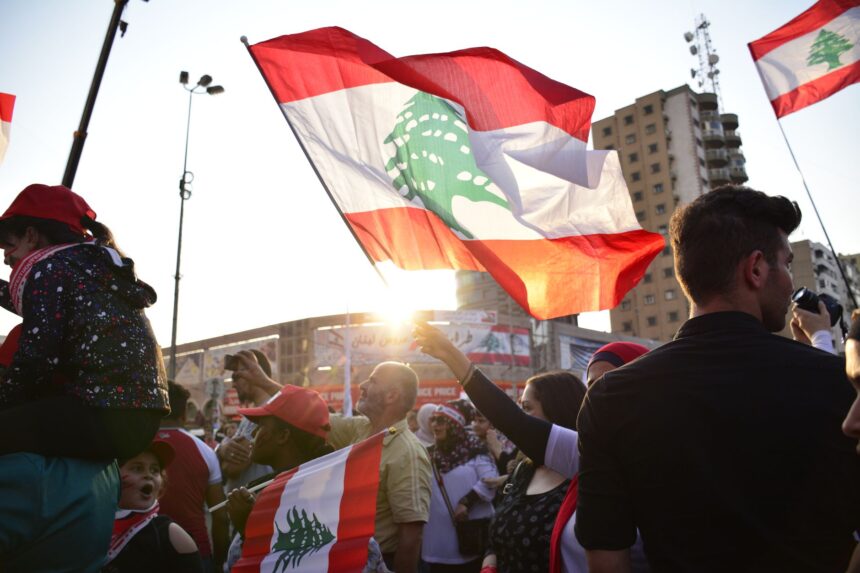
Medical facility in Lebanon showing impact of healthcare disruptions during conflict
WHO investigates reports of hospital strikes in Tyre, Lebanon, as healthcare attacks rise across the country. Vulnerable populations including children and elderly patients face greatest impact from medical service disruptions. — Photo: Mohamad Mekawi / Pexels
SHARE
1 min read|136 words

Healthcare professionals and policymakers should understand three essential impacts from the ongoing situation in Lebanon. First, the WHO is actively verifying hospital strike reports in Tyre, indicating formal international documentation of these incidents. Second, vulnerable populations—including children, elderly individuals, and patients with chronic conditions—are losing critical access to essential medical services, creating compounding health risks. Third, international humanitarian law provides explicit legal frameworks requiring protection of medical facilities; understanding these protections remains crucial for healthcare workers operating in conflict-affected regions.

These developments highlight the interconnected relationship between security threats and health equity. When healthcare facilities become targets, the consequences extend far beyond immediate structural damage—they fundamentally alter treatment access patterns, forcing vulnerable populations to forgo necessary care. Medical professionals should remain aware of these protective legal frameworks while advocating for healthcare infrastructure security.

Was this article helpful?

GMJ Brief · Takeaway

📰 Read the full article: Lebanon Hospital Strikes Leave Vulnerable Patients Without Care, WHO Warns →

Share This Article
Facebook LinkedIn Bluesky Copy Link Print
GMJ
ByProf. Giorgi Pkhakadze
Follow:
Prof. Giorgi Pkhakadze, MD, MPH, PhD, is Editor-in-Chief of the Georgian Medical Journal and Chair of the Public Health Institute of Georgia (PHIG). He is Professor and Head of the Department of Social and Behavioural Sciences at David Tvildiani Medical University, and Secretary/Treasurer of the UEMS Section of Public Health. ORCID: 0000-0001-7609-4515.

Submit Your Paper →

Georgia's peer-reviewed open-access medical journal. No APC until January 2027.
Submit Manuscript →
Orforglipron Shows Clinically Significant HbA1c Reductions in Type 2 Diabetes

Two phase III randomised controlled trials presented at the American Diabetes Association…

Plasma protein signatures reveal how individual cell types age and predict disease risk

Plasma proteomics can measure biological aging independently in 40+ cell types, with…

Bidi Smoking Linked to Elevated Cancer Risk in Large Indian Study

A multicentre case-control study in India links bidi smoking—hand-rolled cigarettes common in…

Submit Your Paper to GMJ

No APC until January 2027.
Submit Manuscript →

You Might Also Like

🚨 Orange notification for tropical cyclone TEN-26. Population affected by Category 1 (120 km/h) wind speeds or higher is 0 (17.193 million in Tropical Storm).

By
Prof. Giorgi Pkhakadze
02/07/2026
Map showing geographic distribution of measles cases and vaccination coverage in South Carolina

Lessons from South Carolina: Translating Measles Research Into Community Protection Strategies

By
Prof. Giorgi Pkhakadze
24/06/2026

PAHO Strengthens Surveillance for Hantavirus and Hemorrhagic Fevers Across Americas

By
Prof. Giorgi Pkhakadze
13/06/2026

SITUATION BRIEF: Ebola Cross-Border Transmission DRC-Uganda with WHO PHEIC Declaration

By
Prof. Giorgi Pkhakadze
31/05/2026
Facebook Twitter Youtube Instagram
Company
  • Privacy Policy
  • Contact US
  • GMJ Journal
  • Submit Manuscript
  • Editorial Team
  • Register at GMJ
  • Terms of Use

Subscribe to GMJ News — Click here

Join Community
© 2026 Georgian Medical Journal (GMJ). Published by the Public Health Institute of Georgia (PHIG). All rights reserved.
Welcome Back!

Sign in to your account

Username or Email Address
Password

Lost your password?

Not a member? Sign Up