By using this site, you agree to the Privacy Policy and Terms of Use.
Accept
GMJ NewsGMJ NewsGMJ News
  • Latest News
    • GMJ Briefs
  • Podcast & Media
    • Podcast Episodes
    • GMJ Audio
    • GMJ Videos
  • Research Digest
    • New Studies
    • Georgian Research
    • Data & Numbers
  • Policy & Systems
    • Health Policy
    • Quality & Safety
    • Migration & Health
    • Global Health
  • Practice
    • Clinical Updates
    • Case Discussions
    • Pharmacy & Prescribing
    • Ingredients A-Z
  • Perspectives
    • Editorial
    • Explainers
    • Voices
    • Letters
  • Health Topics
  • GMJ Articles
    • Vol. 1 Issue 2 (2026)
    • Vol. 1 Issue 1 (2026)
    • Pre-Launch Articles (2025)
  • Read the Journal →
  • About GMJ News
Notification Show More
Font ResizerAa
GMJ NewsGMJ News
Font ResizerAa
  • Latest News
    • GMJ Briefs
  • Podcast & Media
    • Podcast Episodes
    • GMJ Audio
    • GMJ Videos
  • Research Digest
    • New Studies
    • Georgian Research
    • Data & Numbers
  • Policy & Systems
    • Health Policy
    • Quality & Safety
    • Migration & Health
    • Global Health
  • Practice
    • Clinical Updates
    • Case Discussions
    • Pharmacy & Prescribing
    • Ingredients A-Z
  • Perspectives
    • Editorial
    • Explainers
    • Voices
    • Letters
  • Health Topics
  • GMJ Articles
    • Vol. 1 Issue 2 (2026)
    • Vol. 1 Issue 1 (2026)
    • Pre-Launch Articles (2025)
  • Read the Journal →
  • About GMJ News
Follow US
GMJ News > GMJ Briefs > Three Essential Actions to Stop Congenital Syphilis Transmission

Three Essential Actions to Stop Congenital Syphilis Transmission

GMJ
Last updated: 09/08/2026 23:52
By
Prof. Giorgi Pkhakadze
Share
1 Min Read
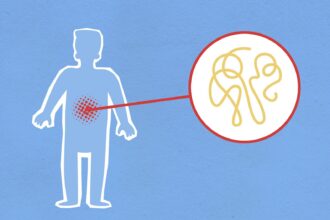
Infographic showing congenital syphilis prevention through prenatal screening and maternal penicillin treatment
Congenital syphilis rates in the United States are rising sharply, alarming physicians and public health officials. Dr. Jeffrey D. Klausner warns that this preventable infection reflects gaps in prenatal screening and maternal treatment access rather than medical limitations. — Photo by Nataliya Vaitkevich on Pexels (Pexels License)
SHARE
1 min read|142 words

Clinicians and health policymakers face a clear imperative to reverse rising congenital syphilis rates through three coordinated interventions. First, universal prenatal syphilis screening in both the first and third trimesters must become standard practice across all healthcare settings, ensuring no pregnant woman is missed.

Second, immediate penicillin treatment must be initiated upon diagnosis—current evidence demonstrates that benzathine penicillin G, administered promptly, prevents nearly all cases of vertical transmission when given before delivery. Third, equitable access to care must be prioritized for underserved and marginalized communities, where disparities in prenatal screening and treatment have contributed significantly to rising case numbers.

These evidence-based actions represent achievable public health goals. Success requires integrated protocols, expanded resources for maternal health programs, and commitment to eliminating healthcare disparities. The science of prevention is established; implementation remains the critical challenge.

Read the full article on GMJ Newsroom.

Submit Your Paper
GMJ_Submit_Banner

Was this article helpful?

GMJ Brief · Takeaway

📰 Read the full article: Congenital Syphilis Surging in U.S.: A Physician’s Urgent Call for Action →

Share This Article
Facebook LinkedIn Bluesky Copy Link Print
GMJ
ByProf. Giorgi Pkhakadze
Follow:
Prof. Giorgi Pkhakadze, MD, MPH, PhD, is Editor-in-Chief of the Georgian Medical Journal and Chair of the Public Health Institute of Georgia (PHIG). He is Professor and Head of the Department of Social and Behavioural Sciences at David Tvildiani Medical University, and Secretary/Treasurer of the UEMS Section of Public Health. ORCID: 0000-0001-7609-4515.

Submit Your Paper →

Georgia's peer-reviewed open-access medical journal. No APC until January 2027.
Submit Manuscript →
Africa’s Regional Research Hubs: Building Local Capacity for Drug Manufacturing and Health Innovation

Africa needs strategically distributed regional research and development hubs to accelerate local…

New optical imaging technique could improve donor liver assessment before transplantation

Researchers have developed polarization-sensitive optical coherence tomography (PS-OCT) to assess donor liver…

AI-designed ‘master key’ vaccine could target entire virus families, not individual strains

Artificial intelligence is enabling vaccine designers to target conserved viral proteins shared…

Submit Your Paper to GMJ

No APC until January 2027.
Submit Manuscript →

You Might Also Like

Restaurant menu with warning label highlighting high-sugar items

Menu Warning Labels Demonstrate Significant Promise in Reducing Restaurant Sugar Consumption

By
Prof. Giorgi Pkhakadze
25/06/2026
UK pharmaceutical regulatory documentation showing parallel import licence statistics

What UK Patients Need to Know About Parallel Import Medicine Access

By
Prof. Giorgi Pkhakadze
02/07/2026
Health PolicyMigration & HealthPolicy & Systems

Migration is a Reality, Not an Emergency—Yet Health Systems Treat It as Crisis

By
Prof. Giorgi Pkhakadze
21/06/2026
Global HealthPolicy & SystemsQuality & Safety

WOAH Warns of Ebola Spread Risk as DRC and Uganda Report New Cases

By
Prof. Giorgi Pkhakadze
13/07/2026
Facebook Twitter Youtube Instagram
Company
  • Privacy Policy
  • Contact US
  • GMJ Journal
  • Submit Manuscript
  • Editorial Team
  • Register at GMJ
  • Terms of Use

Subscribe to GMJ News — Click here

Join Community
© 2026 Georgian Medical Journal (GMJ). Published by the Public Health Institute of Georgia (PHIG). All rights reserved.
Welcome Back!

Sign in to your account

Username or Email Address
Password

Lost your password?

Not a member? Sign Up