By using this site, you agree to the Privacy Policy and Terms of Use.
Accept
GMJ NewsGMJ NewsGMJ News
  • Latest News
    • GMJ Briefs
  • Podcast & Media
    • Podcast Episodes
    • GMJ Audio
    • GMJ Videos
  • Research Digest
    • New Studies
    • Georgian Research
    • Data & Numbers
  • Policy & Systems
    • Health Policy
    • Quality & Safety
    • Migration & Health
    • Global Health
  • Practice
    • Clinical Updates
    • Case Discussions
    • Pharmacy & Prescribing
    • Ingredients A-Z
  • Perspectives
    • Editorial
    • Explainers
    • Voices
    • Letters
  • Health Topics
  • GMJ Articles
    • Vol. 1 Issue 2 (2026)
    • Vol. 1 Issue 1 (2026)
    • Pre-Launch Articles (2025)
  • Read the Journal →
  • About GMJ News
Notification Show More
Font ResizerAa
GMJ NewsGMJ News
Font ResizerAa
  • Latest News
    • GMJ Briefs
  • Podcast & Media
    • Podcast Episodes
    • GMJ Audio
    • GMJ Videos
  • Research Digest
    • New Studies
    • Georgian Research
    • Data & Numbers
  • Policy & Systems
    • Health Policy
    • Quality & Safety
    • Migration & Health
    • Global Health
  • Practice
    • Clinical Updates
    • Case Discussions
    • Pharmacy & Prescribing
    • Ingredients A-Z
  • Perspectives
    • Editorial
    • Explainers
    • Voices
    • Letters
  • Health Topics
  • GMJ Articles
    • Vol. 1 Issue 2 (2026)
    • Vol. 1 Issue 1 (2026)
    • Pre-Launch Articles (2025)
  • Read the Journal →
  • About GMJ News
Follow US
GMJ News > GMJ Briefs > Three Essential Insights for Healthcare Professionals on Reconciliation in Crisis Settings

Three Essential Insights for Healthcare Professionals on Reconciliation in Crisis Settings

GMJ
Last updated: 17/07/2026 08:25
By
Prof. Giorgi Pkhakadze
Share
1 Min Read
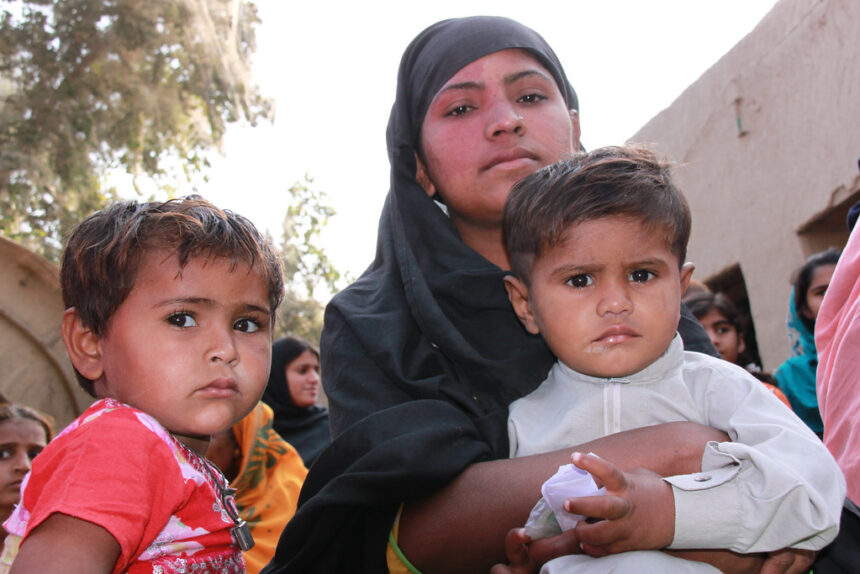
Medical professionals discussing community health and reconciliation approaches
Medical professionals examine reconciliation's role in crisis-affected communities through recent CMAJ correspondence. Healthcare systems increasingly recognize responsibilities beyond traditional clinical boundaries. — "Access to healthcare after the floods" by DFID - UK Department for International Development is licensed under CC BY 2.0. To view a copy of this license, visit https://creativecommons.org/licenses/by/2.0/. (CC BY 2.0)
SHARE
1 min read|146 words

Healthcare professionals working in or supporting crisis-affected communities should understand three critical insights emerging from recent medical journal discourse. First, medical providers can actively engage with reconciliation frameworks that address community healing alongside clinical care, recognizing that population health depends on social trust and collective resilience. This represents a necessary expansion of traditional clinical scope.

Second, interdisciplinary collaboration is essential for effective implementation. Clinicians must partner with public health specialists, community leaders, and social experts to integrate reconciliation principles into healthcare delivery systems. This collaborative approach strengthens both immediate health outcomes and long-term community recovery.

Third, medical education must evolve to prepare practitioners for work in diverse and crisis-affected populations. Understanding the intersection of healthcare delivery and community healing is no longer peripheral to medical practice—it is central to addressing social determinants of health and achieving health equity.

Read the full article on GMJ Newsroom.

Submit Your Paper
GMJ_Submit_Banner

Was this article helpful?

GMJ Brief · Takeaway

📰 Read the full article: Medical Journal Letters Highlight Reconciliation Challenges in Crisis-Affected Communities →

Share This Article
Facebook LinkedIn Bluesky Copy Link Print
GMJ
ByProf. Giorgi Pkhakadze
Follow:
Prof. Giorgi Pkhakadze, MD, MPH, PhD, is Editor-in-Chief of the Georgian Medical Journal and Chair of the Public Health Institute of Georgia (PHIG). He is Professor and Head of the Department of Social and Behavioural Sciences at David Tvildiani Medical University, and Secretary/Treasurer of the UEMS Section of Public Health. ORCID: 0000-0001-7609-4515.

Submit Your Paper →

Georgia's peer-reviewed open-access medical journal. No APC until January 2027.
Submit Manuscript →
Bedroom Light at Night Linked to Metabolic Harm: What the Evidence Shows

Moderate bedroom light exposure triggers measurable metabolic harm within a single night…

Creatine and Kidney Damage: What the Evidence Actually Shows

A 2025 systematic review of 21 studies and analysis of 685 clinical…

How neurotransmitters orchestrate mood, sleep, and cognition: a biochemical primer

Brain function depends on chemical communication between neurons through neurotransmitters. Twelve major…

Submit Your Paper to GMJ

No APC until January 2027.
Submit Manuscript →

You Might Also Like

British Medical Association protest signs during healthcare worker demonstration

Four-Day Strike Marks Longest Continuous Action in Ongoing NHS Pay Dispute

By
Prof. Giorgi Pkhakadze
22/07/2026

PHEIC Declared for Cross-Border Ebola Outbreak: DRC-Uganda

By
Prof. Giorgi Pkhakadze
31/05/2026
Medical illustration of enhanced deep brain stimulation electrode configuration

What You Need to Know About the Latest Brain Stimulation Advancement

By
Prof. Giorgi Pkhakadze
29/07/2026
Medical illustration showing surgical bleeding reduction with tranexamic acid treatment

Study Quantifies Impact: Tranexamic Acid Prevents 38 Bleeding Events Per 1,000 Surgeries

By
Prof. Giorgi Pkhakadze
17/07/2026
Facebook Twitter Youtube Instagram
Company
  • Privacy Policy
  • Contact US
  • GMJ Journal
  • Submit Manuscript
  • Editorial Team
  • Register at GMJ
  • Terms of Use

Subscribe to GMJ News — Click here

Join Community
© 2026 Georgian Medical Journal (GMJ). Published by the Public Health Institute of Georgia (PHIG). All rights reserved.
Welcome Back!

Sign in to your account

Username or Email Address
Password

Lost your password?

Not a member? Sign Up